
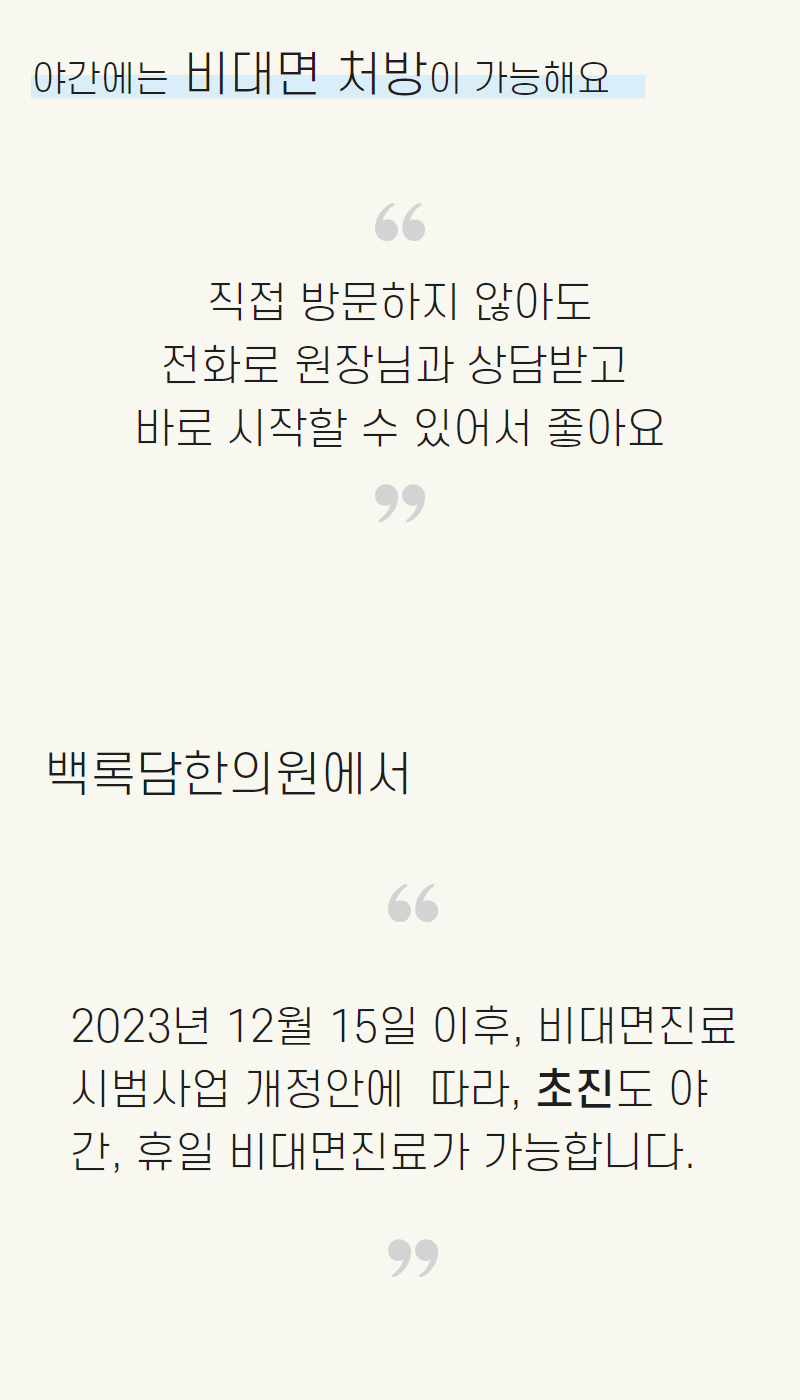
Remote vs. In-Person
Q. I see a lot of remote prescriptions for diet herbal medicine lately. Is there really a difference between that and visiting a clinic in person?
A.
While remote prescriptions offer great convenience for busy professionals, the core of Traditional Korean Medicine lies in accurately assessing your current physiological state. Without objective diagnostic markers like pulse diagnosis (Maek-jin) and tongue diagnosis (Seol-jin), you may receive a standardized prescription rather than a personalized one. It is a choice between convenience and a precision prescription tailored specifically to your body.
📝 Detailed Answer
In clinical practice, we find that even if two patients have similar weight and eating habits, the underlying internal causes of their weight gain are often entirely different.
For some, the issue may be 'Eohyeol' (瘀血, blood stasis), where poor circulation leads to the accumulation of metabolic waste. For others, the cause may be 'Dameum' (痰飮, phlegm-fluid retention), where fluids stagnate in the body. Furthermore, if a patient suffers from 'Bi-heo' (脾虛, Spleen Qi Deficiency) and has poor digestive function, simply suppressing appetite without supporting the Spleen can lead to extreme fatigue and loss of energy.
Remote consultations are convenient, but they lack the depth required for this detailed constitutional analysis. The decisive advantage of an in-person visit is that the practitioner can directly perform pulse and tongue examinations and meticulously adjust the herbal ingredients (Gagam, 加減) based on the patient's immediate condition.
[Comparison: Remote vs. In-person Consultation]
- Convenience: Remote (Very High) / In-person (Low)
- Precision of Customization: Remote (Moderate) / In-person (High)
- Physical Indicators: Remote (Questionnaire-based) / In-person (Pulse, Tongue, and Palpation)
- Side Effect Response: Remote (Consultation-based) / In-person (Immediate physical assessment and adjustment)
- Prescription Method: Remote (Standardized formulas) / In-person (Individualized modified prescriptions)
Ultimately, the difference lies in how accurately your current physical state is reflected in the medicine. If you wish to establish an exact baseline for your health and start your journey with precision, I recommend visiting the clinic in person for your initial consultation.
#comparison
#comparison-table

Expert Verified
Dr. Yeonseung Choe
Chief Director