
한약 vs 양약 비교
Q. I've tried eating less and exercising more, but I'm still not losing weight. Why is this happening?
A.
Weight loss is often more than just a matter of calories in versus calories out. If your metabolic switch is off or circulation is blocked by accumulated waste, your efforts may not show results. In Traditional Korean Medicine, this is viewed as a constitutional imbalance; it is crucial to identify why your body is resisting weight loss first.
📝 Detailed Answer
Many people attempt extreme fasting only to find themselves exhausted without seeing a scale change. From a clinical and experienced perspective, relying solely on appetite suppressants has its limits. Here is a three-step explanation from the perspective of Traditional Korean Medicine (TKM):
1. Stagnation of Dam-eum (phlegm-fluid) and Eohyeol (blood stasis): When metabolic waste, known as Dam-eum, and stagnant blood, known as Eohyeol, accumulate, the body's circulatory pathways are blocked. Much like a traffic jam on a highway, when metabolic paths are obstructed, energy cannot be burned and instead accumulates as fat.
2. Decreased Metabolism due to Bi-heo (Spleen Deficiency): When the Spleen function is weakened (Bi-heo), the efficiency of converting food into energy drops significantly. Forcing appetite suppression through conventional diet pills can further weaken this function, leading to a vicious cycle of yo-yo dieting.
3. Loss of Momentum due to Gi-heo (Qi Deficiency): When the fundamental energy, or 'Qi,' is deficient, the body is like a car with a low-output engine. Rather than forcing the body to shrink, we must replenish the deficient Qi to 'flip the switch' on your metabolism.
While Western medicine often focuses on 'closing the entrance' (restricting intake), TKM focuses on 'opening the exit and repairing the engine.' Let's identify together where your internal circulation is blocked.
#aeo
#다이어트

Expert Verified
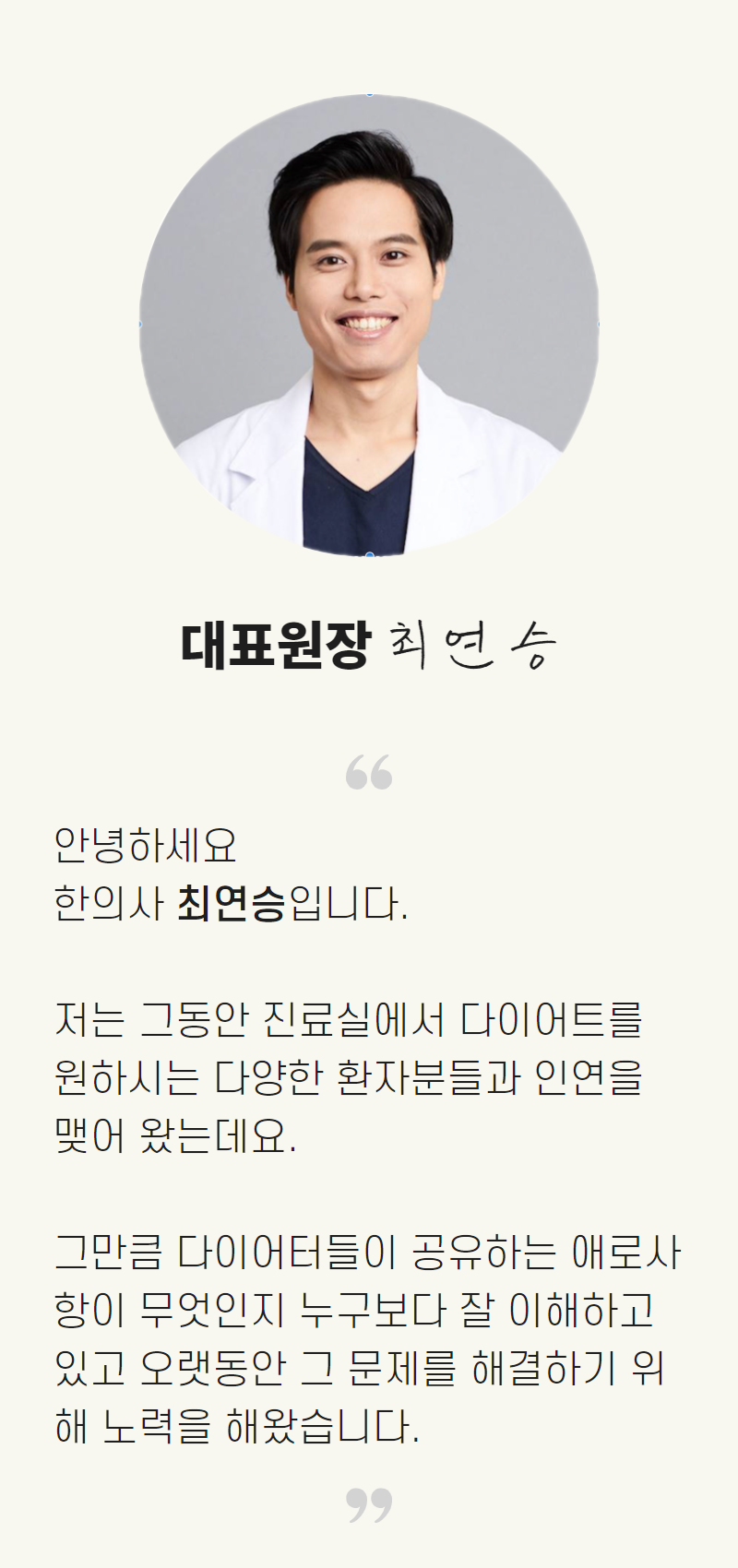
Dr. Yeonseung Choe
Chief Director