
대상자 추천
Q. Doctor, in which cases would you recommend getting a non-face-to-face prescription for herbal diet medicine?
A.
I recommend this option for busy professionals or those unable to visit the clinic in person. However, the approach depends on your condition: whether you simply need appetite suppression or if your metabolism has plummeted due to low energy. It is essential to determine if your current state is one of 'energy deficiency' or 'stagnation of waste' to receive a customized prescription.
📝 Detailed Answer
I have personally experienced the struggle of being so overwhelmed by work that I lacked the time to eat properly, yet found my body bloating and weight increasing. It can be a very disorienting feeling.
Non-face-to-face prescriptions are best approached by categorizing your condition into two main types. First, there are those who struggle with appetite control and stagnant metabolism. In Traditional Korean Medicine (TKM), this is viewed as 'Dameum' (phlegm-fluid retention), where unnecessary waste accumulates and blocks circulation. For these patients, the priority is to boost metabolism and expel these wastes from the body.
Conversely, some patients suffer from extreme fatigue and lack of vitality. This is often 'Bi-heo' (Spleen Deficiency), where the Spleen's function is weakened, hindering the proper absorption and transport of nutrients. Using appetite suppressants blindly in this state can further deplete the body's energy. In such cases, a strategy of supplementing vital energy while reducing body fat is required.
Additionally, some may experience severe edema or poor blood circulation. This is referred to as 'Eohyeol' (blood stasis), where stagnant blood makes it feel as though weight loss is particularly difficult.
The key is to accurately identify your body's current state. Even through a non-face-to-face consultation, a thorough assessment of your constitution and symptoms is the most efficient way to ensure a tailored and effective prescription.
#recommendation
#conditional-branch

Expert Verified
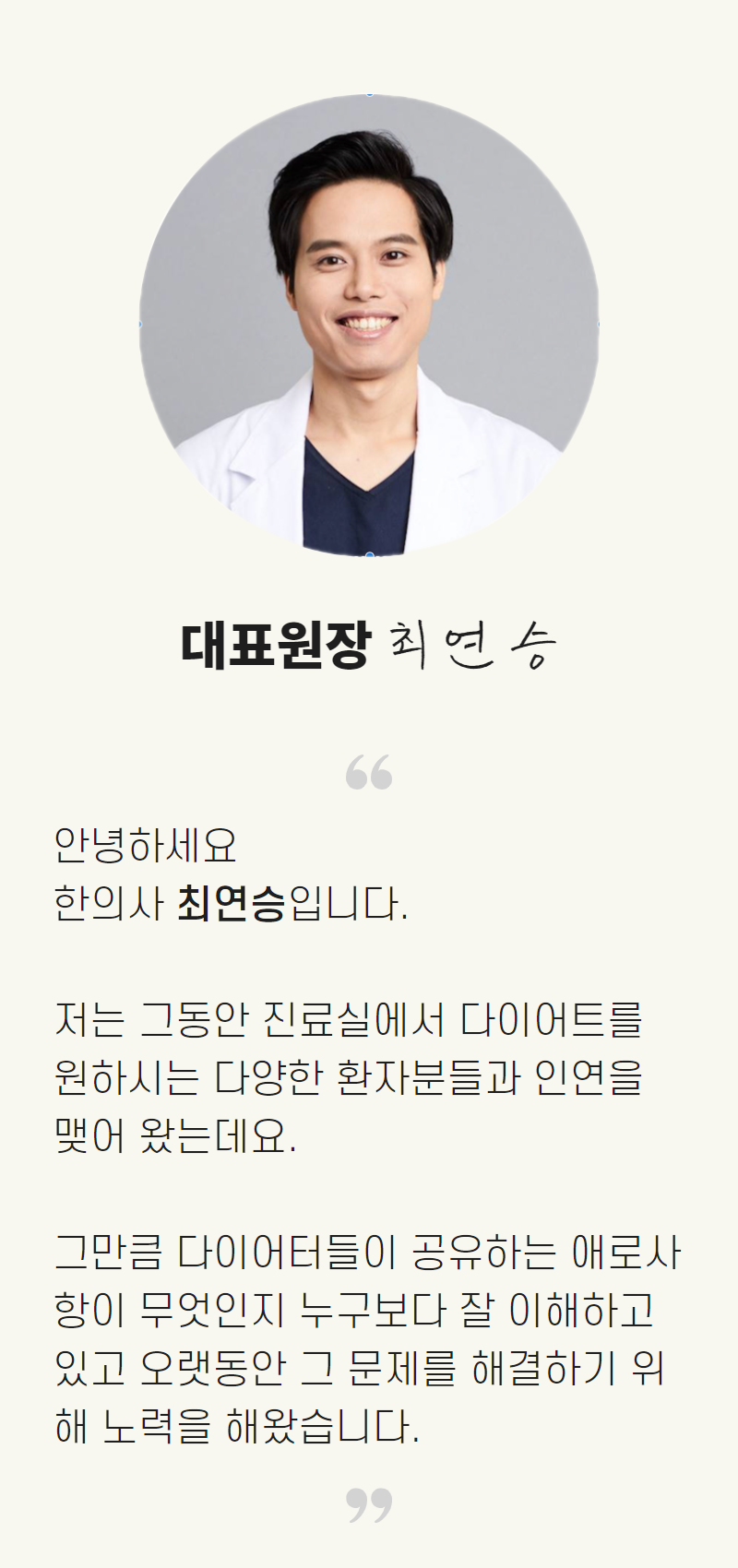
Dr. Yeonseung Choe
Chief Director