Average Body Fat Percentage for Korean Men

Table of Contents
I see many men sigh when stepping on the scale at the clinic. Yet when I ask, "What's your body fat percentage?" most don't know. When starting a weight management program, body fat percentage is actually more important than weight alone. An 80kg body with more muscle and less fat is completely different from an 80kg body with less muscle and more fat. Today, let's answer the question: "How does my body fat percentage compare to the average?" I'll explain the average body fat percentage for Korean men, normal ranges, and important measurement limitations.
What the Body Fat Percentage Number Means
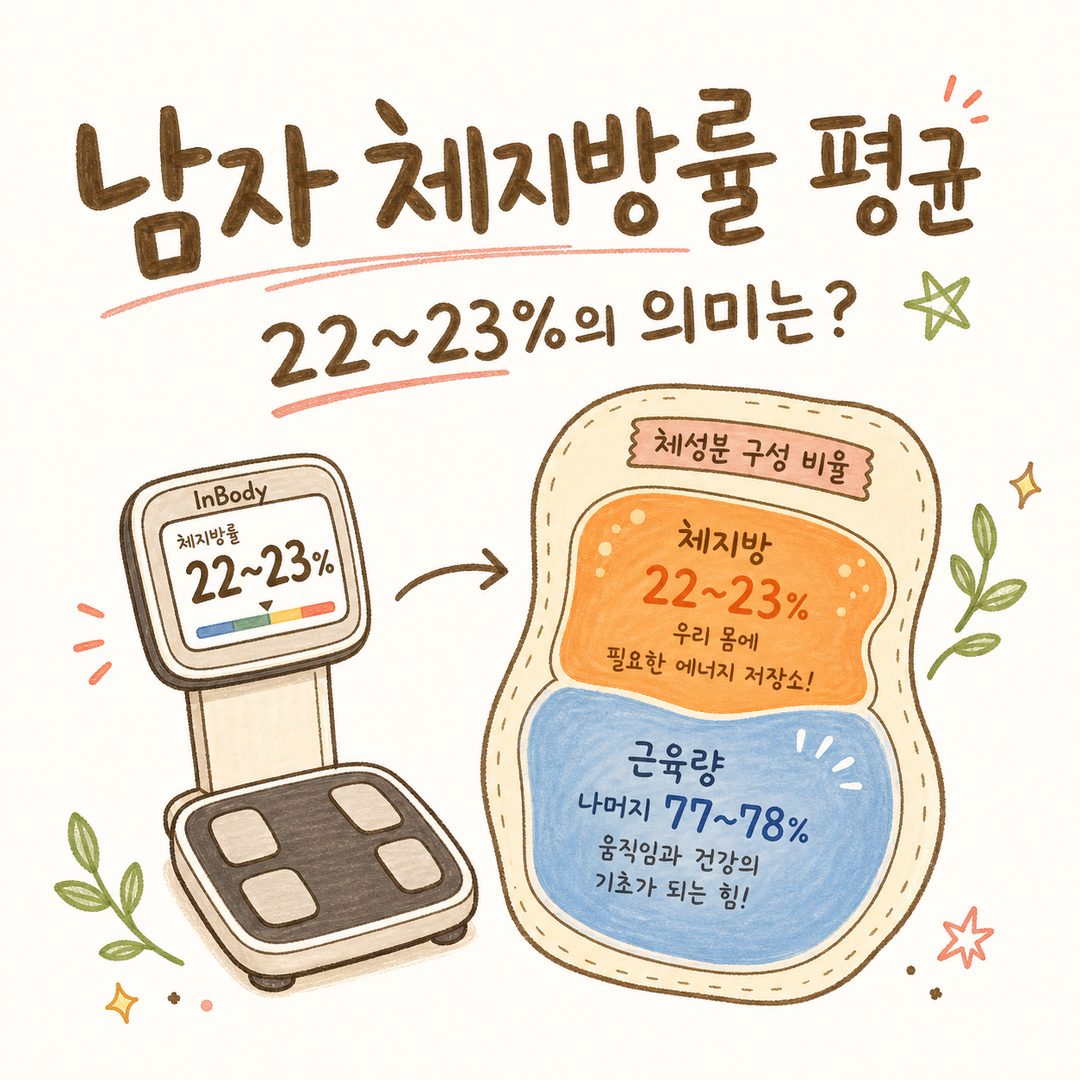
Body fat percentage is simple: the proportion of your total weight that is fat. For an 80kg man with 20% body fat, that means 16kg is fat and the remaining 64kg is lean mass (muscle, bones, water, organs). While BMI (Body Mass Index) is a rough indicator based only on height and weight, body fat percentage goes a step further to show "the quality of that weight." This helps distinguish between skinny fat (normal BMI but high body fat) and muscular builds (overweight BMI but low body fat). Measurement is typically done using bioelectrical impedance analysis (BIA) devices like InBody, available at gyms, Korean medicine clinics, and public health centers.
What's the Actual Average for Korean Men?
According to the 2023 InBody Report, the average body fat percentage for Korean adult men is 22.61%. Other sources show similar ranges of 22-23%, or broadly 22-24%. Interestingly, among 12 countries, Korean men rank in the middle, but by body type standards, this falls into the 'overweight' category for average builds. So the average isn't necessarily a healthy average.
Let's break it down by age group, based on data from the Korea Sports Promotion Foundation and Korea Institute of Sport Science from over 56,000 participants:
19-24 years: 17.1%
25-29 years: 19.4%
30-34 years: 21.0%
35-39 years: 21.7%
40-44 years: 21.6%
45-49 years: 21.8%
50-54 years: 22.4%
55-59 years: 22.7%
60-64 years: 23.4%
65-69 years: 24.0%
70-74 years: 25.1%
80+ years: Around 26%
Early 20s show the lowest at around 17%, with a steady increase of 1-2% per decade. Men enter the 20% range in their 30s and exceed the average after mid-50s. Compare your percentage to your age group to see where you stand.
Normal Range and Ideal Zones
While the average is 22-23%, this isn't the recommended range. A healthy body fat percentage for men is typically 10-20%, with 15-18% often cited as the most ideal range. According to Korean InBody and medical standards, the healthy range for men in their 20s-30s is 8-19%. Here's what the ranges mean:
2-5%: Essential fat only. Bodybuilders achieve this for competitions, but it's dangerous for health.
6-9%: Athlete level. Very defined abs but maintaining this long-term risks hormone and immune system issues.
10-14%: Typical for regular exercisers or bodybuilders in off-season. Considered functionally and health-wise ideal.
15-19%: Standard range for active men in their 20s-30s. Neither bad nor great.
20-24%: Most common range for Korean men. Classified as overweight/unhealthy.
25%+: Obese. Over 30% is severely obese, increasing cardiovascular disease and diabetes risk.
Since the Korean average falls in the 20-24% range, this means the "average" is actually overweight. Don't aim for average—target 15-19% as your first goal.
Can You Trust InBody Numbers 100%?
BIA, the most common measurement method, estimates body composition by sending a weak electrical current through the body. While quick and painless, it has limitations. It's highly sensitive to hydration levels—results can vary based on water intake, sauna use, exercise, or meals. For consistent readings, measure under similar conditions: fasted, pre-exercise, post-urination, and at the same time of day.
Additionally, muscular people may have underestimated body fat percentages, while lean individuals with less muscle might see slight overestimations. Location of fat matters too—visceral fat affects health differently than subcutaneous fat. Rather than fixating on a single number, track trends over several days under consistent conditions.
Complementary Metrics to Consider
Body fat percentage alone doesn't tell the whole story. Consider these complementary metrics:
Skeletal Muscle Mass: Even with the same body fat percentage, more muscle means higher basal metabolic rate.
Waist Circumference: A simple indicator of visceral fat. Over 90cm for men indicates abdominal obesity.
BMI: Compare with body fat percentage. If they move together, great. If not (e.g., skinny fat or muscular build), adjust your diet and exercise plan accordingly.
Trend Graphs: Track weekly changes under consistent conditions for more meaningful insights.
In Traditional Korean Medicine, the same body fat percentage may require different approaches based on constitution and qi-blood balance. Rather than obsessing over averages, find an approach that suits your body. At Baekrokdam Korean Medicine Clinic, we prescribe Baekrok Gambi-jung based on individual constitutional diagnosis. If you want to achieve your personal best beyond the average, consider scheduling a consultation.