Diet and Eye Size: From Body Checks to Orbital Fat

Table of Contents
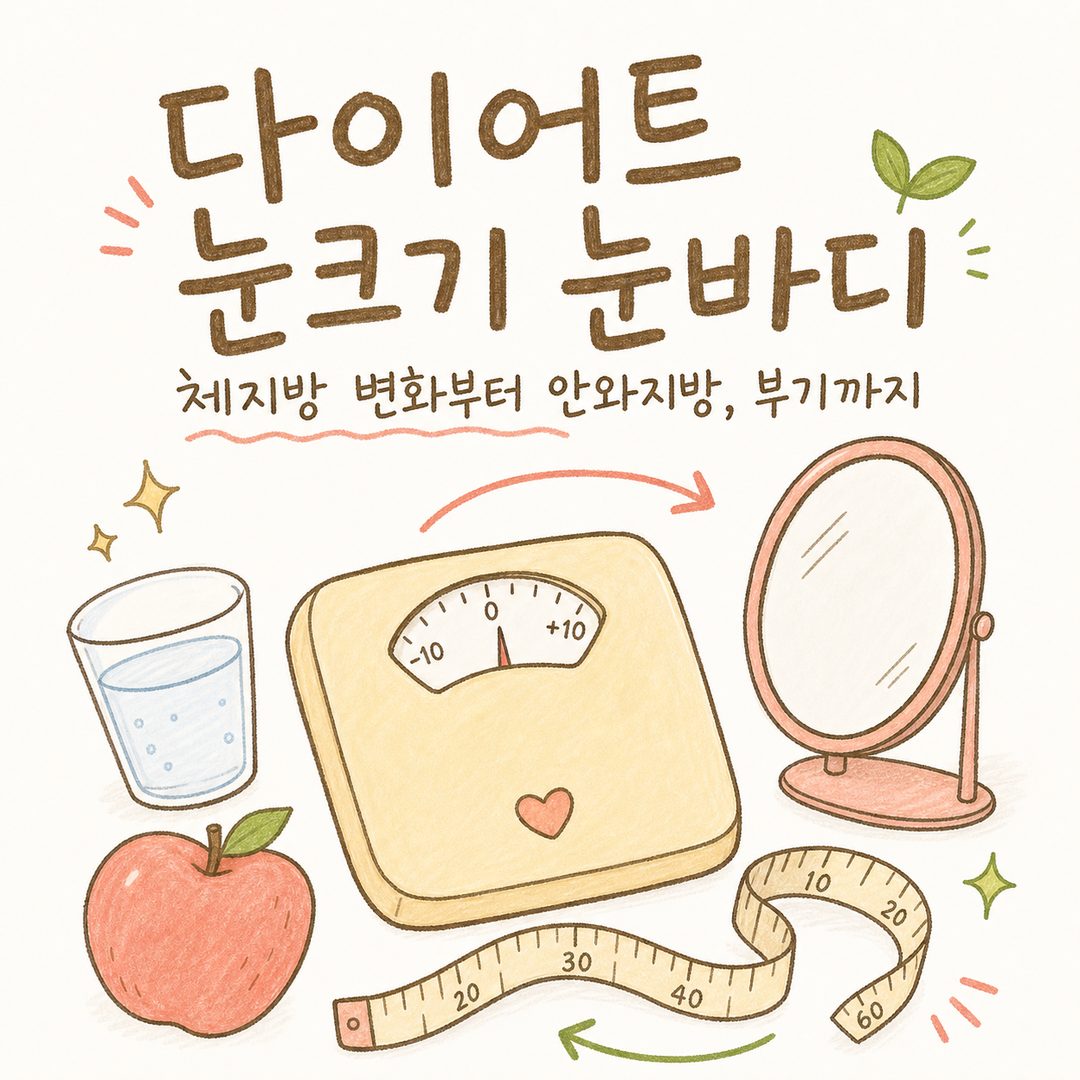
Have you ever sighed in front of the mirror, thinking your eyes look smaller than yesterday? In the clinic, I often meet patients who say, "My weight is the same, but my eyes look swollen." When discussing weight management, let's look beyond the scale and talk about "Noon-body" (visual body checks) and whether your eye size can actually increase.
Why Visual Body Checks Are More Honest Than the Scale
Weight is surprisingly fickle. Even for the same person on the same day, it fluctuates based on water retention, food intake, and muscle mass. This is why Noon-body—tracking physical changes through the mirror or photos—serves as an excellent supplementary indicator. Even if the weight isn't dropping quickly, the process of losing body fat and defining your body lines often shows up in the mirror first.
However, since "Noon-body" is a subjective term, it can be influenced by your mood. It is most accurate when viewed alongside waist circumference, weight, and InBody (body composition) results. Photos are great for comparing body shape changes and left-right balance, while tape measures and body composition tests track trends with numbers. The two are not substitutes; they are partners.
Does "Eye Size" Really Increase?
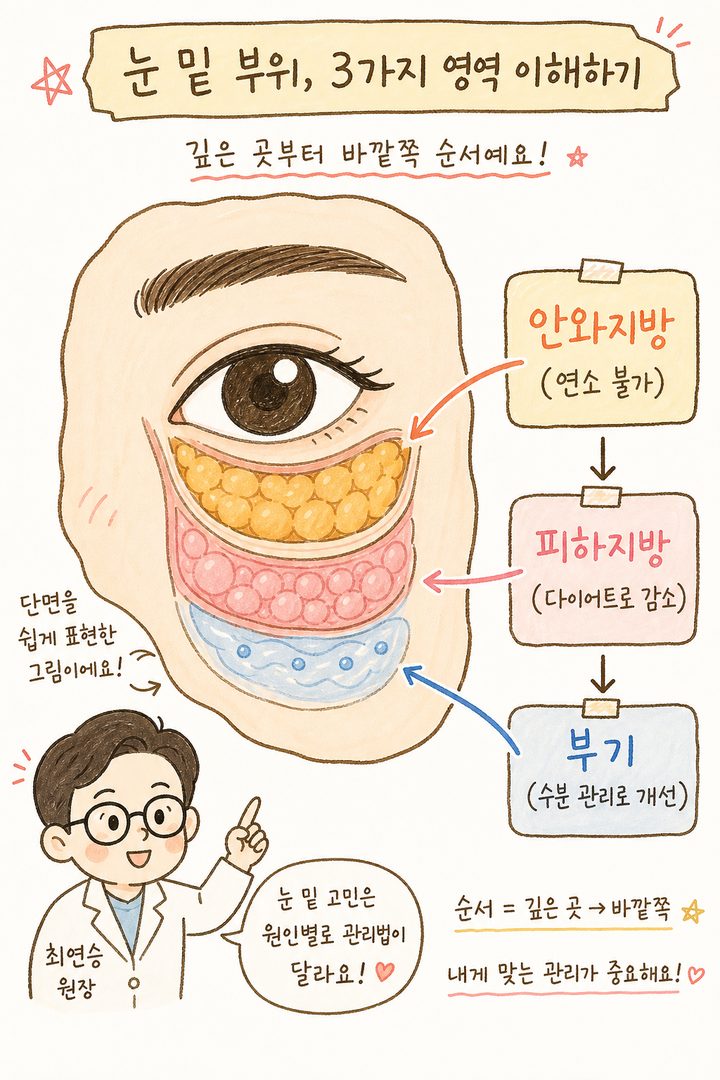
To be honest, the actual diameter of the eyeball does not increase with weight management. The bone structure of the eye socket (orbit) and your natural eye shape remain the same even after losing weight. Yet, there is a reason why those who lose weight feel like their eyes have grown larger.
As the subcutaneous fat around the eyelids and brow area thins, the area covering the pupil decreases, making the eye appear more exposed. Furthermore, as the overall facial contours become more defined, the eyes are emphasized relative to other features. One more thing: orbital fat (deep fat in the eyelids) generally does not decrease through diet alone without surgery. Conversely, what is resolved through weight management is the surface subcutaneous fat and swelling.
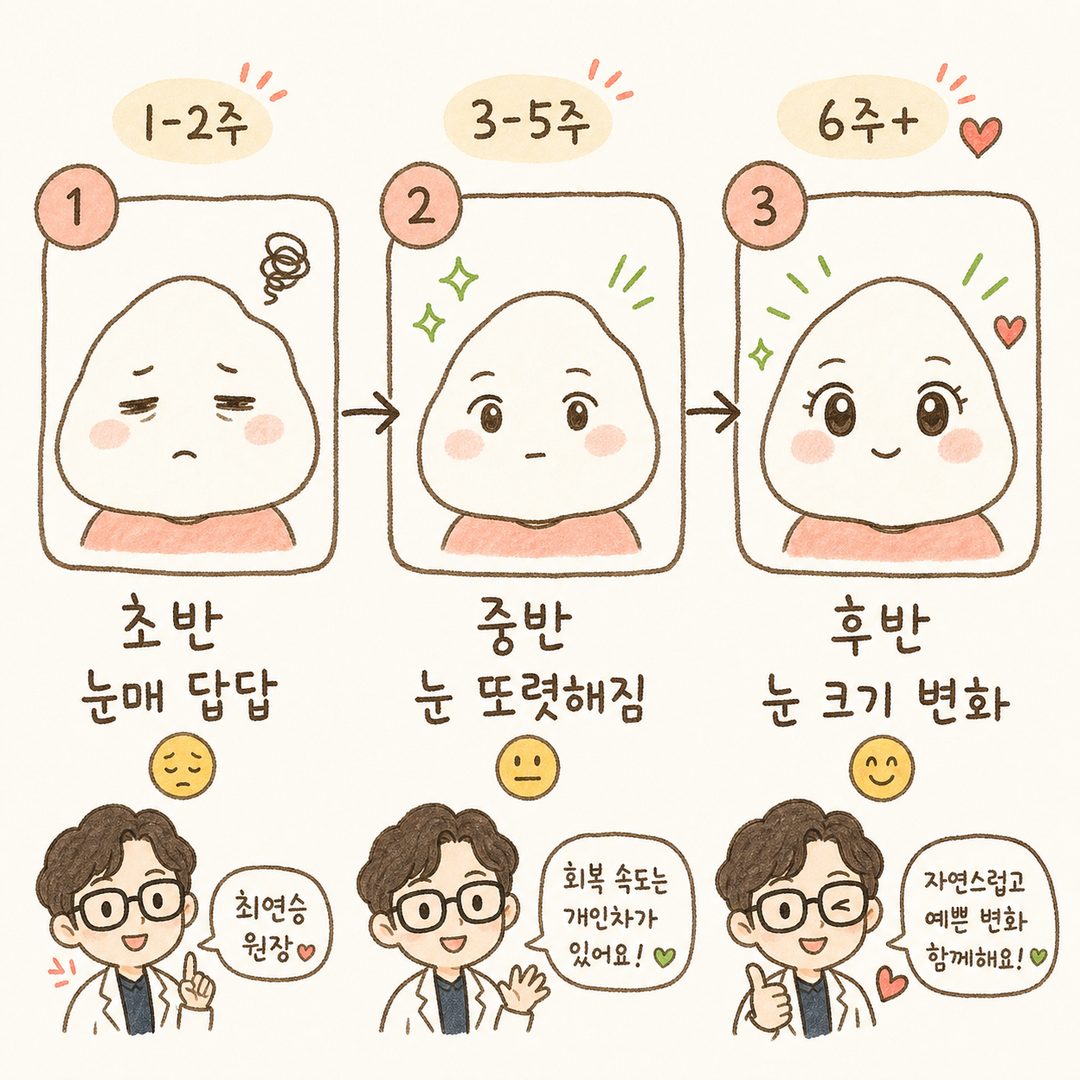
How Changes Actually Progress During Weight Management
Signs that your weight management is going well appear first in clothing fit, the lines of your waist, arms, and legs, and abdominal circumference rather than the number on the scale. If your clothes feel looser in front of the mirror, it is often a sign that body fat is already being lost.
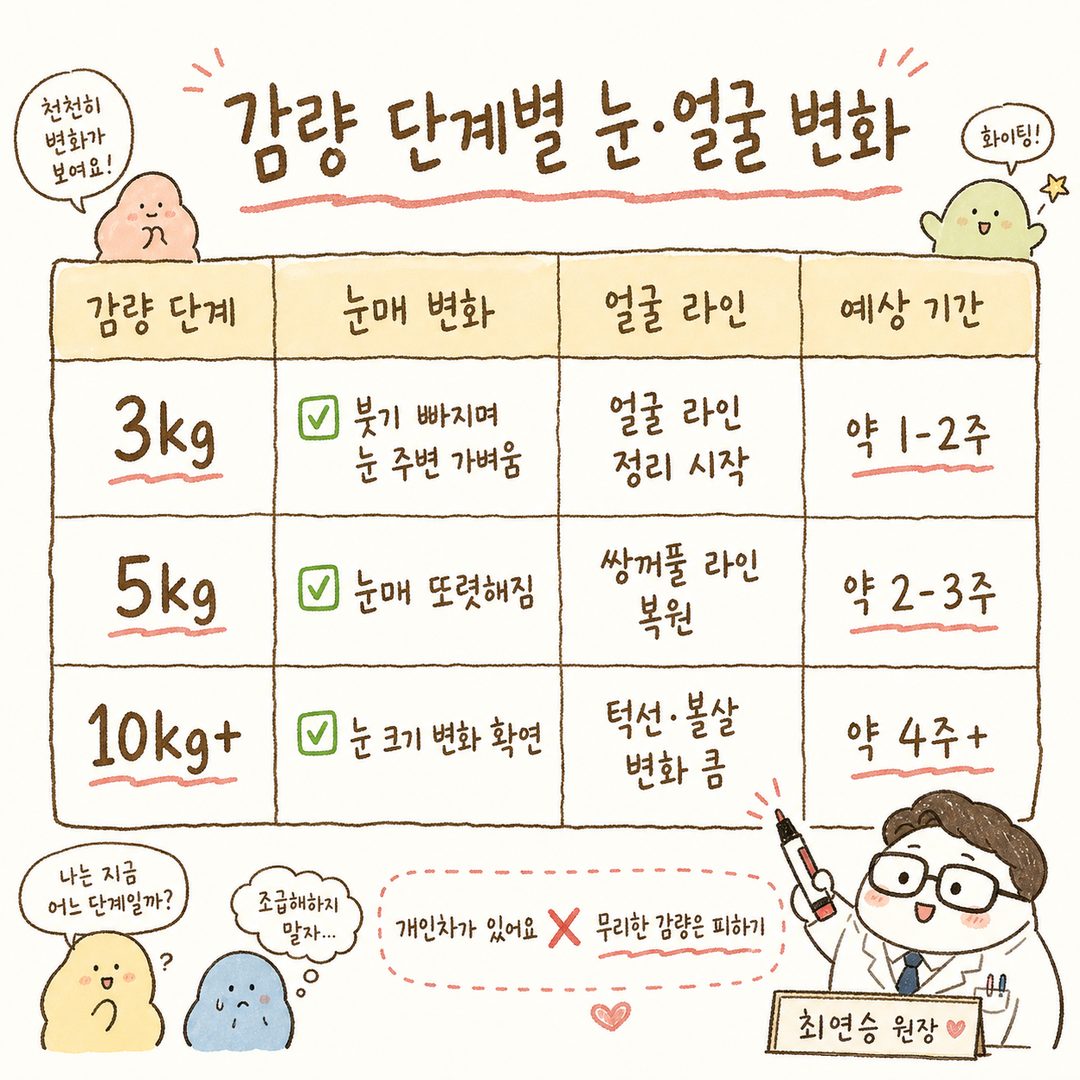
Here is a summary of the typical progression seen in reviews:
In the 3kg loss range, many report that their facial lines become more defined and their eyes look clearer.
Upon reaching the 5kg loss range, eyes become significantly sharper, and many experience buried double eyelid lines reappearing.
With a loss of 10kg or more, cases where the change in eye size is strikingly obvious in before-and-after photos become frequent.
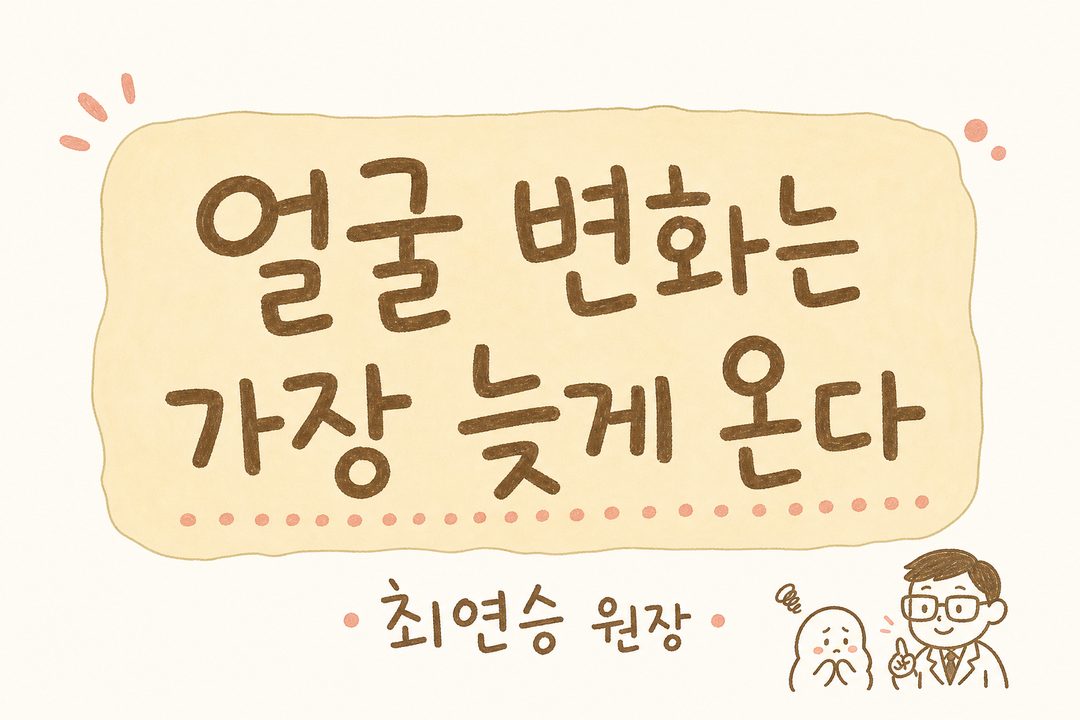
However, facial fat is often the last area to disappear during weight loss, and the fat around the eyelids is the very last of that. So, do not be discouraged if you don't see changes early on. The torso and legs usually slim down first, and the face follows.
Swelling vs. Orbital Fat: Easy to Confuse
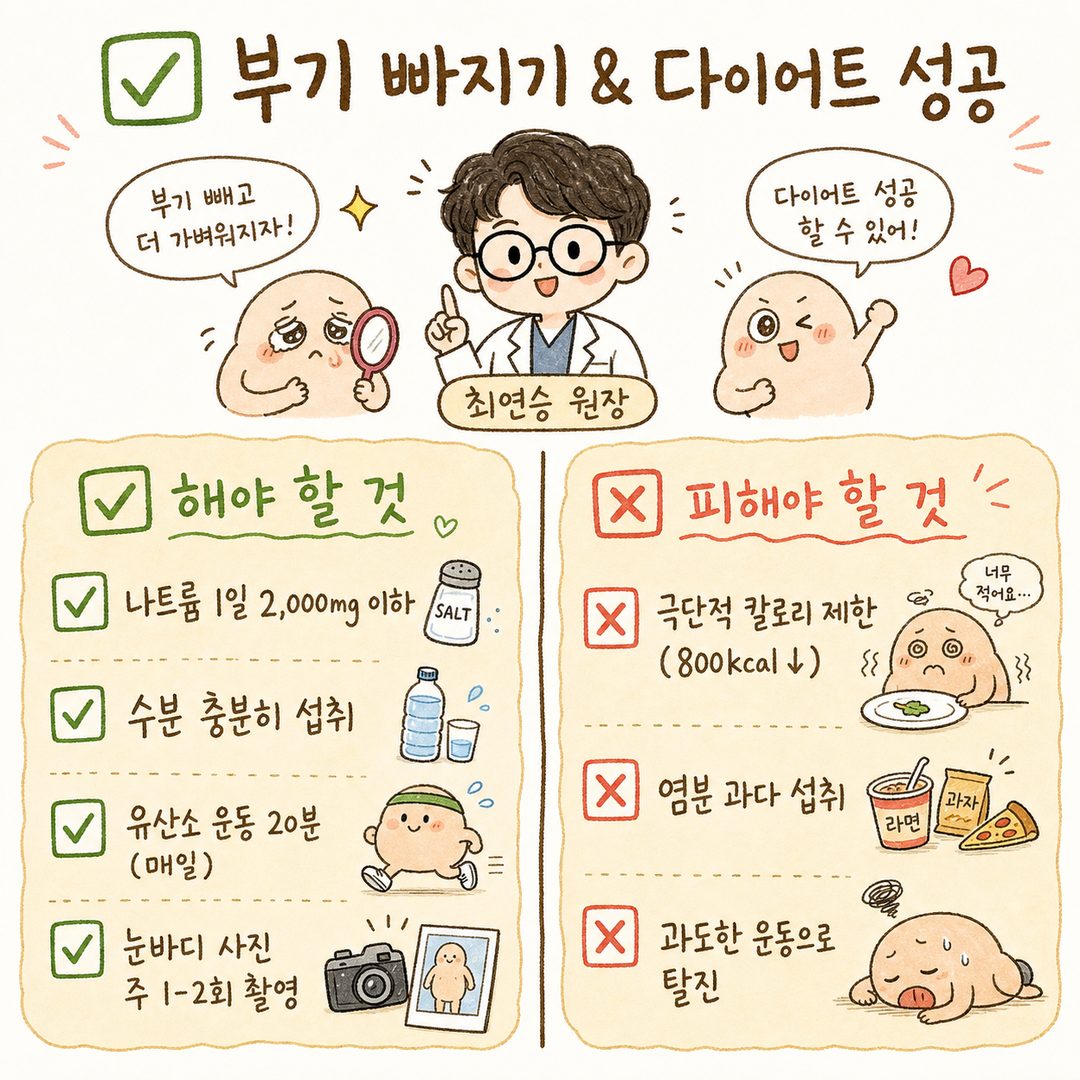
When you look in the mirror in the morning and feel your eyes have gotten smaller, it is very often swelling rather than fat. Swelling fluctuates quickly depending on your daily condition; reducing sodium and drinking enough water tends to significantly decrease morning puffiness.
In contrast, orbital fat is located deep within and does not burn away easily. This means it is fat that is not typically lost through standard weight management. For those worried that their double eyelids might disappear, I reassure them that changes in the eyelid area are minimal at standard weight loss levels. Significant changes come from the reduction of swelling and subcutaneous fat.
The Perspective of Baekrokdam Clinic
In our clinic, we don't view Noon-body changes simply as "looking prettier." In Korean medicine, facial swelling and changes around the eyes are read as constitutional signals such as Suseup (Dampness), Giheo (Qi Deficiency), and Dameum (Phlegm-fluid). Those whose eyes swell excessively every morning and whose bodies feel heavy often have a pattern of stagnant water metabolism, while those whose faces become puffy after meals often have weakened spleen and stomach function.
Therefore, even for the same complaint of "heavy-looking eyes," one person may need a prescription to improve water metabolism, while another may need a prescription that replenishes energy while dissolving excess fat. This is why we don't just follow the scale; we examine Noon-body photos, waist circumference, body composition, and perform pulse and tongue diagnosis. Because facial changes occur last, if we don't monitor the constitutional flow, it is easy to lose motivation midway.
Action Points You Can Start Today
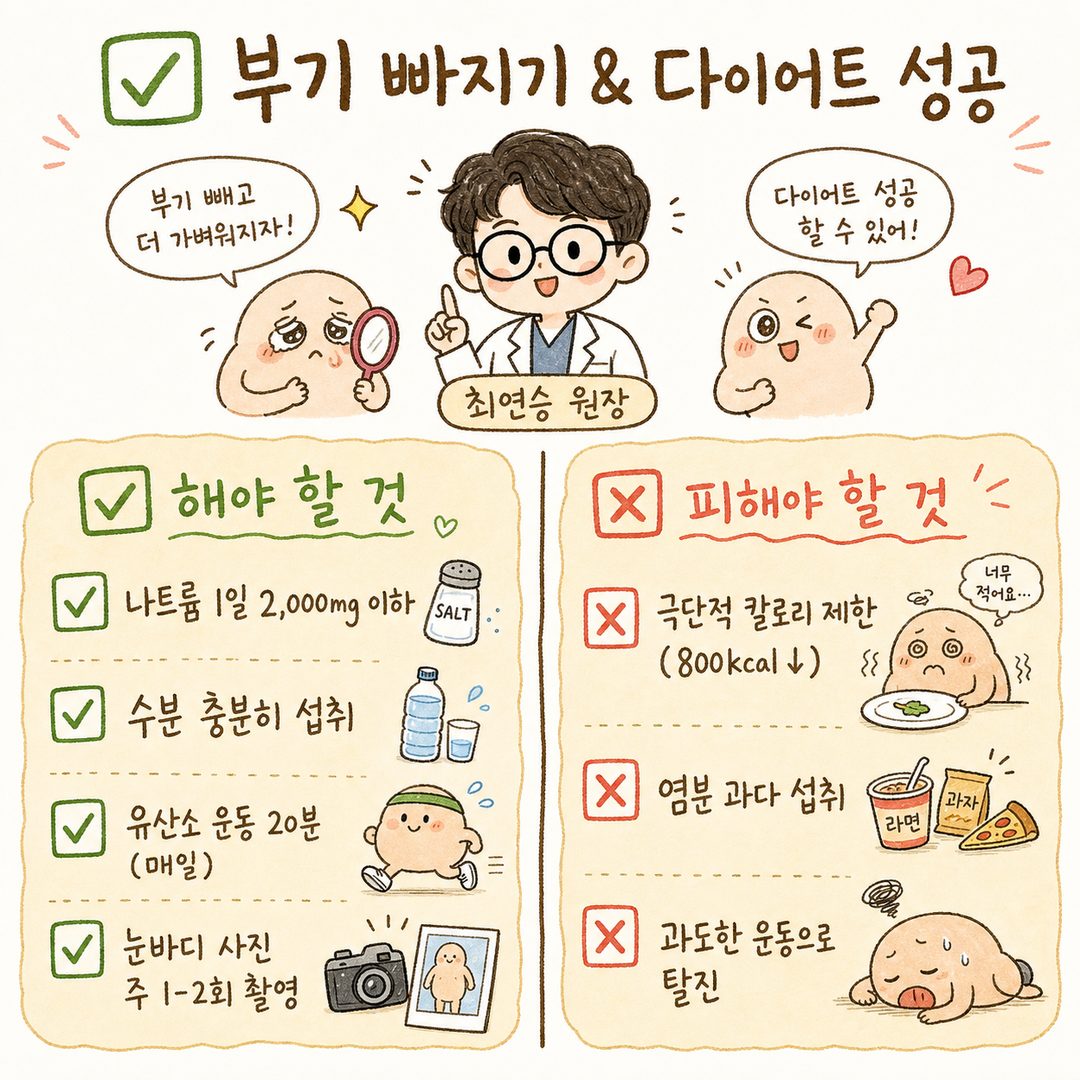
One or two things you can repeat daily are more powerful than a grand plan. Try starting lightly with these items:
Take Noon-body photos 1–2 times a week using the same lighting, clothes, and pose. Exceeding 2 times can make you overly sensitive to minor fluctuations.
Manage sodium within the daily upper limit of 2,000mg. Consciously trying to stay around 1.5g of salt is very helpful.
Start with a slight caloric deficit by removing about 25% of your usual meal portion. Cutting drastically to something like 800kcal at once can easily make your face look haggard.
Repeating light aerobic exercise or stretching in 20-minute blocks daily will noticeably speed up the reduction of swelling.
Don't compare yourself to yesterday in the mirror; compare yourself to photos from 1–2 weeks ago. Facial changes come slowly.
Instead of being shaken by the scale every day, a single Noon-body photo and a tape measure will be much more honest friends. It's human nature to only notice the parts that haven't changed when looking alone, so having someone to track the progress with helps establish a steady flow. Baekrok Gambi-jung is a Korean medicine diet program designed to read these constitutional and swelling patterns, helping facial lines and eye clarity emerge naturally without excessive strain. We will track your Noon-body trends with you in the clinic, so if your progress feels slow, please feel free to knock on our door.