Diet Pho Delivery: Half Noodles, Less Broth Tips

Table of Contents
Have you ever opened a delivery app in the evening and clicked on Pho, thinking, "Let's eat light today"? I hear this often in the clinic: "Doctor, isn't Pho okay for weight management?" It's a very common question.
Why Delivery Pho Often Hinders Weight Management
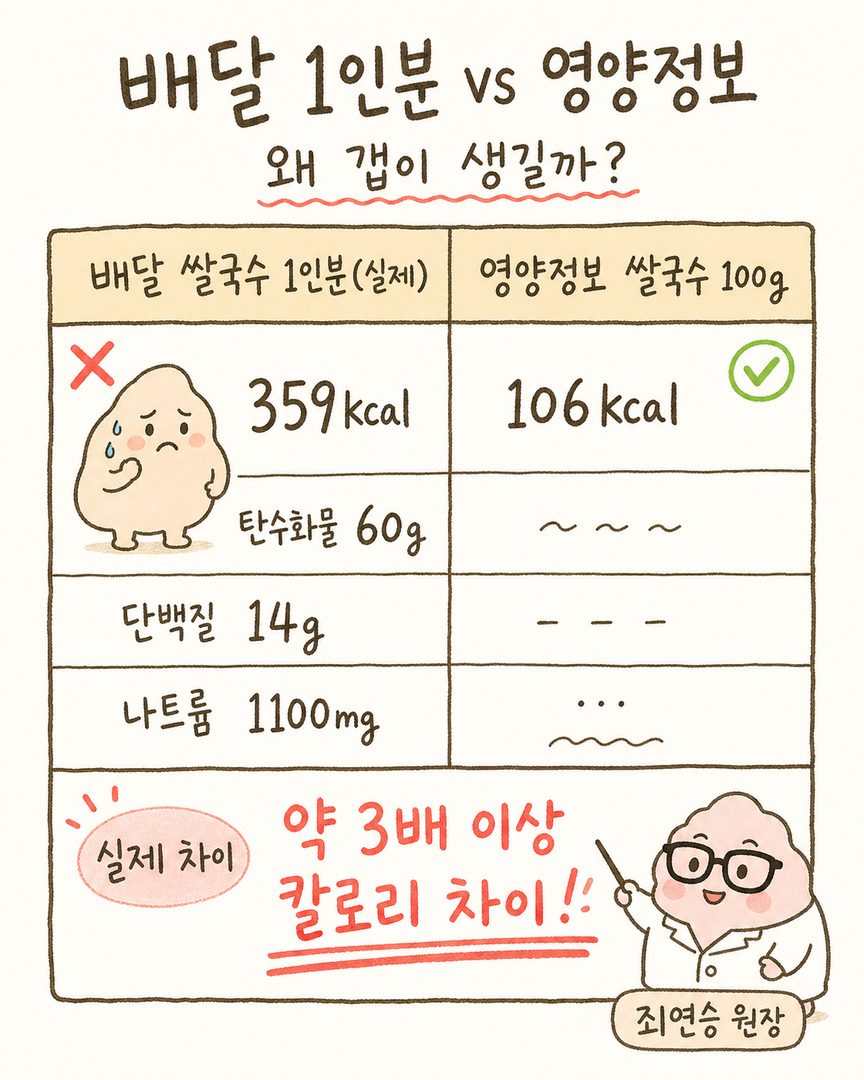
Pho certainly feels lighter than wheat-based noodles. According to some nutritional databases, Pho contains about 106 kcal per 100g, meaning the noodles themselves are relatively low in calories. Since they are non-fried rice noodles, they are less oily, and because they come with bean sprouts and vegetables, they have a strong image of being a "health food."
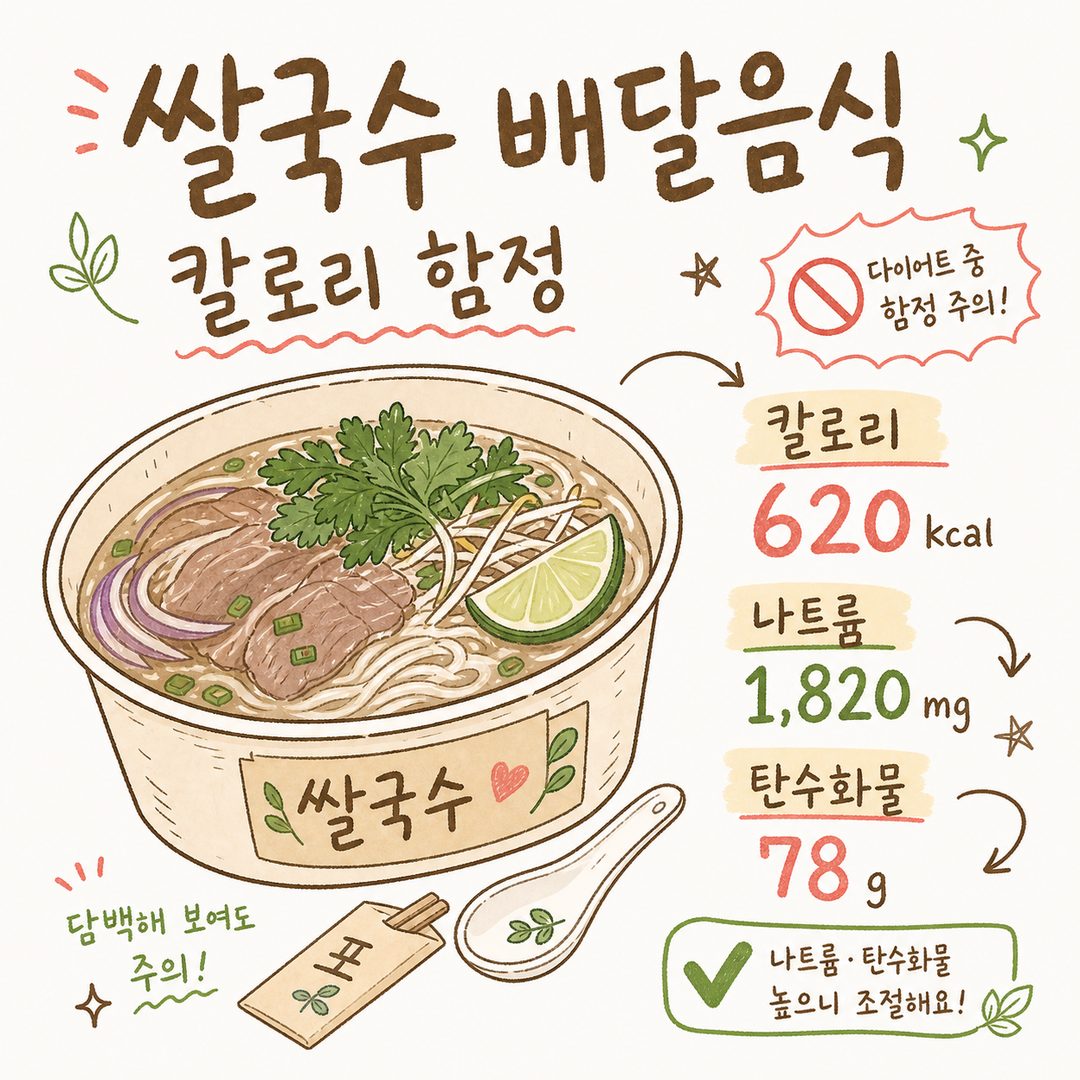
The problem is that a single serving delivered to your door is not just 100g of noodles. Typically, one serving of delivery Pho is introduced as having about 359 kcal for 300g. Depending on the restaurant, this can range from 320 to 500 kcal, and if you finish all the toppings and broth, it can exceed 600 kcal. Some media reports suggest that consuming the entire bowl—broth, meat, noodles, and vegetables—can reach over 560 kcal, which is higher than a pack of Shin Ramyun (505 kcal).
There is one more trap. A bowl of Pho contains about 60g of carbohydrates, which is a fairly high proportion. The protein content is somewhat disappointing at around 14g. This leads to a pattern of "feeling full for a moment, but getting hungry again quickly." For those who complain that their late-night snacking increased while eating only Pho during their diet, this nutritional composition is likely the culprit.
Calories and Nutrition — A Bowl by the Numbers
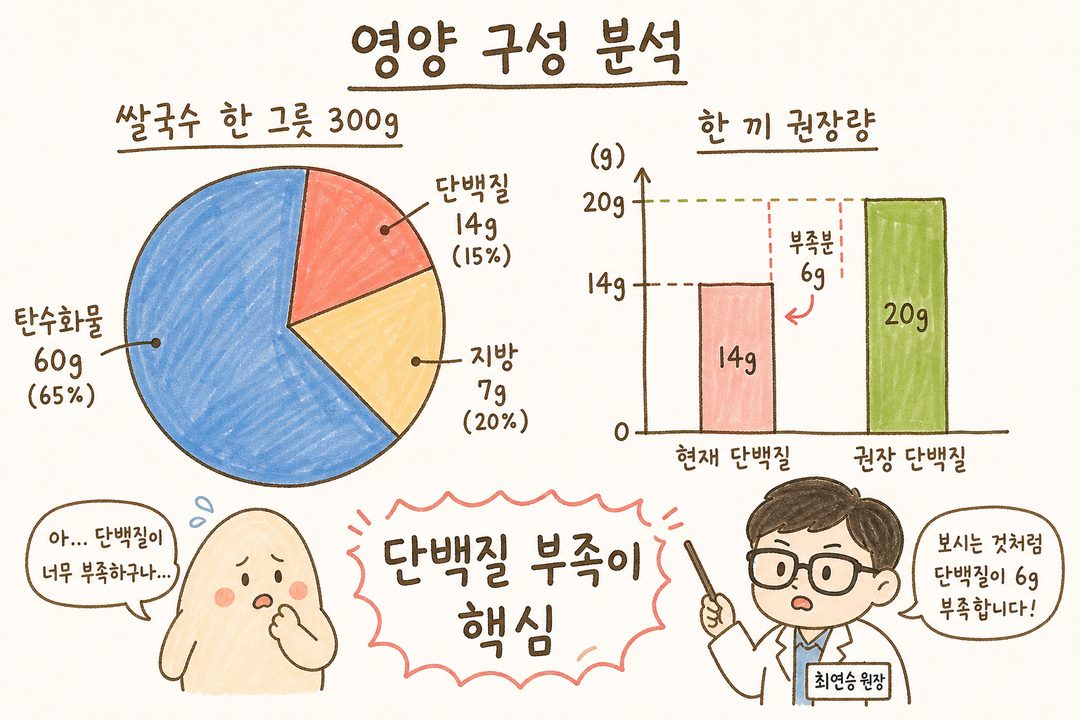
Let's look at this more specifically. Based on food databases, the composition of one bowl (300g) of delivery Pho is roughly as follows:
Calories: 359 kcal
Carbohydrates: 60g
Protein: 14g
Fat: 7g
Considering a recommended meal for someone on a diet is usually around 400 kcal, the numbers alone might make it seem "just right." However, the 14g of protein is a concern. To reach a target of over 20g of protein per meal, you need to add more lean meat or include a separate protein side dish.
We also cannot ignore the broth. Because Pho broth is deeply simmered, it is common for the sodium levels to reach up to 1,100mg. If you finish the broth, the number on the scale the next day is likely to fluctuate by 1–2kg due to edema. In most cases, this isn't actual fat gain but water retention, yet it often becomes the real reason people lose their motivation for weight management.
What Changes When You Reduce Noodles and Add Vegetables
The advice I most frequently give patients in the clinic is: "Eat only half the noodles." According to nutritional data, reducing the noodles by half brings the calorie count of Pho down to the 250–300 kcal range. You can fill the space left by the noodles with bean sprouts, vegetables, and lean meat.
When I hear feedback from those who have tried this, many say they felt relieved of the guilt that "delivery Pho is ruining my diet." Those who ate Pho 1–2 times a week while following the "half noodles, extra meat, half broth" rule showed a pattern of slow, steady weight loss without hitting a plateau. Conversely, those who maintained the habit of finishing the entire bowl of broth more than twice a week tended to experience longer plateaus, even with similar food diaries.
The important thing is not just looking at the calories of a single meal, but looking at the total amount of sodium and carbohydrates on a daily and weekly basis. A single day of Pho is light, but if it's repeated every weekday evening, the story changes.
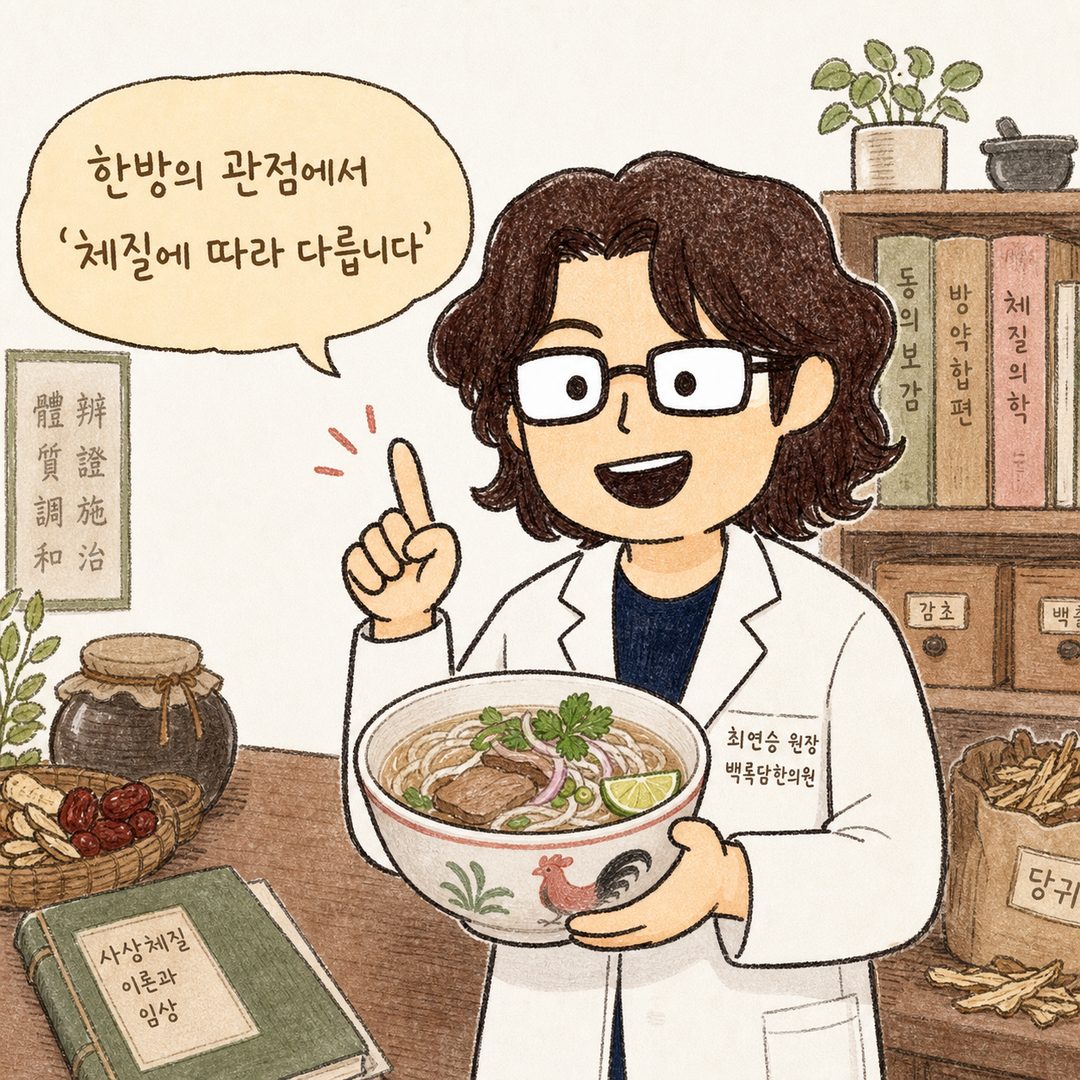
Pho from the Perspective of Baekrokdam Clinic
In Korean medicine, Pho is not viewed simply as a "carbohydrate meal." Because it contains warm broth, bean sprouts, and aromatic herbs like cilantro, it is seen as a dish that warms the interior and aids digestion. For those who usually have cold hands and feet or a weak digestive system, it can be a meal that is actually less burdensome than a cold salad.
However, for those with a damp-phlegm (濕痰) constitution—meaning those whose bodies swell easily, feel heavy, and have a sticky sensation in the mouth—finishing the Pho broth can easily lead to poor physical condition the next day. The fats and sodium in the rich broth encourage water retention. Even with the same Pho, the person who needs to "reduce noodles" and the person who needs to "reduce broth" can differ based on their constitution.
I don't tell patients to "stop eating Pho." A diet that involves suppressing the foods you love usually doesn't last long. Instead, I help them decide on which days and with what composition they should eat it.
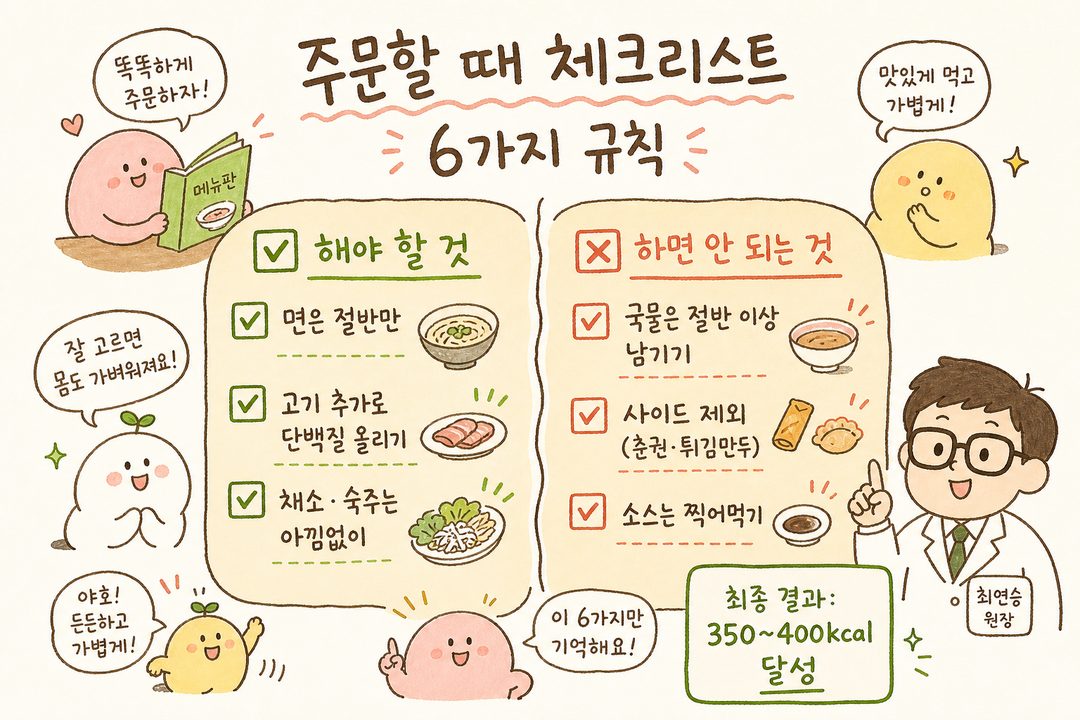
Checkpoints to Apply When Ordering
Here is a summary you can use right away this evening:
Eat only half the noodles and save the rest for tomorrow's lunch.
Increase protein to over 20g by adding extra meat or brisket toppings.
Be generous with bean sprouts, onions, and cilantro—high volume, low calories.
Taste the broth but leave more than half (cuts sodium and calories simultaneously).
Exclude sides like spring rolls or fried dumplings from that day's menu.
Instead of pouring sauces (Hoisin, Sriracha) over the food, dip the food into them.
By following these steps, a bowl of Pho can be neatly finished within the 350–400 kcal range. You can include it 1–2 times a week without much difficulty.

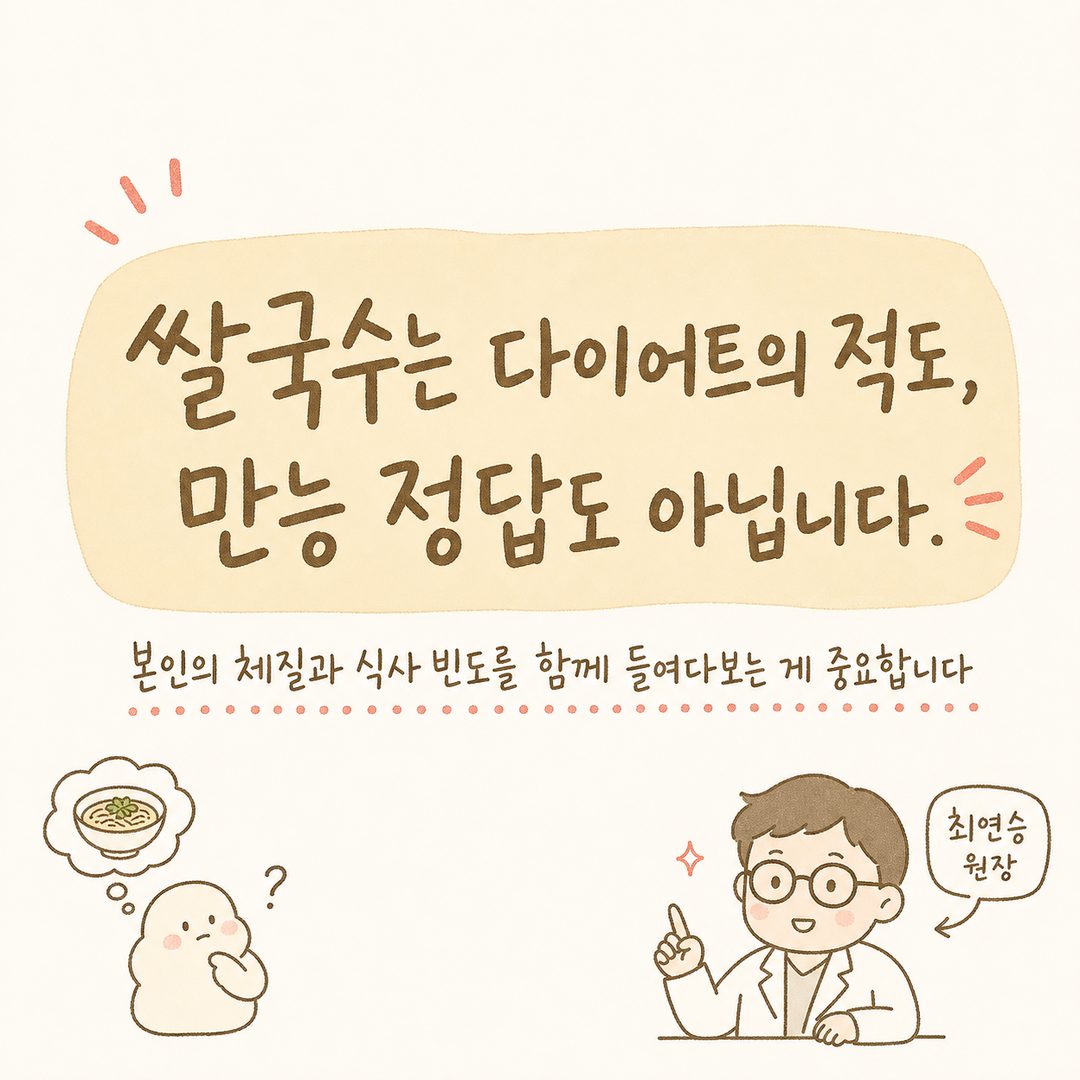
Conclusion
Delivery Pho is neither the enemy of a diet nor a magic solution. If you follow the rules of half noodles, extra protein, and less broth, it becomes a satisfying meal for a busy weekday evening. Conversely, if the habit of finishing the broth every time accumulates, it can become the cause of a plateau. It is important to look at your constitution and meal frequency together.
If you find yourself struggling while planning your own meals, it would be beneficial to try the Baekrok Gambi-jung program at Baekrokdam Clinic. We can help you establish a weekly eating rhythm along with a constitutional consultation. We will help you find a way to lose weight slowly and stably without having to give up your favorite delivery menus.