Diet Exercise Methods: Cardio, Strength, and Walking

Table of Contents
One of the most common questions I hear in the clinic is, “Doctor, I’ve been exercising, so why am I not losing weight?” Some have registered for the gym five times, while others walk for an hour every day only to see the scale stay the same. I understand that frustration deeply. Exercise is indeed a major pillar of weight management. However, if the direction is wrong, you are simply losing time. Today, I will explain step-by-step how to move your body in a way that actually triggers weight loss.
Why "Exercise Alone" Isn't Enough for Weight Loss
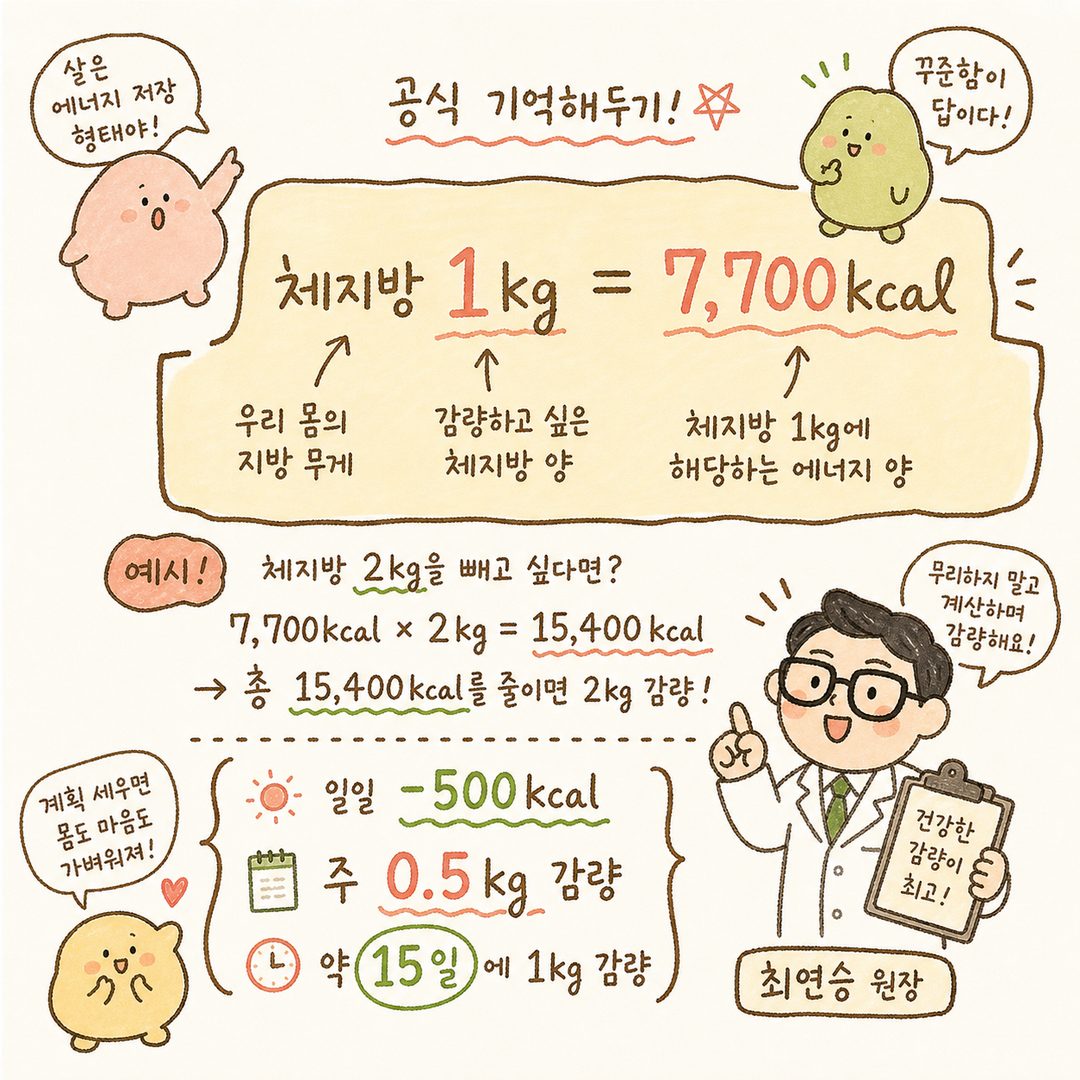
To lose weight, your energy expenditure must exceed your caloric intake. According to domestic health and medical data, reducing about 500 kcal per day through a combination of diet and exercise is the safest way to lose approximately 0.5 kg per week. Since 1 kg of body fat is roughly 7,700 kcal, a daily deficit of -500 kcal theoretically results in 1 kg of weight loss every 15 days. These numbers tell the story: burning 500 kcal through exercise alone is harder than it sounds. Walking briskly for 30 minutes only burns about 150 kcal. This is why dietary control and exercise must be treated as a "set."
Furthermore, many people try to starve themselves while over-exercising. However, eating too little causes muscle loss first. The recommended minimum intake is 1,200–1,500 kcal for men and 1,000–1,200 kcal for women. Dropping below these levels causes the Basal Metabolic Rate (BMR) to fall, meaning the actual calories burned during exercise also decrease. The key is the balance of "eating less and moving well."
One Month, Three Months, Six Months… How Your Body Changes
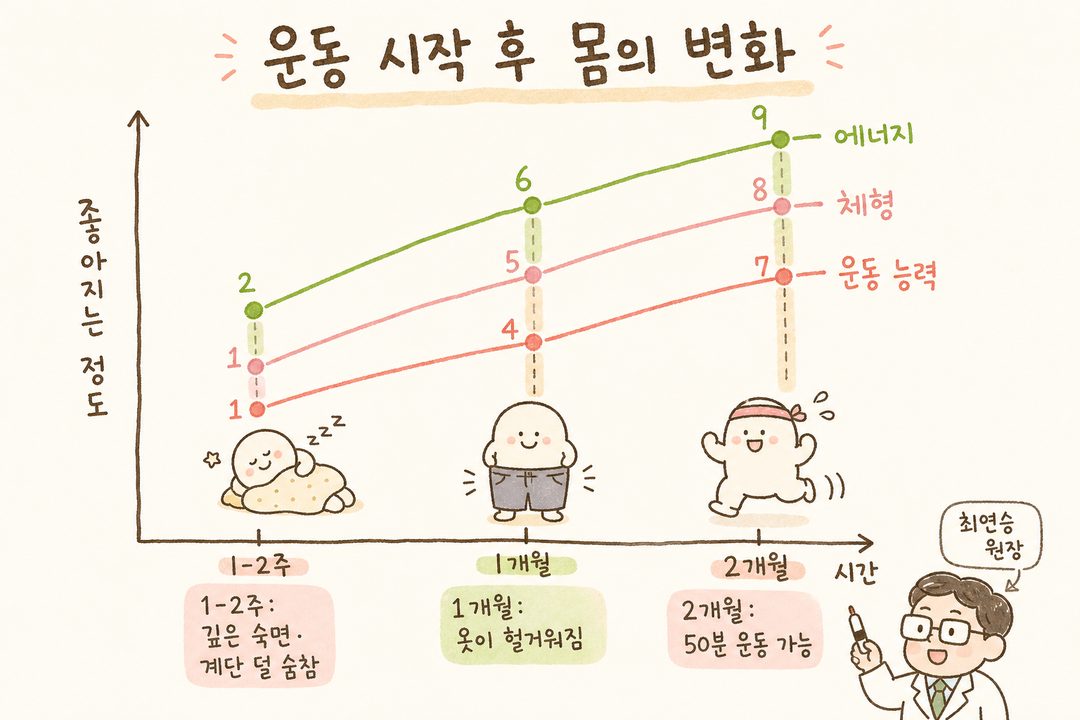
I always tell those starting a new routine: "Look at your condition before the scale." During the first 1–2 weeks, there is often little change in the numbers. Instead, you might notice deeper sleep, less breathlessness on stairs, and reduced post-meal drowsiness. It usually takes about a month for clothes to feel slightly looser. One patient started with 30 minutes of brisk walking every evening and increased the duration by 5–10 minutes each week. By the second month, they could walk for 50 minutes and naturally lost weight by eating about 1/3 less than their usual portions.
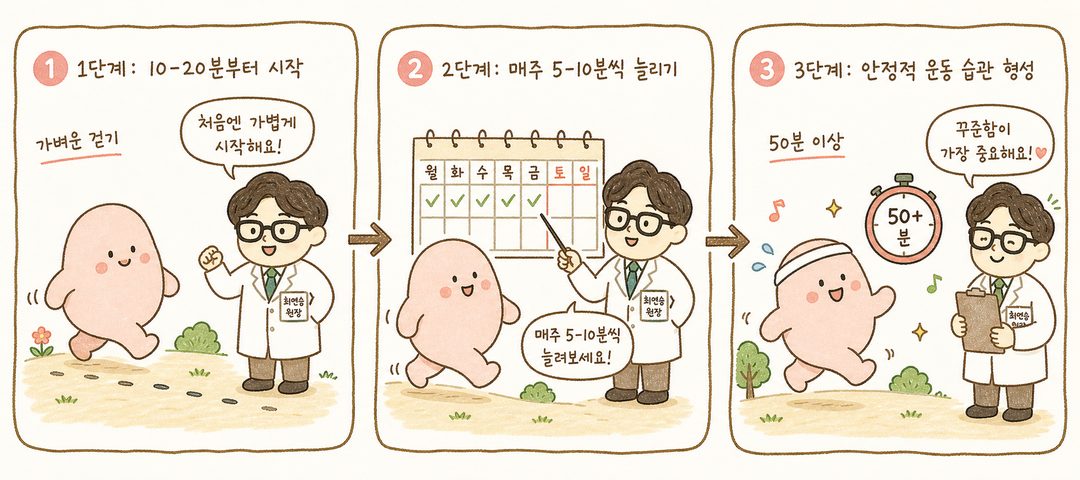
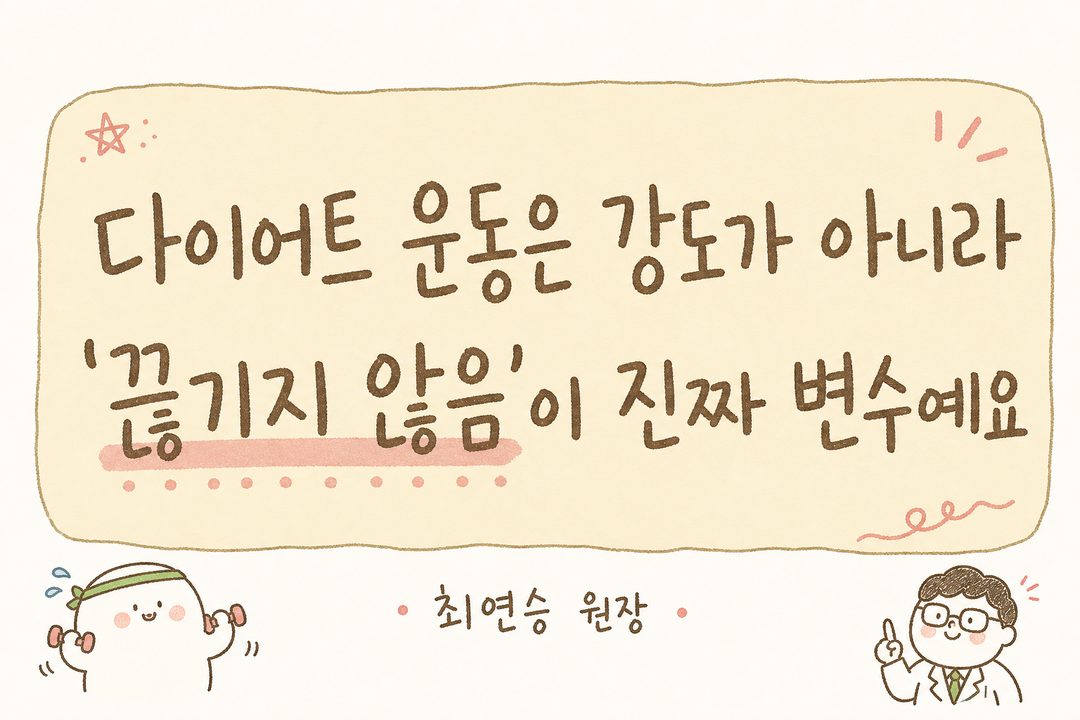
Conversely, some patients started running two hours a day out of sheer ambition, only to stop due to knee pain. I advised them to start over with just 10–20 minutes. The real variable in diet exercise is not intensity, but "consistency." A rate of 0.5–1 kg per week is medically the safest and minimizes the yo-yo effect.
The Role of Exercise at Baekrokdam Clinic
In Korean medicine, we believe the "path to weight loss" differs for every individual. For the same 30-minute walk, some people sweat profusely, while others only experience a slight rise in body temperature with little change. This is why we examine your constitution in the clinic. For those with weak energy (Qi) who experience fatigue for days after exercising, we do not recommend high-intensity cardio right away. Instead, we start with short, light walks to improve circulation and use Korean herbal medicine to regulate edema and metabolism before gradually increasing exercise time.
It is a similar case for those who suffer from abdominal gas and severe post-meal bloating. If gastrointestinal function is sluggish, the body cannot absorb protein efficiently, making it difficult to build muscle even with exercise. In Korean medicine, we first address the flow of nutrient absorption and waste elimination for these individuals. Then, we layer cardio and strength training on top. Exercise is a tool to produce results, but for that tool to be effective, the body's foundation must be warmed up first.
Practical Tips to Start Today
Since I've explained quite a bit, here is a summary of the "prescriptions" I frequently give in the clinic:
Cardio: 5+ days a week, 30–60 minutes per session. Choose the least boring option among brisk walking, cycling, or light jogging. Moderate intensity—where you are slightly out of breath but can still hold a conversation—is sufficient.
Strength training: 2–3 times a week. Bodyweight exercises like squats, planks, and wall push-ups are enough to start. Maintaining muscle is essential to prevent the BMR from dropping.
Start with 10–20 minutes and increase by 5–10 minutes each week. Over-ambitious exercise often leads to knee pain first.
The -500 kcal rule. Try to cut 1/3 of your usual meal portion and fill the remaining deficit with walking. Reducing a full bowl of rice to 2/3 is a good start.
Reduce hidden calories. According to National Health Insurance Service data, a cup of mix coffee is 55 kcal, a sports drink is 65 kcal, and a red bean bread is 252 kcal. It is faster to block them at the mouth than to pay them back through exercise.
3 meals a day at 4–5 hour intervals. Skipping meals often leads to overeating at the next one. Aim for 1.0–1.5g of protein per 1kg of standard body weight.
These are the basics that can make your body feel lighter if followed for just one month. Rather than a grand exercise routine, small, consistent habits are what ultimately move the scale.
No matter how well you exercise, if your body's foundation is cold and edema is severe, results will be slow. For those who feel they have reached a limit with exercise alone, I recommend a constitutional diagnosis and the use of Baekrok Gambi-jung to improve metabolism. If you would like a personal consultation to design an exercise intensity that fits your constitution, feel free to contact Baekrokdam Clinic. Let’s move forward together—slowly, but steadily.