Diet Tomatoes & Tomato Sauce: Lycopene & Low-Sugar Tips

Table of Contents
While on a diet/weight management plan, you might bite into a tomato thinking, "I can really eat this without worry," yet hesitate when faced with tomato sauce at a pasta restaurant. In my clinic, I often hear the question, "Director, is tomato sauce pasta part of a diet/weight management menu?" To give you the answer upfront: fresh tomatoes and cherry tomatoes are highly recommended, but you must be selective with commercial tomato sauces. Even if they share the name 'tomato,' their contents differ significantly.
Why Tomatoes Frequently Appear in Diet Plans
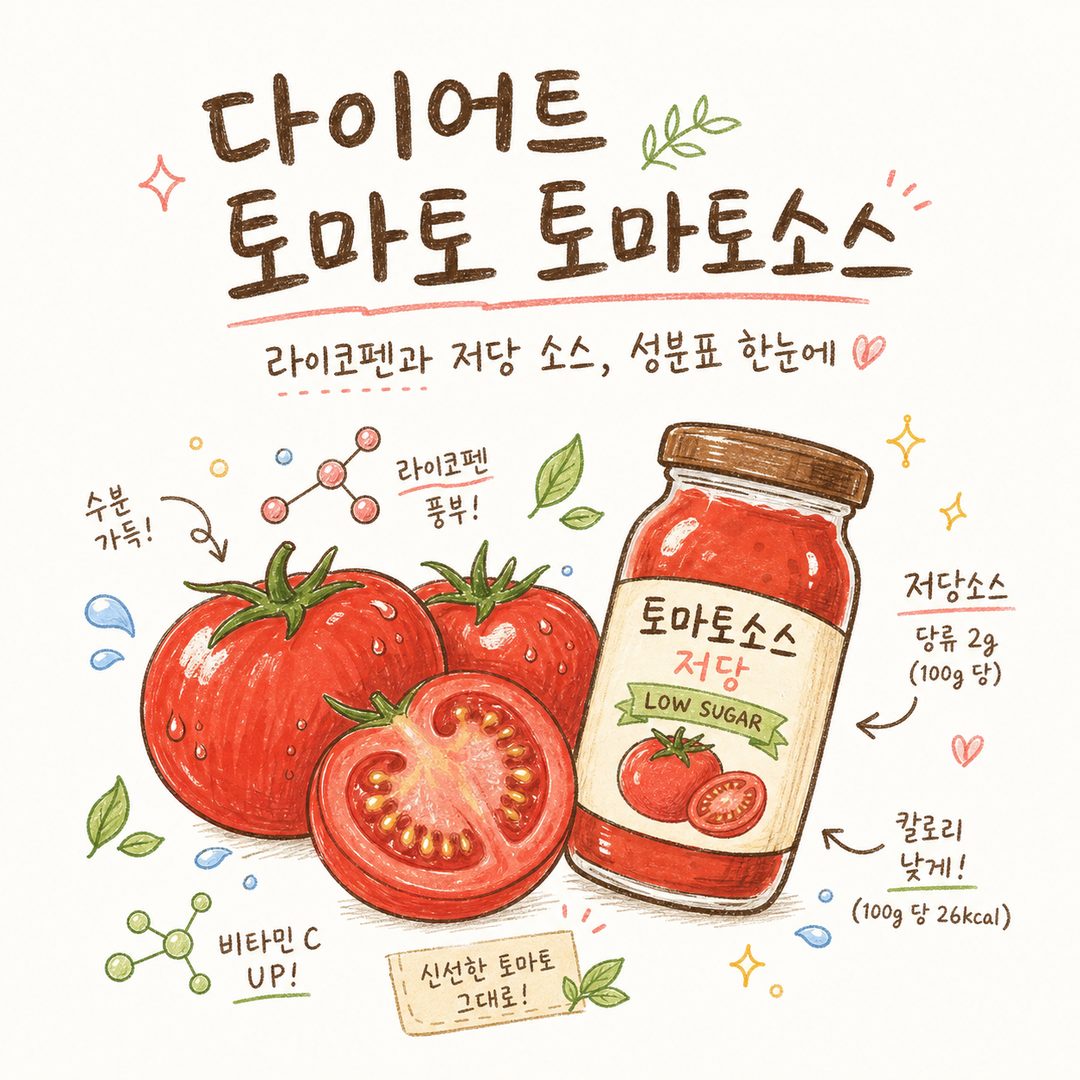
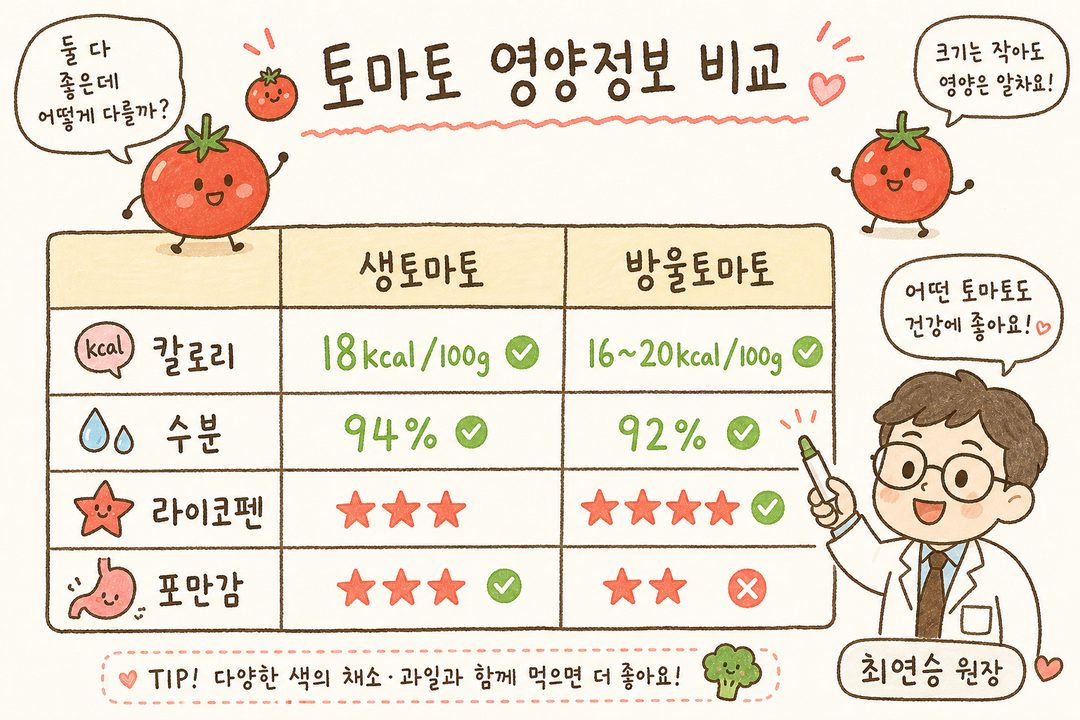
In short, tomatoes are a high-moisture, low-calorie food. Some data indicates that tomatoes contain about 18 kcal per 100g and are 94% water. This aligns with other records stating a standard tomato (195g) is about 35 kcal, or roughly 20 kcal per 100g. Cherry tomatoes are at a similar level, making them a frequent choice for low-calorie snacking.
Because they contain both dietary fiber and water, they provide a quick sense of satiety. According to data from Seoul National University Bundang Hospital, eating one tomato before a meal helps reduce total food intake. They are also rich in lycopene, vitamin C, and potassium, contributing to antioxidant effects, edema reduction, and blood pressure management. Since lycopene absorption improves when cooked with oil, it is often recommended to grill them with a light drizzle of olive oil or serve them in a salad.
Why Tomato Sauce Should Be Viewed Differently
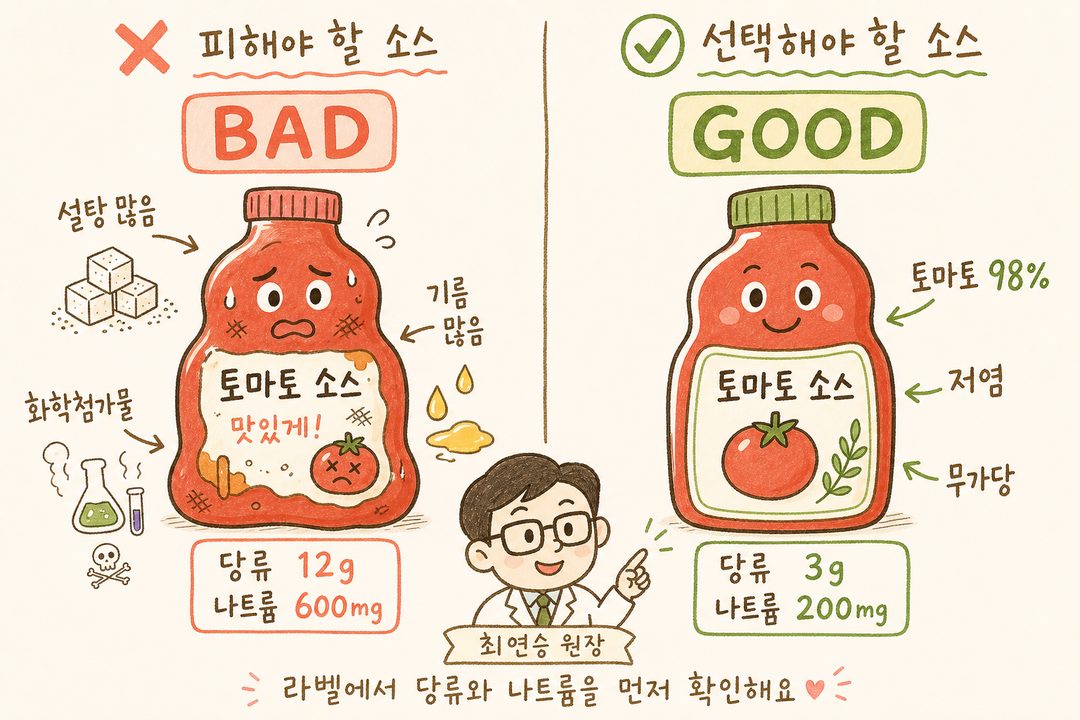
The issue lies with commercial tomato sauces. While tomatoes themselves are low in calories, sugar, corn syrup, oil, cheese, and salt are added when making pasta sauce. Some data suggests that 'diet tomato sauce' contains about 50 kcal and 6g of carbohydrates per 100g, and even standard tomato sauces usually hover around 40–60 kcal per 100g, which seems relatively low.
However, we shouldn't stop at "the calories are low, so it's fine." Even at the same 50 kcal, whether the sugar content is 6g or 12g makes a significant difference in weight management. Products with high sodium can cause edema, leading to a weight increase of nearly 1kg the next day, which can be discouraging. It is essential to develop the habit of checking sugar, sodium, and fat on the nutrition label.
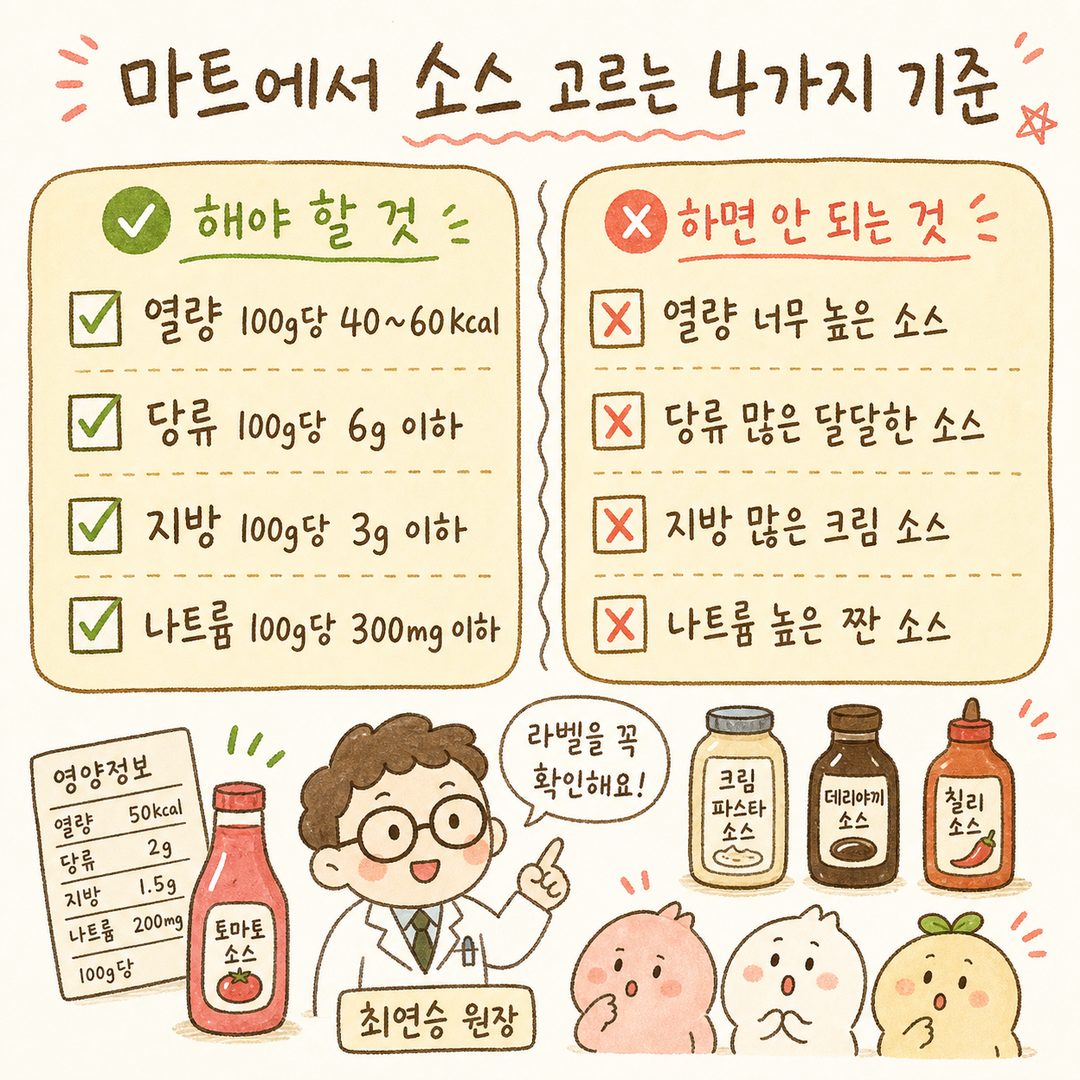
Criteria for Choosing Sauce at the Supermarket
The criteria I share with patients in the clinic are simple. Look at the nutrition facts per 100g and check these four things:
Calories: Around 40–60 kcal per 100g
Sugar: 6g or less per 100g (unsweetened is even better)
Fat: 3g or less per 100g (products using a small amount of olive oil)
Sodium: Low-sodium products with 300mg or less per 100g
Also, look at the ingredient list. A simple composition like 98% tomato and 2% salt is best. If sweetness is needed, products using low-calorie sweeteners like allulose, erythritol, or monk fruit (Lakanto) help reduce calories. It is better for your peace of mind to step away from lines containing cream, cheese, butter, or margarine during a diet/weight management period.
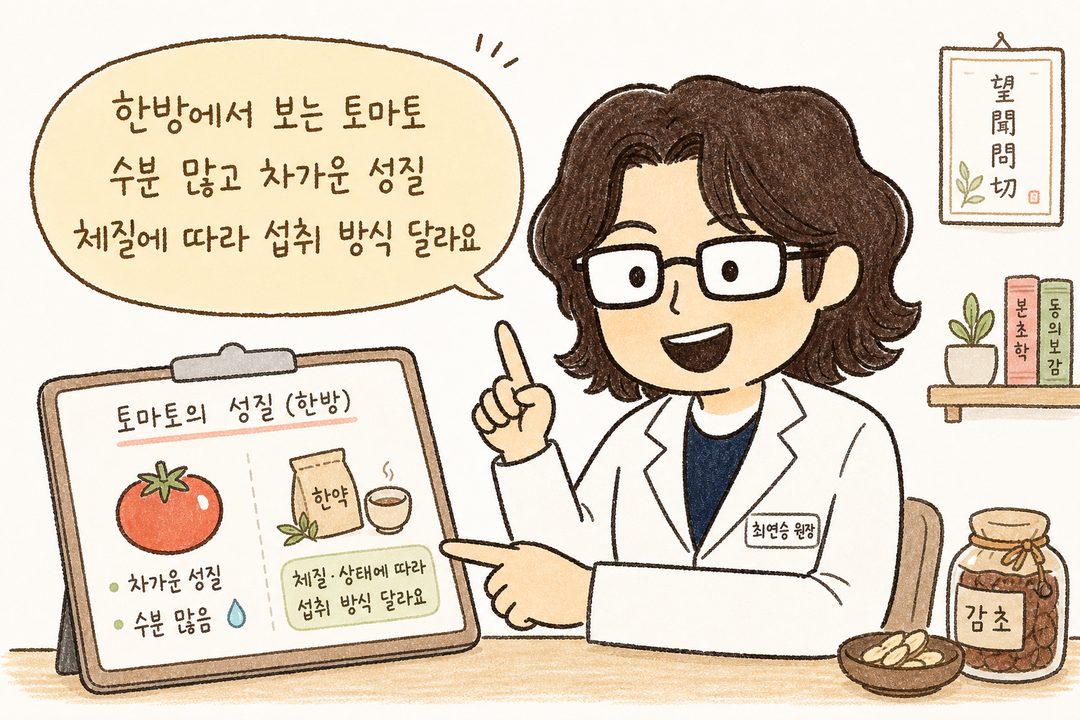
How Korean Medicine Views Tomatoes and Sauces
When reviewing patient diets at Baekrokdam Korean Medicine Clinic, we classify tomatoes as a food with high moisture and a 'cold' nature. They are well-suited for those whose heat rises upward, who flush easily, or who have a constitution prone to dry mouth and frequent thirst. However, if someone with cold hands and feet or weak digestion eats a large amount of raw tomatoes, they may experience bloating or diarrhea. In such cases, I recommend eating them cooked and warm, such as in a tomato egg stir-fry or a lightly simmered tomato soup.
When it comes to tomato sauce, the perspective becomes stricter. In Korean medicine, foods that combine sweet and oily flavors are seen as a 'diet that creates Damyum (痰飮 - metabolic waste)'. For those with a heavy body type that swells easily and loses weight with difficulty, frequent consumption of commercial sauces often causes weight to plateau. Therefore, during constitutional consultations, we don't say "stop eating tomatoes," but rather advise, "try adjusting the form and amount of the sauce."
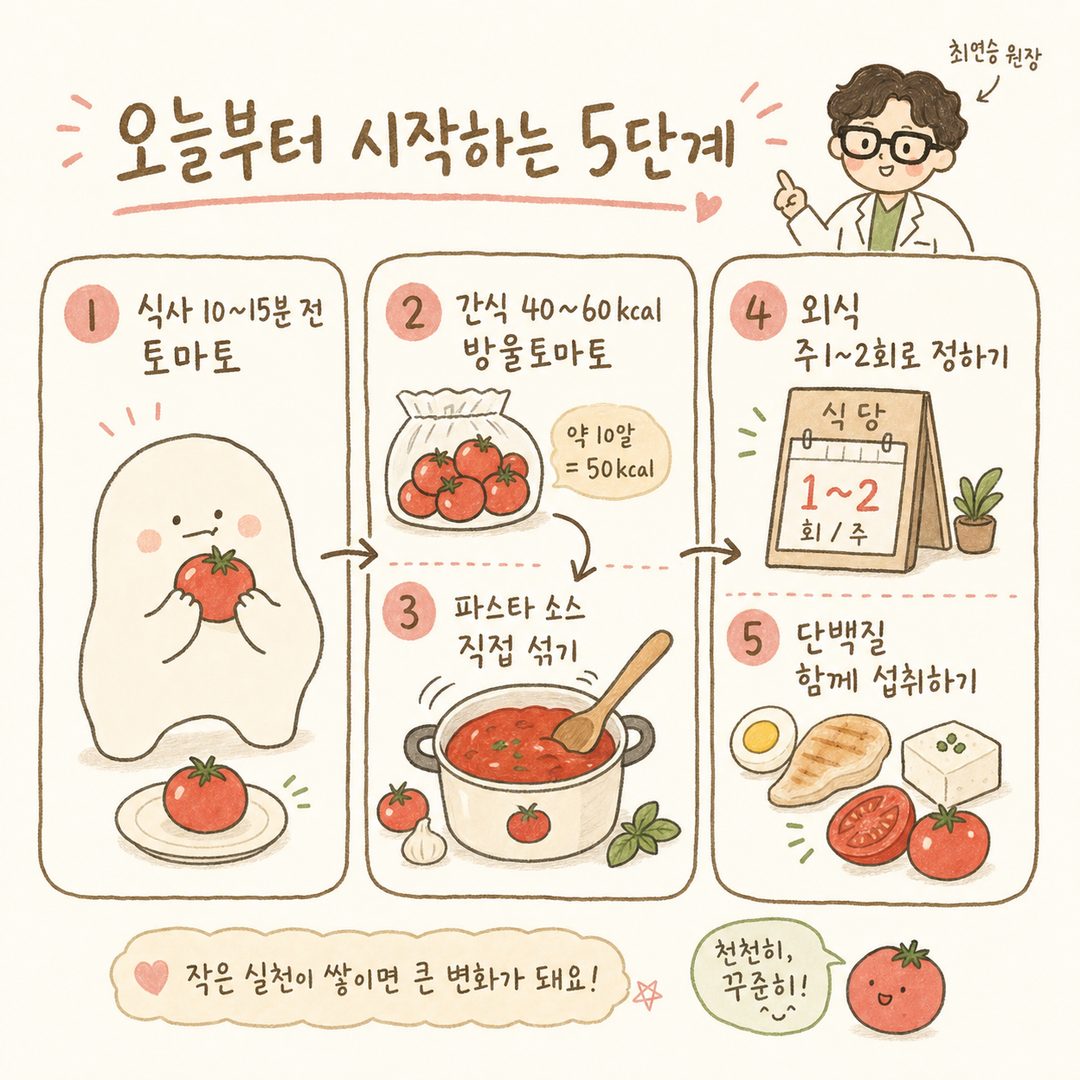
Practical Tips You Can Apply Today
Starting small is more sustainable than a grand plan. Try following these for just 7 to 10 days:
Eat one tomato or 10 cherry tomatoes 10–15 minutes before a meal. This naturally reduces the amount of rice and side dishes you consume.
Keep 10–15 cherry tomatoes (approx. 40–60 kcal) as a snack instead of cookies or bread.
When eating pasta, use only 50–100g of commercial sauce and mix in one or two freshly chopped tomatoes. This increases volume while decreasing sugar.
Set a frequency for eating pasta out, such as 1–2 times a week. 'Setting a frequency' is easier to maintain than 'not eating at all.'
Compose a meal with added protein, like a tomato egg stir-fry. Aim for a range of 60–120 kcal per serving for a low-burden meal.
Many people notice a difference in post-meal satiety and a reduction in snacking after just 10 days of this routine.
Tomatoes are certainly a reliable friend in a diet/weight management journey, but tomato sauce is a processed food that requires a second look at the label. As I always emphasize in the clinic, the results change depending on how the same ingredient is processed. If your weight remains stagnant despite dietary adjustments, or if you are concerned about edema and digestive issues, you may consider a personalized Korean herbal medicine prescription. Baekrokdam Korean Medicine Clinic's Baekrok Gambi-jung is a program that integrates diet, exercise, and medication after first examining your constitution and lifestyle patterns. Feel free to seek a consultation so that the change started by a single tomato can become even more solid.