
Abdominal Obesity: From Waist Circumference Criteria to Visceral Fat Management

Table of Contents
- Criteria for Determining If You Have Abdominal Obesity
- Dietary Habits That Create Belly Fat and Visceral Fat
- The Impact of Sleep Deprivation on Abdominal Obesity
- Abdominal Obesity and Visceral Fat from a Korean Medicine Perspective
- Active Habits You Can Practice Immediately in Daily Life
- The Correlation Between Muscle Mass and Basal Metabolic Rate
- References
When we gain weight, it tends to accumulate first in the belly, and when we try to lose it, the belly fat is often the last to go. Many people struggle with this.

Criteria for Determining If You Have Abdominal Obesity
When I meet patients in the consultation room, many are unsure whether they actually have abdominal obesity. Generally, abdominal obesity refers to the accumulation of adipose tissue that increases waist size.
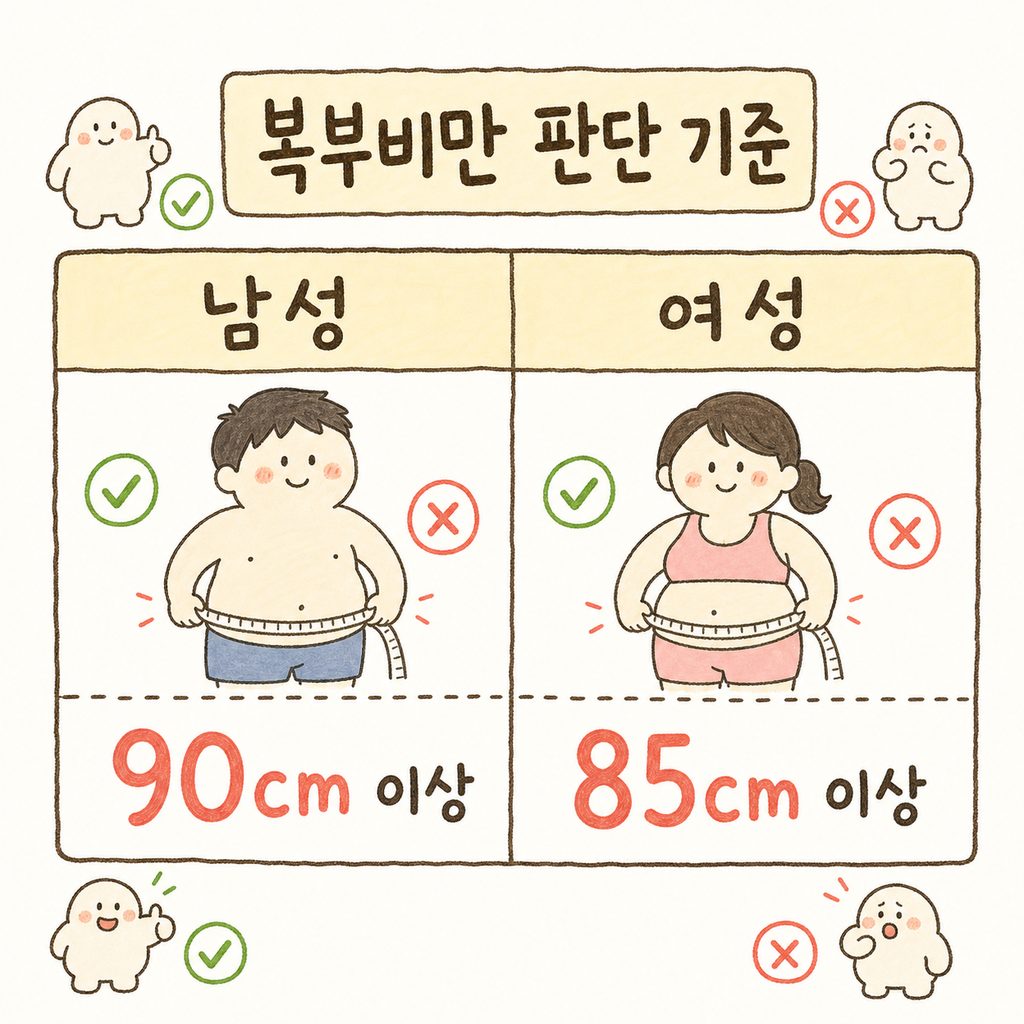
According to standard criteria, abdominal obesity is defined as a waist circumference of 90cm or more for men and 85cm or more for women. Of course, since everyone's body type is different, it's more important to monitor trends in change rather than focusing solely on absolute numbers.
When measuring, stand with your feet about 25-30cm apart, exhale comfortably, and measure with a tape measure. Even without a tape measure, you can get a rough idea by checking your protruding waist fat in a mirror.
Dietary Habits That Create Belly Fat and Visceral Fat
Many people develop belly fat even though they don't eat fatty meat. However, the main culprit behind abdominal obesity is often the carbohydrates we encounter every day.

Excessive consumption of refined carbohydrates like white rice, noodles, and bread makes it easy for them to accumulate as visceral fat. On the other hand, dietary fiber promotes satiety and helps reduce overall food intake.
Therefore, try creating a routine that reduces carbohydrate intake while increasing dietary fiber and protein consumption. Even just slightly adjusting your meal composition can lead to noticeable changes in waist circumference.
The Impact of Sleep Deprivation on Abdominal Obesity
Surprisingly, many people overlook the importance of sleep duration. When we don't get enough sleep, our body's metabolism becomes imbalanced, creating an environment where weight gain occurs more easily.
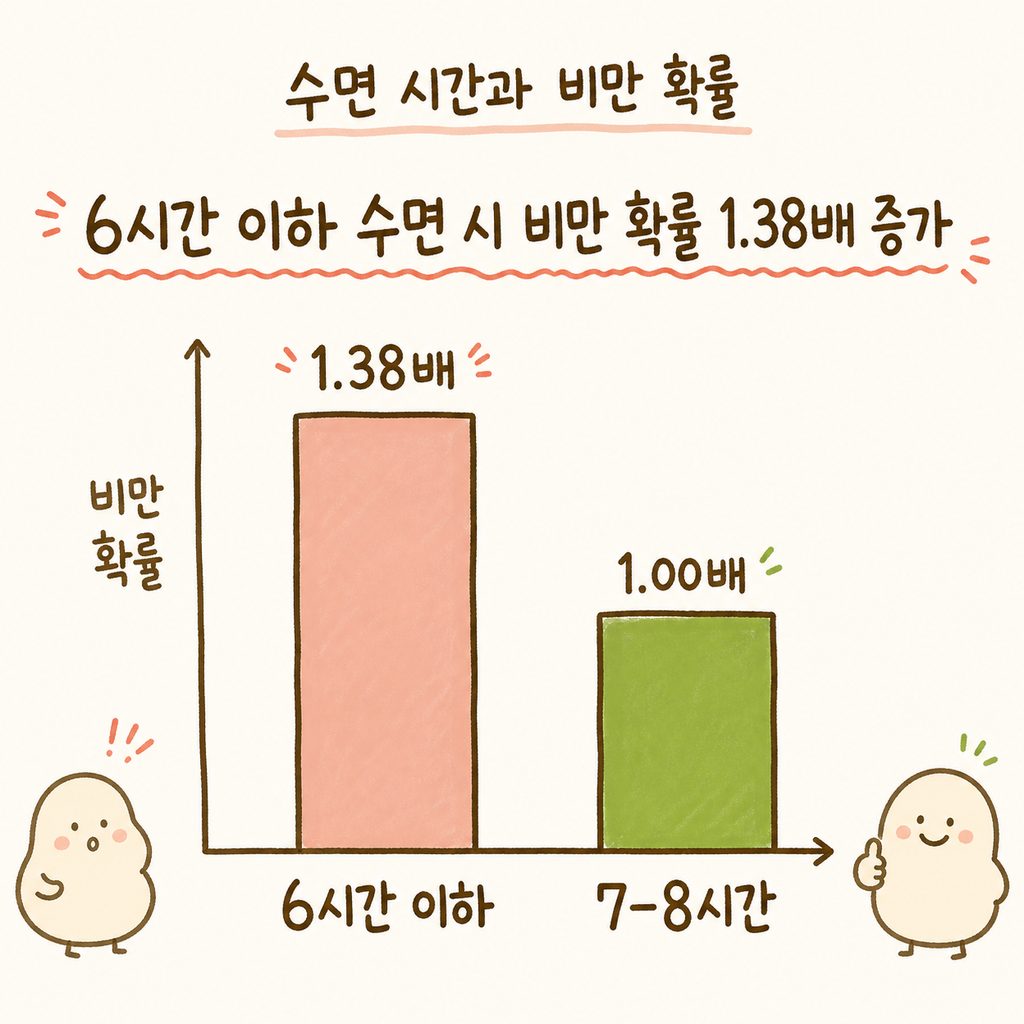
According to one study, sleep duration showed a negative correlation with body mass index (BMI), waist circumference, and body fat percentage. In particular, meta-analysis results showed that people sleeping 6 hours or less had a 1.38 times higher risk of obesity compared to those sleeping 7-8 hours[1].
While aggressive exercise for weight management is beneficial, remember that getting adequate rest is fundamental to overcoming abdominal obesity.
Abdominal Obesity and Visceral Fat from a Korean Medicine Perspective
In Korean medicine, abdominal obesity, especially visceral obesity, is viewed as a condition where fat accumulates in the mesentery (omental membrane) that connects the organs within the abdominal cavity.
This is more dangerous because fat is not just visible on the surface but also deposits between organs. When visceral fat increases, there's a high likelihood of developing adult diseases such as insulin resistance and metabolic syndrome.
Therefore, rather than simply focusing on reducing weight, we concentrate on eliminating waste products from the body and restoring metabolic function to create a body state where visceral fat burns efficiently.
Active Habits You Can Practice Immediately in Daily Life
Starting high-intensity exercise suddenly can strain your body and lead to quick abandonment. At first, start with small movements in your daily routine.
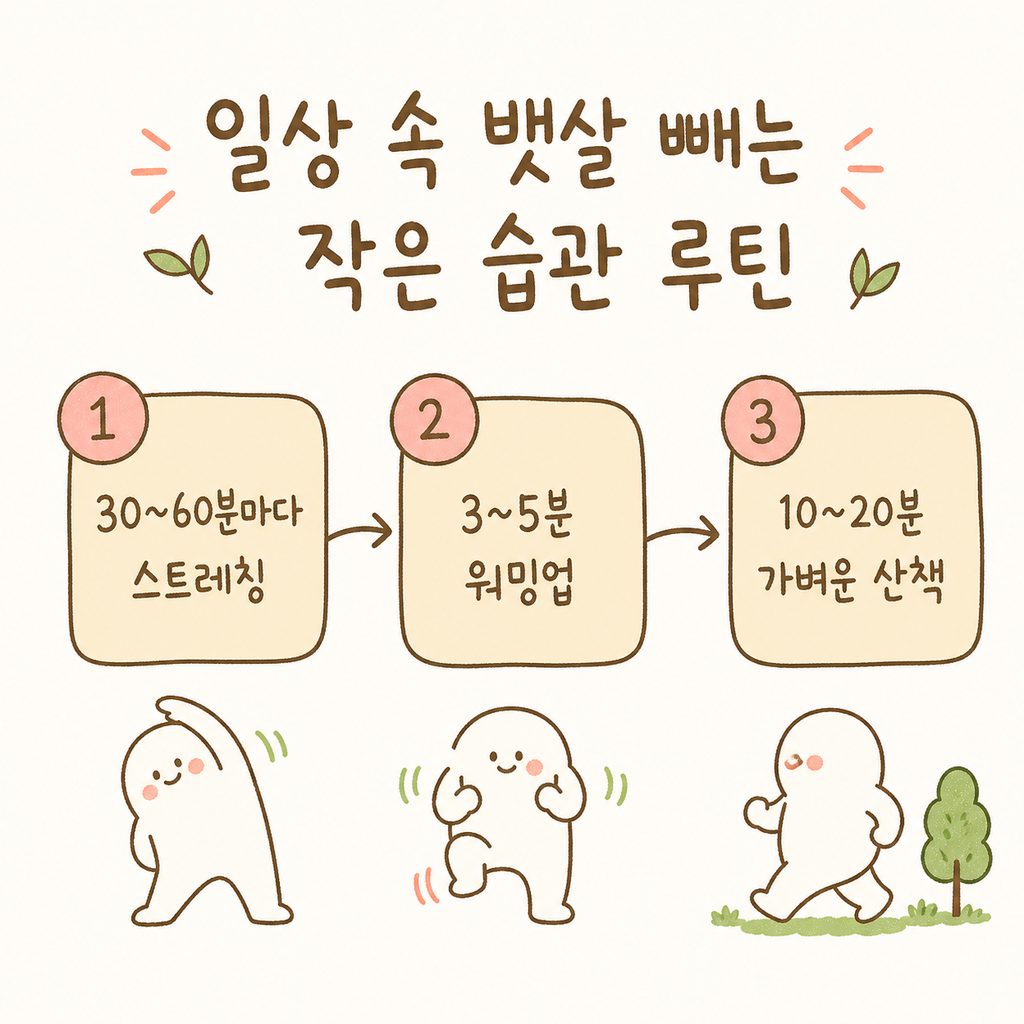
Even during work, I recommend standing up every 30-60 minutes to stretch or take a short walk. Before starting formal exercise, it's important to spend 3-5 minutes on a proper warm-up to prevent injuries.
Instead of running intensely, simply walking slowly or taking a light walk for 10-20 minutes consistently is enough. Small habits accumulate to create significant changes in reducing belly fat.
The Correlation Between Muscle Mass and Basal Metabolic Rate
To effectively lose belly fat, you ultimately need to create a body that "burns well." The key to this is muscle mass.

According to research, it's known that building approximately 907g of muscle can increase daily resting metabolism by about 20 calories. Although this seems like a small number, when this accumulates daily, your basal metabolic rate increases, resulting in a body type that gains less weight even when eating the same amount.
Try combining adequate protein intake with light strength training. As your muscles grow, you'll be much better positioned to manage abdominal obesity without hitting plateaus.
Managing belly fat isn't a short-term victory but a process of changing your 24-hour daily routine. The three gears of diet, sleep, and activity levels need to mesh well and turn together.
If managing diet and exercise on your own feels overwhelming, or if you're particularly struggling with stubborn belly fat that won't go away, consider trying the Baekrokdam Gambi-jung program. With an approach tailored to your individual constitution, you can expect more effective results. Give it a try and let us know how it went during your next consultation.
References
[1] The association between sleep duration and general and abdominal obesity in Koreans: data from the Korean National Health and Nutrition Examination Survey, 2001 and 2005. (Obesity (Silver Spring, Md.), 2009) — https://pubmed.ncbi.nlm.nih.gov/19180067/
References