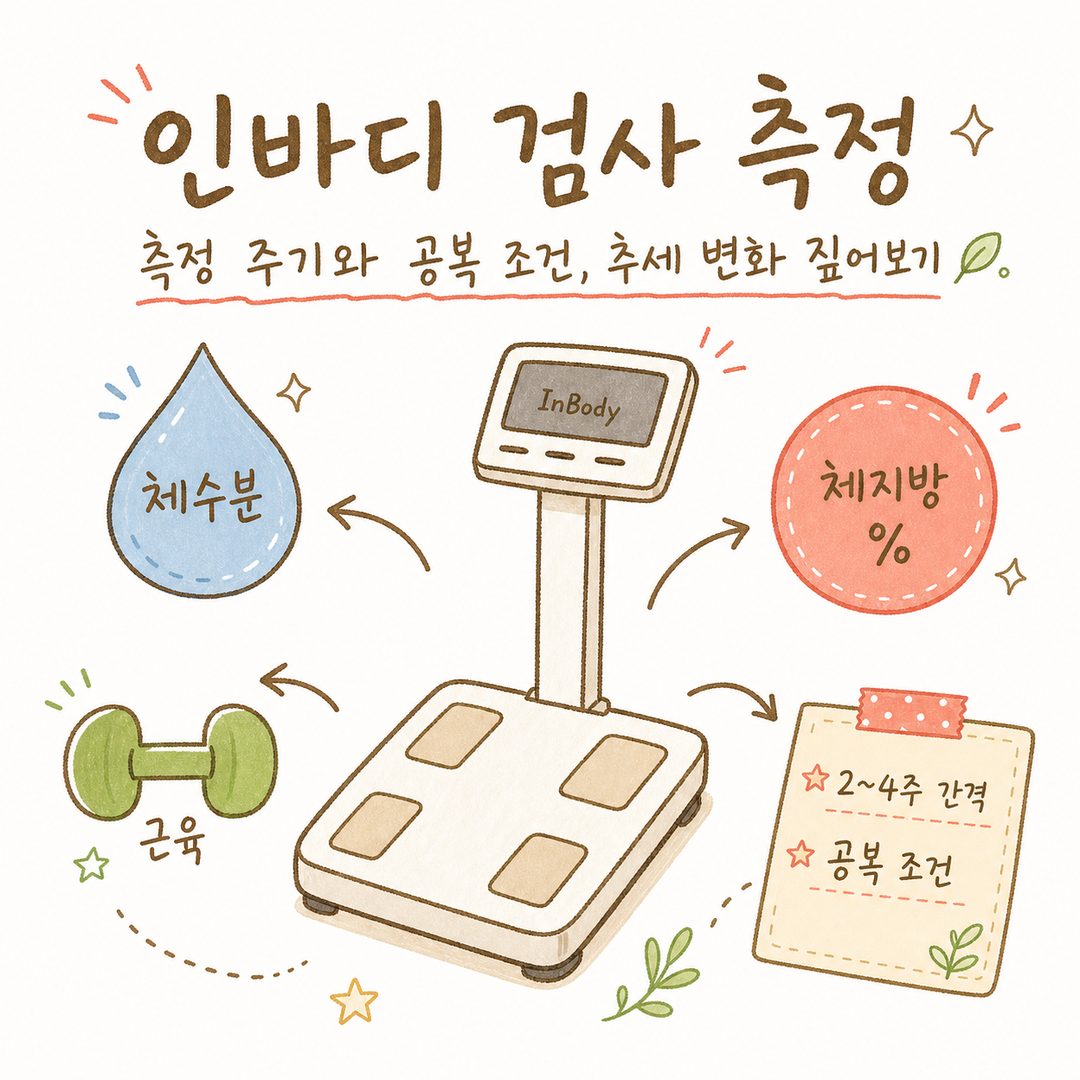
InBody Testing: Measurement Frequency, Fasting, and Trends

Table of Contents
In the clinic, patients often say, 'Doctor, I did an InBody test yesterday and my body fat percentage increased significantly compared to a few days ago. Am I failing?' Every time I hear this, it breaks my heart.

Why InBody Results Vary Each Time
InBody's official name is Bioelectrical Impedance Analysis (BIA). It sends a very weak electrical current through the body and measures the resulting electrical resistance to indirectly estimate body water, muscle mass, and body fat mass.
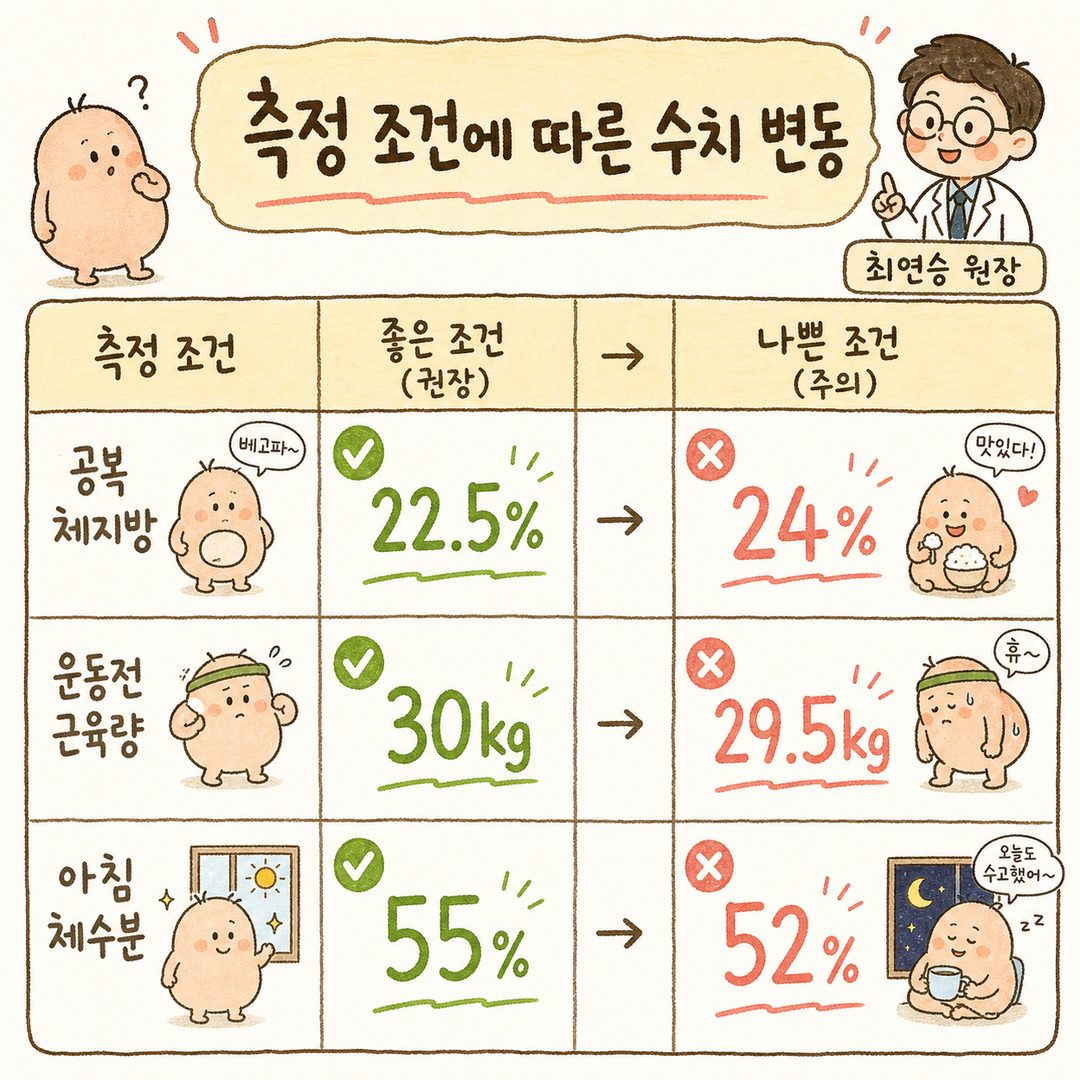
Just from understanding the principle, you can guess that measurements can vary significantly based on hydration status. Even for the same person using the same device, results can differ depending on the time of measurement, whether they've eaten, exercised, consumed water, or used the restroom. Body fat percentage tends to be overestimated when dehydrated and underestimated when well-hydrated.
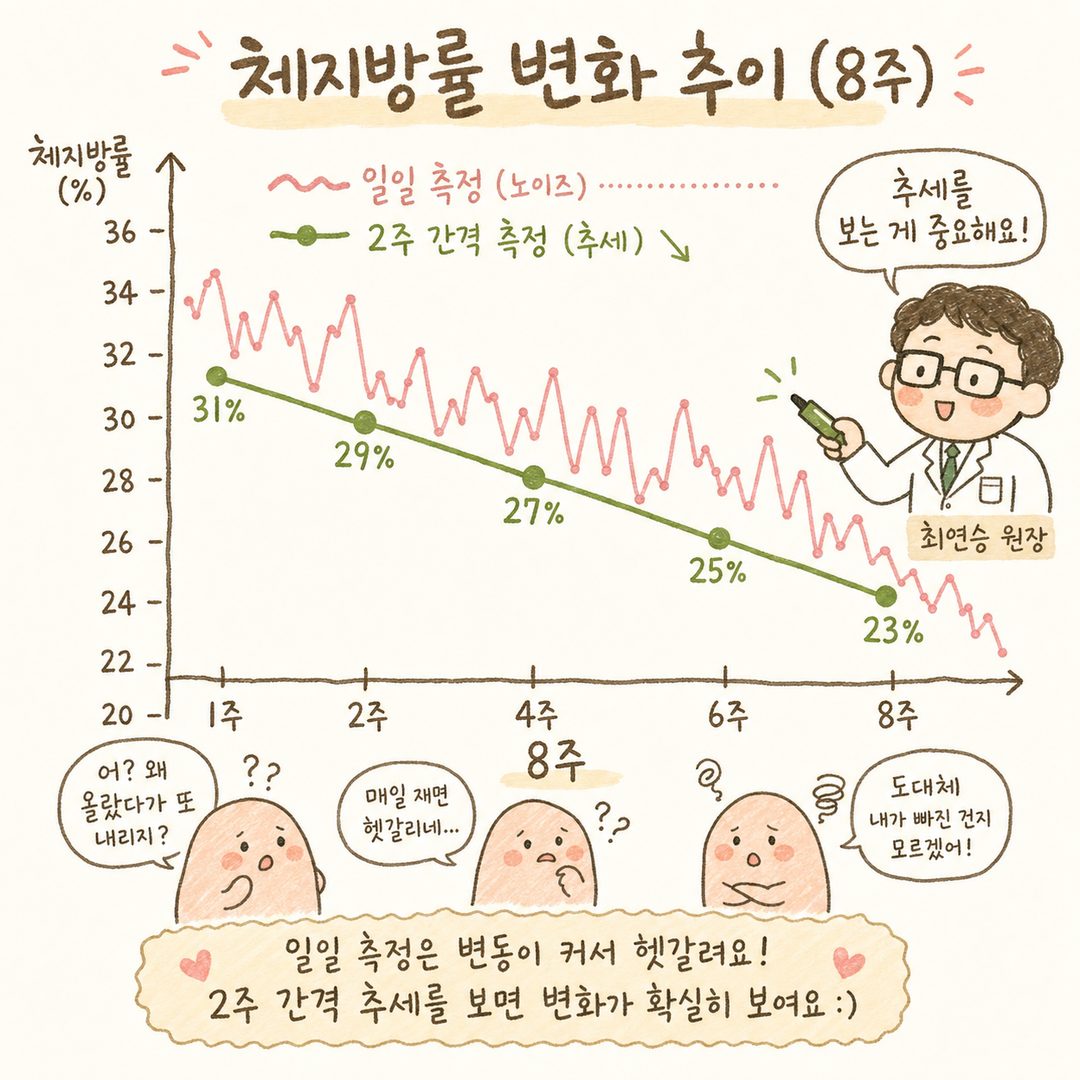
So don't get too discouraged by different readings from day to day. Looking at trend changes is much more meaningful than focusing on a single absolute value. Even the manufacturer officially states, 'There's no set interval, but it's better to observe trends over time rather than measuring daily.'

Measurement Frequency: Too Often Can Be Confusing
Many people want to measure their InBody daily because they're eager to see changes. However, the general recommendation is every 2-4 weeks for body composition measurements, with once a week being the absolute maximum.
Here's a breakdown by situation:
When starting exercise/weight management: Every 2-4 weeks is appropriate
Once your routine is established: Once a month is sufficient
During intensive weight loss: Every 1-2 weeks is okay for motivation
During maintenance without specific goals: Every 1-2 months or even quarterly is fine
Daily measurements are easily influenced by variables like hydration levels, meals, exercise, sleep, menstrual cycle, body temperature, and posture. It's easy to get discouraged when you think you've lost weight one day only to see it return the next.
Real InBody Changes Seen in the Clinic
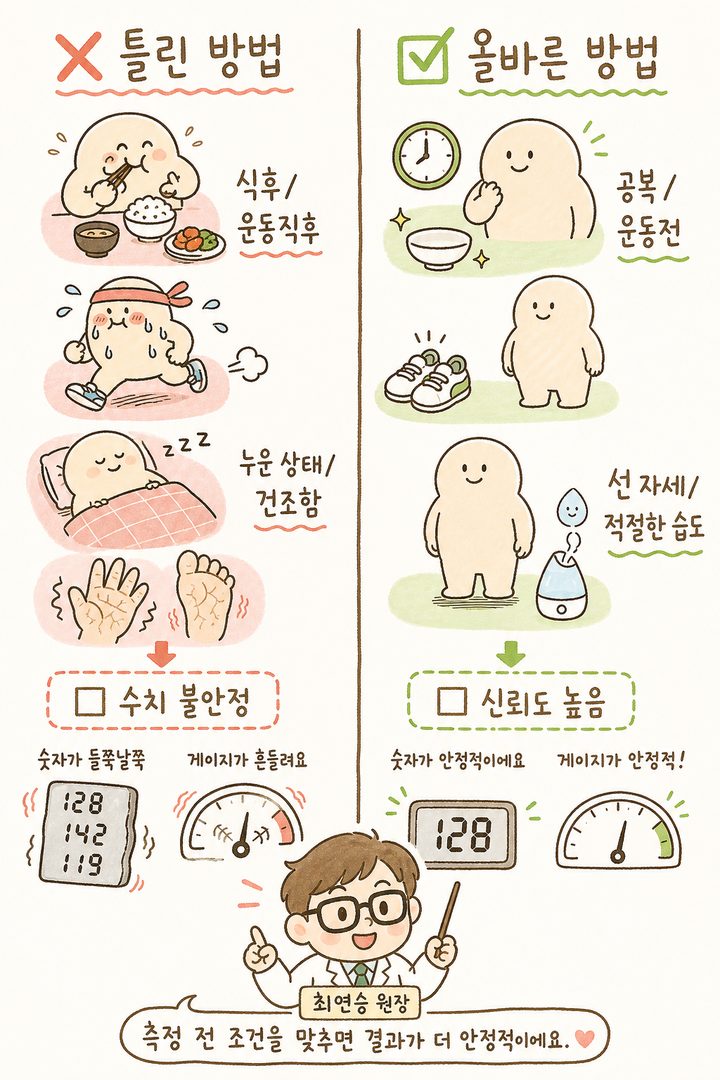
Body composition doesn't change dramatically in a short time. That's why I advise patients to measure under the same conditions each time: on an empty stomach, after using the restroom, before exercise, preferably in the morning, and ideally with the same device.
In the first month, weight often fluctuates due to varying water retention. Only after two or three measurements do patterns start to emerge. Some patients maintain the same weight but gain muscle and lose fat. Others lose a little weight but with a higher proportion of muscle loss, requiring dietary adjustments. You can't see these patterns from just one measurement.
Body Composition and Constitution in Korean Medicine
In Korean medicine, obesity can have different causes for different people. Some have dampness-phlegm pattern with fluid retention, showing fluctuating body water levels along with edema. Others have yang deficiency leading to slow metabolism, making weight loss difficult and causing muscle loss first.
You can't determine constitution from InBody alone. However, tracking the same person's measurements every 2-4 weeks can provide a more complete picture when combined with pulse diagnosis, abdominal diagnosis, and tongue diagnosis from Korean medicine. Whether edema improves and body water stabilizes, or whether fat decreases while preserving muscle mass, these changes help refine treatment approaches.
For patients losing muscle along with fat, examining digestive function might be more helpful than simple calorie restriction. We don't base prescriptions solely on InBody numbers, but they're very useful as supplementary data for reading trends.

Practical Measurement Tips You Can Apply Today
Don't overcomplicate it. Here are the basic principles I share with patients in the clinic:
Measure on an empty stomach. Avoid measuring right after meals
Measure after using the restroom
Measure before exercise. Post-exercise, hydration and body temperature fluctuate
Try to measure at the same time in the morning
Stand for a while before measuring. If you get up from lying down, body fluids may be unevenly distributed
Keep hands and feet clean but not too dry
Use the same device whenever possible
One more thing to remember: People with implanted medical devices like pacemakers may have restrictions. Consult your healthcare provider first for safety.
Don't step on the scale daily. Check your InBody every 2 weeks with peace of mind. Even the manufacturer recommends 'observing trends over time rather than measuring daily.' Developing an eye for reading trends is much more reliable than getting excited or disappointed by daily fluctuations.
At Baekrokdam Korean Medicine Clinic, we help interpret InBody results according to your constitution and lifestyle rhythm. Instead of being swayed by single measurements, we adjust Baekrok Gambi-jung prescriptions and dietary coaching while observing trends over two to three months. If you're having trouble interpreting your graphs, let's look at them together during your visit. We'll help you make gradual but definite progress together.