Still Hungry Eating Only Vegetables? Low-Sugar High-Fiber Diet Guide

Table of Contents
- Why Salad Alone Falls Short and Nutritional Gaps
- Specific Meal Sequencing and Quality Choices to Prevent Blood Sugar Spikes
- Perspectives on Diet and Metabolism Flow in Traditional Korean Medicine
- Low-Sugar, High-Fiber Practice Points You Can Apply Starting Today
- A Healthy Diet is Completed Through Recording and Observation
- References
Looking at a salad bowl full of vegetables yet feeling strangely unsatisfied, you end up tearing open a bag of chips. You may wonder why you feel hungry so quickly despite building your diet around supposedly healthy vegetables, or why products you believed were low-sugar didn't help with weight changes as much as expected.
If simply reducing sugar and increasing fiber were the answer, many would have already succeeded. But the key lies not in 'what to remove' but in 'what combination to fill with.' Today, I'll share the practical guidelines for a low-sugar, high-fiber diet that I emphasize to patients discussing dietary concerns in the clinic, along with insights into nutritional balance that are commonly overlooked.
Why Salad Alone Falls Short and Nutritional Gaps
When starting a weight management program, the first choice many make is to reduce meat and increase vegetable proportion. Vegetables are low in calories and rich in antioxidant nutrients, which certainly help with weight loss and chronic disease prevention. However, the common mistake many make is following a pattern of eating 'vegetables only.'
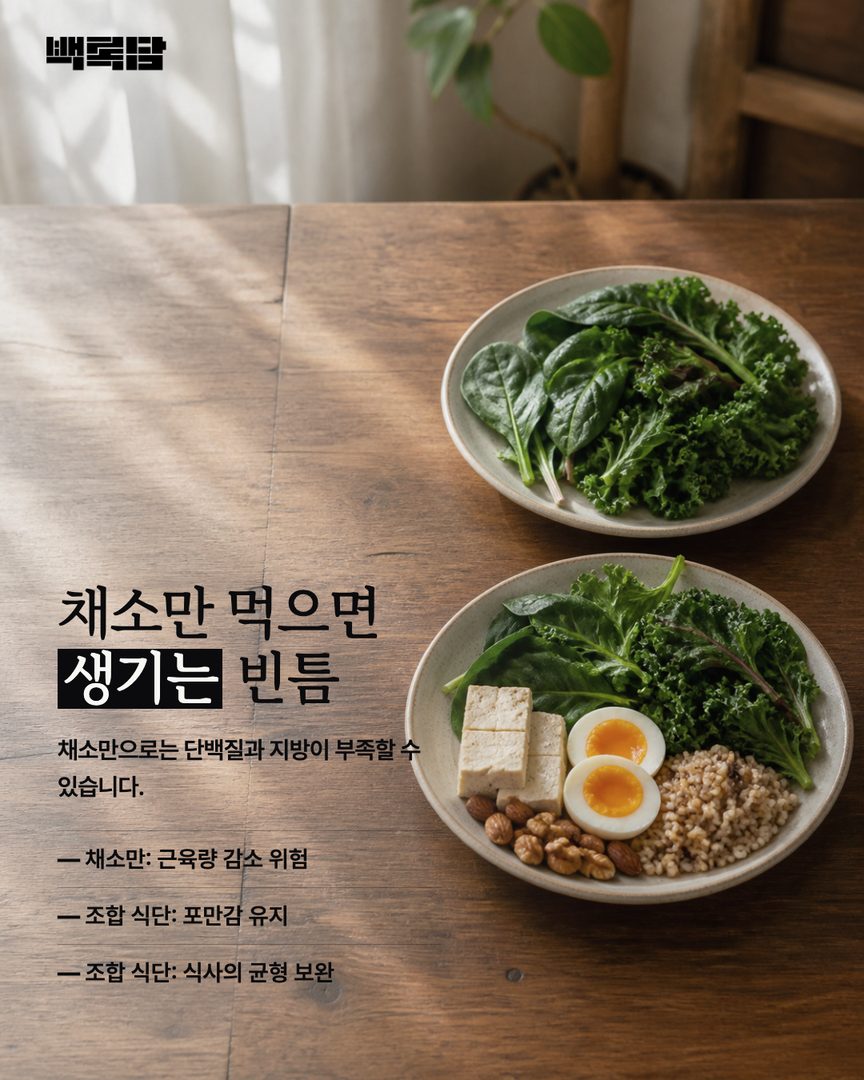
Our bodies require a harmonious combination of carbohydrates, proteins, and fats to generate energy. Filling all three daily meals with vegetables only can lead to deficiencies in essential nutrients and subsequent health issues. In particular, inadequate protein intake reduces muscle mass, which leads to decreased basal metabolism, ultimately causing weight regain despite previous efforts to lose weight.
In reality, protein intake is essential during weight management. Appropriately combining protein sources such as eggs, fish, and meat helps maintain satiety longer and prevents falling for false hunger. While fiber-rich vegetables slow digestion, it is actually protein and appropriate fats that maintain body tissues and produce energy.
Specific Meal Sequencing and Quality Choices to Prevent Blood Sugar Spikes
The core of a low-sugar diet is not making sugar zero, but preventing 'blood sugar spikes' where blood sugar rises sharply. The easiest way to apply this is to change your meal sequencing.
During meals, eat vegetables and protein first, then finish with rice (carbohydrates). When dietary fiber and protein enter the stomach first, they slow the absorption rate of carbohydrates that come later, helping to suppress rapid blood sugar rises.
Additionally, when choosing carbohydrates, focus more on 'quality' than 'quantity'. According to the World Health Organization's (WHO) new dietary guidelines, after eating bread or rice from whole grains, they recommend consuming fruits. Choosing complex carbohydrates rich in dietary fiber, not just carbohydrates that simply fill the stomach, is the essence of a low-sugar diet.
One important caution here is blind faith in 'gluten-free' products. According to some research, certain gluten-free products can actually have higher glycemic indexes (GI) or inferior nutritional and sensory quality compared to regular products. Rather than selecting foods just because they bear 'low-sugar' or 'gluten-free' labels, it is necessary to develop the habit of carefully checking dietary fiber content and sugar proportion in actual ingredient labels.
Perspectives on Diet and Metabolism Flow in Traditional Korean Medicine
In Traditional Korean Medicine, rather than simply counting calories, emphasis is placed on how food is digested and transported within the body—that is, the 'flow of qi and blood' and 'metabolism efficiency.' While a low-sugar, high-fiber diet is excellent from a modern perspective, it also aligns with the Traditional Korean Medicine approach of removing turbid energy from the body and creating clear flow.

Dietary fiber, in particular, plays a significant role in improving the gut environment. Recent studies suggest that complex dietary fibers can alter the composition of gut microbial communities (microbiome) in a direction that reduces inflammation potential. This is also a notable point showing how the 'spleen-stomach (digestive organs)' health emphasized in Traditional Korean Medicine greatly affects systemic metabolism and immunity.
However, since each person's constitution differs, responses to the same high-fiber diet can vary. Some people feel comfortable and light-bodied when increasing fiber, but those with extremely weak digestion may experience abdominal bloating or indigestion from sudden raw vegetable intake. Therefore, in the clinic, I first examine the patient's digestive condition and then finely adjust whether to start with cooked vegetables or accompany them with fermented foods.
Low-Sugar, High-Fiber Practice Points You Can Apply Starting Today
Theory may be complex, but practice must be simple to sustain. Try using these three key guidelines I propose during grocery shopping and meal times.
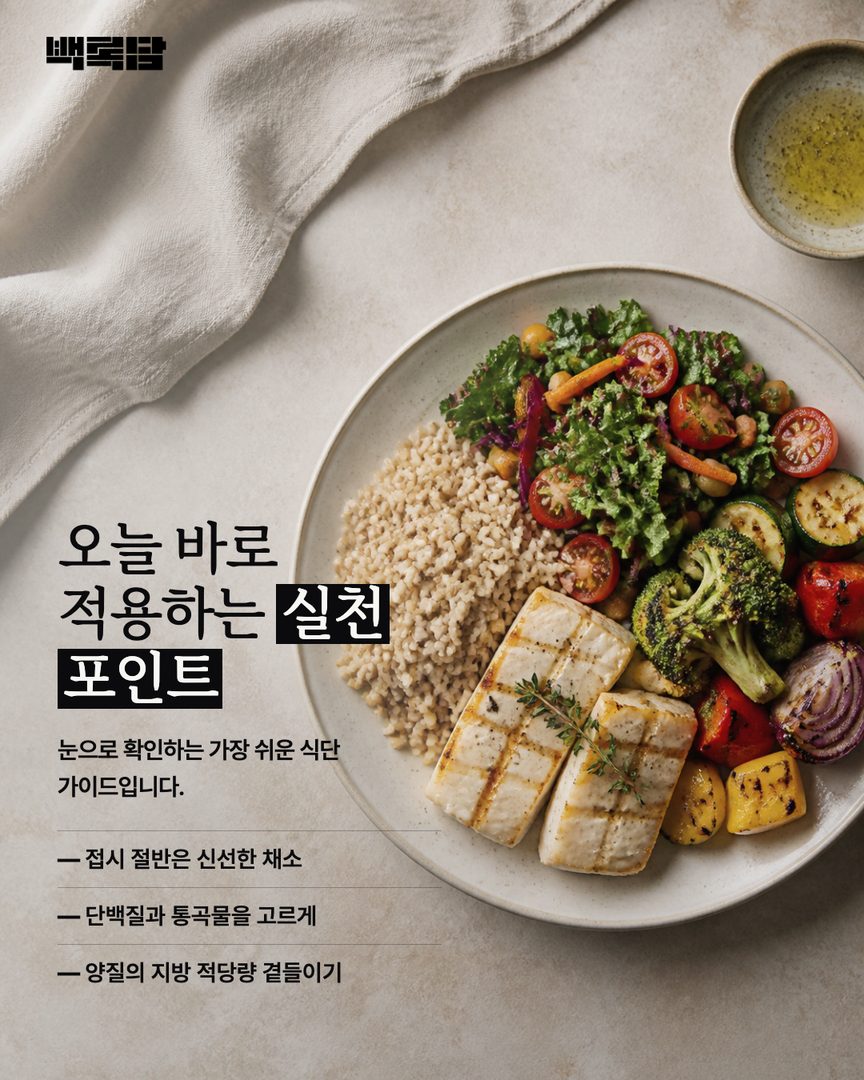
First, visually confirm your plate composition. An easy way to implement this is filling half your plate with vegetables, then evenly dividing the remaining space between protein (fish, tofu, lean meat) and whole grain carbohydrates. If meal composition seems difficult, refer to the personalized diet examples from the Nongshim Ministry of Agriculture and Food 'Balwo' healthy diet management. For example, starting with a basic composition of abalone porridge, braised eggplant, and baekkimchi, you can add low-fat milk or yogurt, or a piece of fruit as needed, adjusting with about 50-100kcal of flexibility.
Second, maintain an appropriate level of fat intake. Following a low-sugar diet doesn't mean completely eliminating fats, which can lead to hormone imbalance, but consuming too much can result in excess calorie intake. WHO guidelines recommend keeping fat intake below 30% of total daily calories. The key is to appropriately accompany quality fats like olive oil or nuts.
Third, vary your cooking methods. If eating only raw vegetables is difficult, I recommend lightly blanching or steaming. Additionally, research findings suggest that utilizing 'sprouting' foods where beans or grains are germinated can positively impact improving blood sugar response and increasing antioxidant activity, so actively incorporate sprouted vegetables like bean sprouts or mung bean sprouts.
A Healthy Diet is Completed Through Recording and Observation
Many people think of diets as 'rules to follow,' but in reality, a diet is closer to 'an experiment of observing your body's responses.' It is important to observe whether you feel unusually drowsy after eating certain foods, or which combinations keep hunger at bay until the next meal.
If you become so absorbed in simply reducing sugar that you cause nutritional imbalance, that cannot be considered sustainable health. Only when the abundance of vegetables, the strength of protein, and the stable energy of whole grains achieve harmony does our body's metabolism begin to find its own rhythm.
If designing your own diet feels overwhelming or you feel you need accurate nutritional planning suited to your constitution, seeking expert help is also a good approach. If you parallel diet management tailored to individual constitution and metabolism status along with the Baekrokdam program, you can expect much more comfortable and efficient results. Try implementing the meal sequencing I've shared today one step at a time, and be sure to share how your body responds at your next consultation.