Mediterranean Diet Explained: Components, Health Benefits, and How to Start

Table of Contents
When I see patients in the clinic, one of the most frequent questions is about eating methods. "Doctor, everyone says the Mediterranean diet is healthy—how exactly should I eat it?" they ask. While many trendy diets claim to be healthy, actually applying them to your daily life can leave you feeling lost. I've experienced the same struggle myself. Today, let me explain the true nature of the Mediterranean diet and how to practice it, just as I would calmly explain in the clinic.
What Is the Mediterranean Diet?
The Mediterranean diet isn't about literally eating the cuisines of a specific region. It's a nutritional approach centered on plant-based foods and healthy fats. The core focus is on unprocessed whole grains, legumes and vegetables, vegetables, and fruits as a plant-based diet.
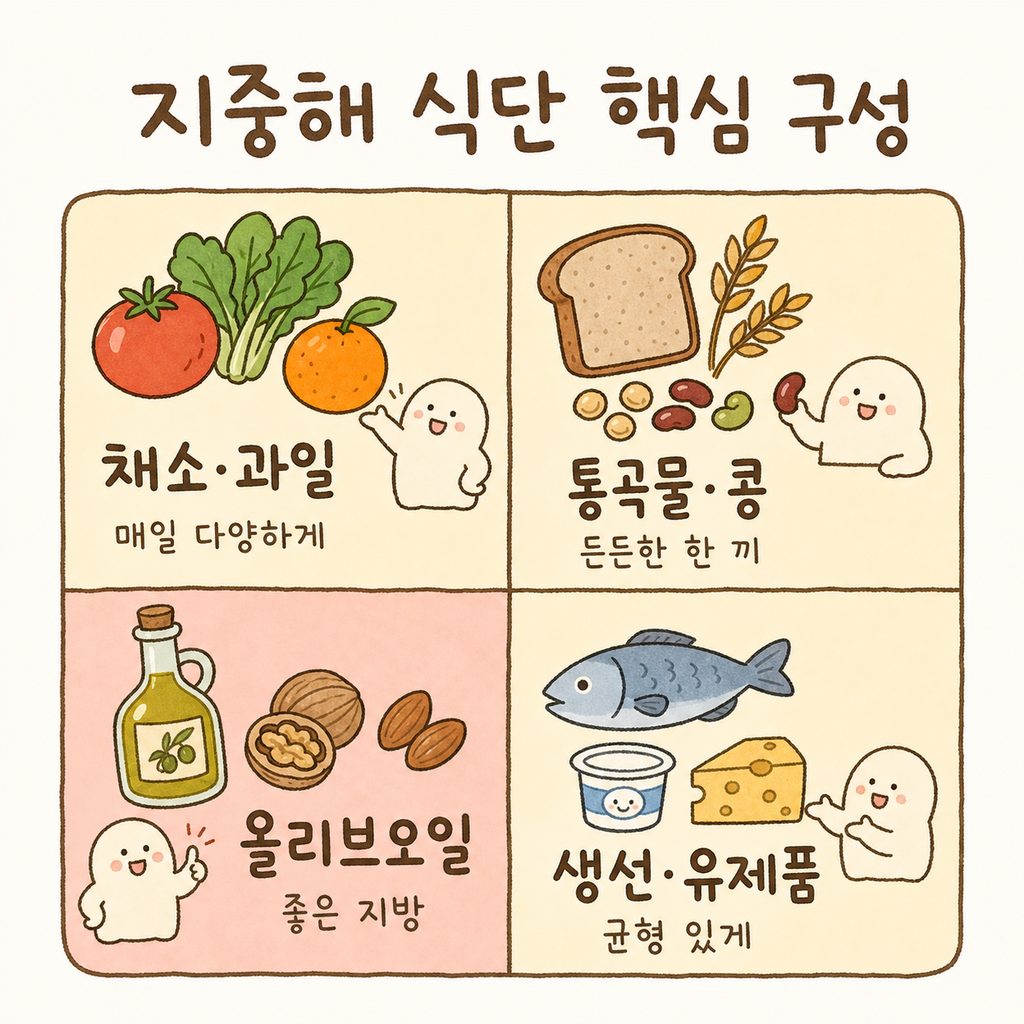
Additionally, fish and dairy products (mainly cheese and yogurt) are added in moderate amounts, while red meat is limited to small quantities. Olive oil, in particular, has been extensively studied as a potential key factor in reducing chronic disease risk and mortality, earning it a symbolic place in this dietary pattern. Think of it as an eating method that uses unprocessed, natural ingredients to reduce inflammation in the body and promote smooth metabolism.
How Did This Diet Begin?
The concept was first developed in 1975 by American biologist Ancel Keys and chemist Margaret Keys. It was formalized based on the typical eating habits and traditional foods of people in southern Spain, southern Italy, and the island of Crete in the early 1960s.
One important point to note: this differs somewhat from the "Mediterranean cuisine" we encounter at restaurants or the Atlantic diet in Portugal. Rather than following recipes from a specific region, it's closer to a nutritional guideline that has been refined based on numerous scientific research findings. In fact, with over 3,000 related papers published, it's a healthy eating approach that researchers worldwide continue to study.
Key Mediterranean Diet Rules for Daily Life
Saying "eat healthy" without specifics makes it hard to put into practice. So let me outline the key rules in a checklist format, just as I guide patients in the clinic.

Increase plant-based foods: Make vegetables, fruits, and legumes the stars of your dining table.
Choose complex carbohydrates: Instead of refined white rice or wheat flour, primarily eat whole grains.
Use healthy fats: Replace butter or margarine with olive oil as your main fat source.
Increase seafood consumption frequency: Mediterranean people eat seafood more than 3 times per week. We can use this as a reference.
Moderate meat intake: You don't need to completely eliminate meat. However, I recommend changing your habit to include fish instead of red meat at least twice a week.
Common Misconceptions We Often Hear
The most frequent misconception among those new to the Mediterranean diet is, "Do I need to eat Italian pasta or Spanish paella every day?" The essence of this diet isn't about the "menu" but about the "composition of nutrients."

Some people mistakenly think it's a vegetarian diet that excludes all meat. As I mentioned earlier, the goal is to reduce red meat, not eliminate it entirely. Fish, chicken, and moderate amounts of cheese and yogurt are very much part of this diet. The key is finding the right balance—what to eat "more" of and what to "reduce."
Practical Effects from a Weight Management and Health Perspective
Many of you are curious: "So does this really help with weight loss?" Let me give you the conclusion first: it can be positively helpful for weight reduction in obese individuals.

The numbers become even clearer when looking at a joint research team from Harvard T.H. Chan School of Public Health and the University of Navarra in Spain. People who followed the Mediterranean diet while reducing calorie intake and exercising showed a 31% lower risk of type 2 diabetes compared to those who didn't.
Those who practiced all three (diet adherence, calorie reduction, exercise) reduced their body weight by an average of 3.3kg and their waist circumference by an average of 3.6cm. What's impressive is that it's not just about losing weight—various health benefits follow, including improved blood cholesterol levels, prevention of cardiovascular diseases and stroke, and even alleviation of depression.
How to Apply the Mediterranean Diet to Korean Tables
It's not practical to import European ingredients as they are. So I recommend a "Korean-style Mediterranean diet" to my patients.
Start by switching white rice to mixed grain rice or barley rice. This is precisely the "unprocessed grain" consumption emphasized in the Mediterranean diet. Another good method is mixing sesame oil with olive oil when dressing vegetables, or using olive oil as a salad dressing.
Try to include blue-backed fish like mackerel or Spanish mackerel at least 3 times per week. If you've had meat-heavy office dinners, try to adjust the next day with lighter meals focused on vegetables and fish. You don't need elaborate cooking—just changing the proportion of ingredients can fully implement this on your Korean table.
If you've been exhausted both physically and mentally from extreme fasting or single-food diets, why not take this opportunity to shift direction toward a sustainable Mediterranean diet? Diet changes take time, and that time is also needed for your body to healthily adapt.
If you find it difficult to continue managing your diet alone, or if you feel weight loss is slow due to declining metabolism function, try the Baekrokdam Gambi-jung program. By receiving constitutional-based supportive care while following the Mediterranean diet, you can expect even more effective results. Please try this new diet approach and let me know how your body responds during your next visit.
References