Health Intelligence: Next-Gen Health Trends & Applications

Table of Contents
Tracking sleep scores on smartwatches and meticulously logging sugar intake through diet apps has become commonplace. More people are seeking to interpret their body's subtle signals through data, moving beyond simple weight reduction.
In this article, we'll explore the direction of health management that will accelerate starting from 2026. Beyond mere trends, we'll outline why the concept of "Health Quotient (HQ)" matters and the criteria for judging how AI-driven hyper-personalized management will transform our daily lives.
The Expanding Domain of Health Management Beyond Clinical Settings
In the past, people would visit hospitals only when something hurt or test results showed abnormalities. However, the recent trend has completely shifted from treatment-centered to prevention and management-centered approaches. Health management has now become an activity that takes place in the "daily life outside hospitals" where we breathe, eat, and sleep—not in the specialized space of hospitals.
Data sits at the center of this transformation. As lifestyle data such as daily blood pressure, blood glucose, and activity levels accumulate, it's now possible to observe the state of your body in real time—something that could only be known during regular checkups before. We are now entering an era where hyper-personalized management, combining your genes and blood data with actual lifestyle habits, is becoming the norm rather than one-size-fits-all guidelines prescribed by others.
Changes in Choices Brought by Health Quotient (HQ)
Recently, "Health Quotient (HQ)" has emerged as a key keyword for 2026. Similar to Intelligence Quotient (IQ) or Emotional Quotient (EQ), it refers to the ability to accurately understand your own health status and select and execute appropriate management methods.
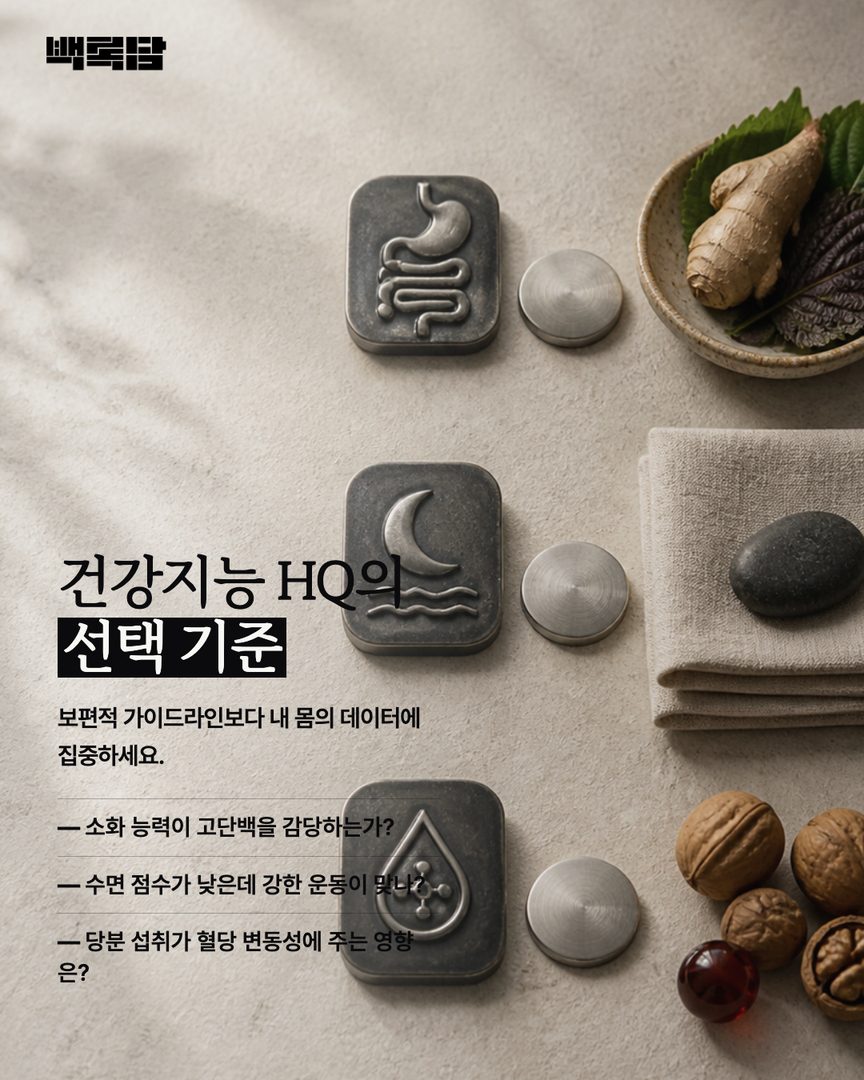
People with high HQ don't simply think, "Protein is good, so I should eat more." Instead, they evaluate their condition based on criteria like these:
Is my current digestive capacity able to handle a high-protein diet?
My sleep data was low yesterday—will doing high-intensity exercise today actually help with recovery?
What impact is my logged sugar intake having on my blood glucose variability?
Only when you have the ability to interpret your own data can you finally select the right answers for yourself from the overwhelming amount of health information available.
How AI Lowers the Threshold to the Clinic
Artificial intelligence technology is now going beyond simple information provision to being closely connected to actual medical practice. Services like ChatGPT Health launched by OpenAI are representative examples. When you input hospital test results or diagnostic reports, they explain the content in easy-to-understand terms and provide advice on what questions to ask your doctor before the consultation.
Furthermore, the entry speed of medical AI devices is accelerating. With support from the Ministry of Health and Welfare and the Korea Health Industry Development Institute, AI medical devices that assess cardiovascular disease risk from images taken inside the eye or measure the location and size of cerebral infarction from brain images are reaching the stage where their effectiveness is being verified in hospitals.
These technologies will serve as supplementary tools that help patients understand their conditions more clearly—not by replacing doctors' diagnoses, but by providing more precise evidence needed for diagnosis.
Data and Constitution from a Traditional Korean Medicine Perspective
Traditional Korean medicine has long regarded "individualization" as its most important value. Even with the same symptoms, prescriptions can differ completely depending on the patient's constitution and current qi and blood status—this is the essence of Korean medicine treatment.
The recent digital health trend resembles the process of Traditional Korean medicine's pursuit of "individuality" being validated through the objective language of data. For example, some people tend to feel heavy and bloated from even small amounts of carbohydrates, while others feel their energy depleting and experience sudden fatigue with just a little overexertion.
By checking such individual responses through data like heart rate variability or sleep patterns from smartwatches and post-meal blood glucose changes, and combining these with Traditional Korean medicine constitutional analysis, far more sophisticated management becomes possible. Data shows the "phenomenon," while Traditional Korean medicine diagnosis serves the role of identifying the "cause" and "context" behind that phenomenon.
Practical Points to Boost Your Body's HQ Starting Today
Let me share ways to increase your health quotient that you can start right now, even without fancy equipment.
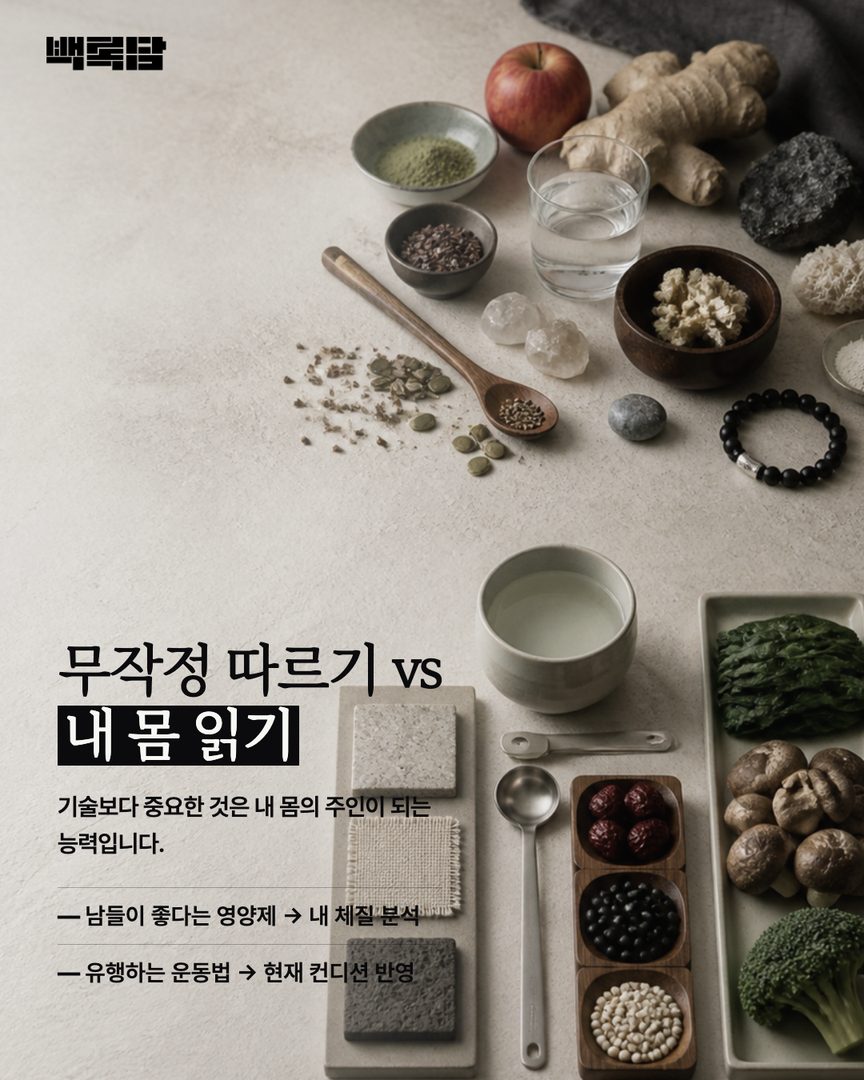
First, try connecting recording with observation. Rather than just recording in a diet app and stopping there, it's important to develop the habit of also noting changes in your condition when eating certain foods. A very small discovery like "I feel especially drowsy around 3 PM on days when I eat flour-based foods" becomes the starting point for understanding your body's characteristics.
Second, try aligning your sleep and activity rhythms. If the sleep score shown by your wearable device like a Galaxy Watch or Apple Watch is low, rather than aggressively increasing exercise intensity, you need the flexibility to adjust direction toward light stretching and sufficient rest.
Third, try recording your consultation details with professionals specifically. Memo the explanations you hear in the clinic before you forget them, and delivering how those results turned out through specific numbers or symptoms at your next visit creates much more efficient treatment outcomes.
Ultimately, the core of next-generation health trends is not the technology itself, but the ability to become the "owner of your body" by utilizing that technology. Rather than blindly following whatever supplements or trending exercises others say are good, try listening to the data your body sends.
If you feel you need detailed adjustments suited to your constitution or sense body signals that are difficult to interpret alone during this process, please don't hesitate to seek help. If you begin management considering your body's characteristics with the Baekrokdam program, you may experience even more satisfying changes. I hope we can share the body changes you've observed at your next consultation.