How to Lower Body Fat: Calorie Deficit & Strength Training

Table of Contents
- Body Fat Percentage: What is a Safe Range?
- The First Step: A Slight Deficit from Maintenance Calories
- Nutrient Ratios: Lowering Carbs and Increasing Protein
- Strength Training: Increase the Denominator to Lower Fat Percentage
- Small Changes Impact Body Fat Percentage
- What to Check When Body Fat Percentage Won't Budge
Seeing your body fat percentage can be discouraging. In the clinic, I often hear, "Doctor, I lost weight, but my body fat percentage is the same." The principle of lowering body fat percentage is actually simple: eat slightly less, protect your muscle, and move your body frequently. However, pushing yourself too hard all at once leads to the yo-yo effect and muscle loss, so controlling your pace is crucial. Today, based on Korean medical data, I will explain step-by-step where and how to start.

Body Fat Percentage: What is a Safe Range?
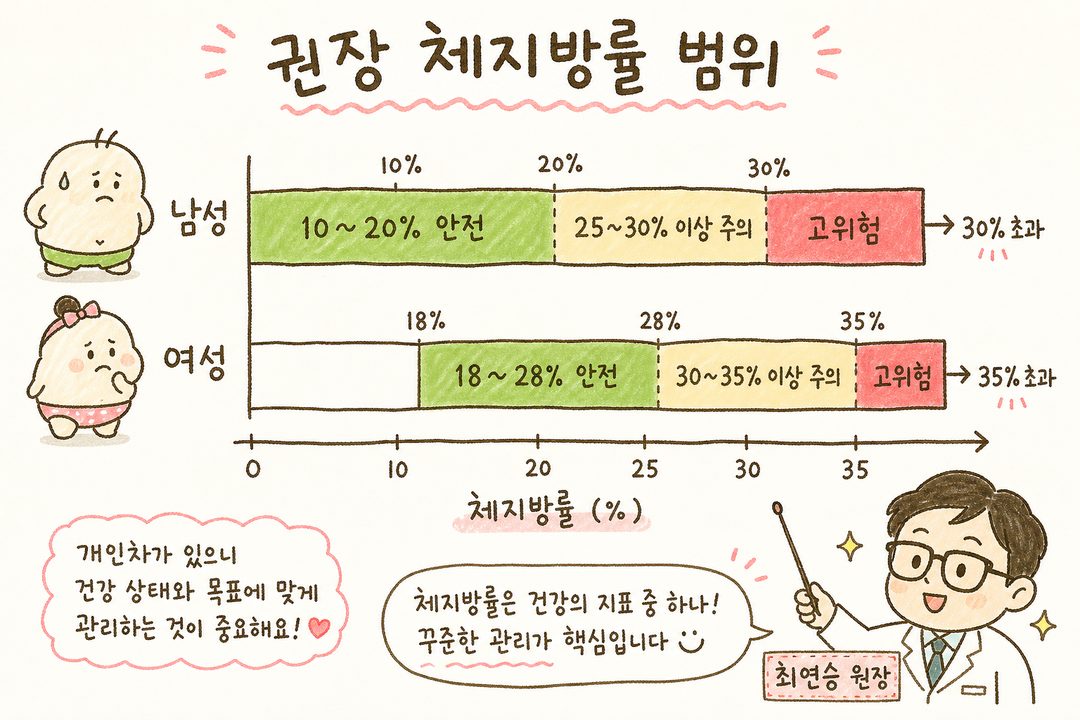
First, let's check where you currently stand. According to Korean standards, the recommended body fat percentage is approximately 10–20% for men and 18–28% for women. For men, 25–30% or higher, and for women, 30–35% or higher, are ranges that require caution from a health perspective. This isn't just about being overweight; it's the point where metabolic indicators begin to fluctuate as visceral fat increases.
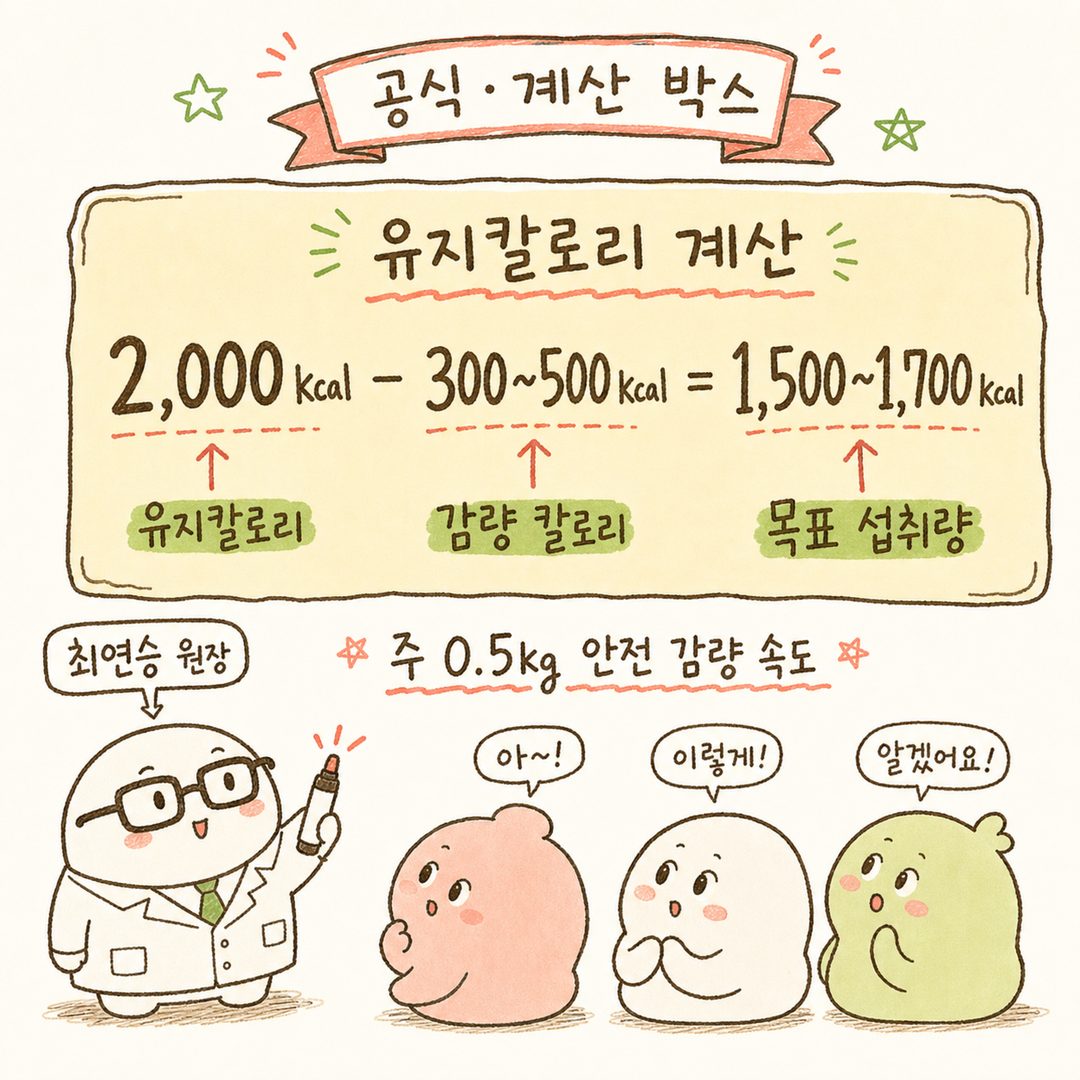
The most important factor here is the rate of weight loss. According to data from endocrinology professors at Hanyang University Hospital, a safe speed to reduce body fat while minimizing the yo-yo effect and muscle loss is about 0.5 kg per week. Losing 4 kg or 5 kg a month may seem fast, but a significant portion of that weight is muscle and water, which often leads to a cycle of regaining the weight.
The First Step: A Slight Deficit from Maintenance Calories
The starting point for body fat reduction is surprisingly simple. First, determine your maintenance calories (the energy required to maintain your current weight) and consume 300–500 kcal less per day. For example, if your maintenance calories are 2,000 kcal, your target during the weight loss period would be around 1,500–1,700 kcal/day.
I do not recommend extreme fasting or excessive restrictions like 800 kcal a day. While you may see rapid weight loss in the first few days, your basal metabolic rate (BMR) will drop, leading to a series of problems such as muscle loss, hair loss, and irregular menstruation. This is the most common pattern I see in the clinic. A moderate calorie deficit may seem tedious, but it is ultimately the fastest route.
Nutrient Ratios: Lowering Carbs and Increasing Protein
Even with the same 1,600 kcal, the results of body fat loss vary depending on how you fill those calories. Ratios commonly recommended by domestic data per meal are approximately 40–50% carbohydrates, 30–35% protein, and 15–20% fat. Considering that the average Korean diet consists of over 60% carbohydrates, the goal is to slightly lower carbs and consciously increase protein.
A low-carb approach, setting total carbohydrate intake at 60–200g per day during the weight loss phase, is frequently recommended. Reduce refined carbohydrates and sugars such as white rice, bread, cookies, and sugar, and switch to brown rice, multi-grains, sweet potatoes, and vegetables. Even with the same 200g of carbohydrates, the source determines the blood sugar and insulin response.
For protein, the baseline is at least 1.2g per 1kg of body weight. If you weigh 60kg, you should aim for around 70g a day to create a structure where you lose only body fat while protecting muscle. Adding eggs, tofu, and yogurt in the morning and switching snacks to nuts (about 30g a day), chicken breast, or legumes makes reaching 70g surprisingly manageable. However, those with kidney disease must consult a doctor before adjusting protein intake.
Strength Training: Increase the Denominator to Lower Fat Percentage
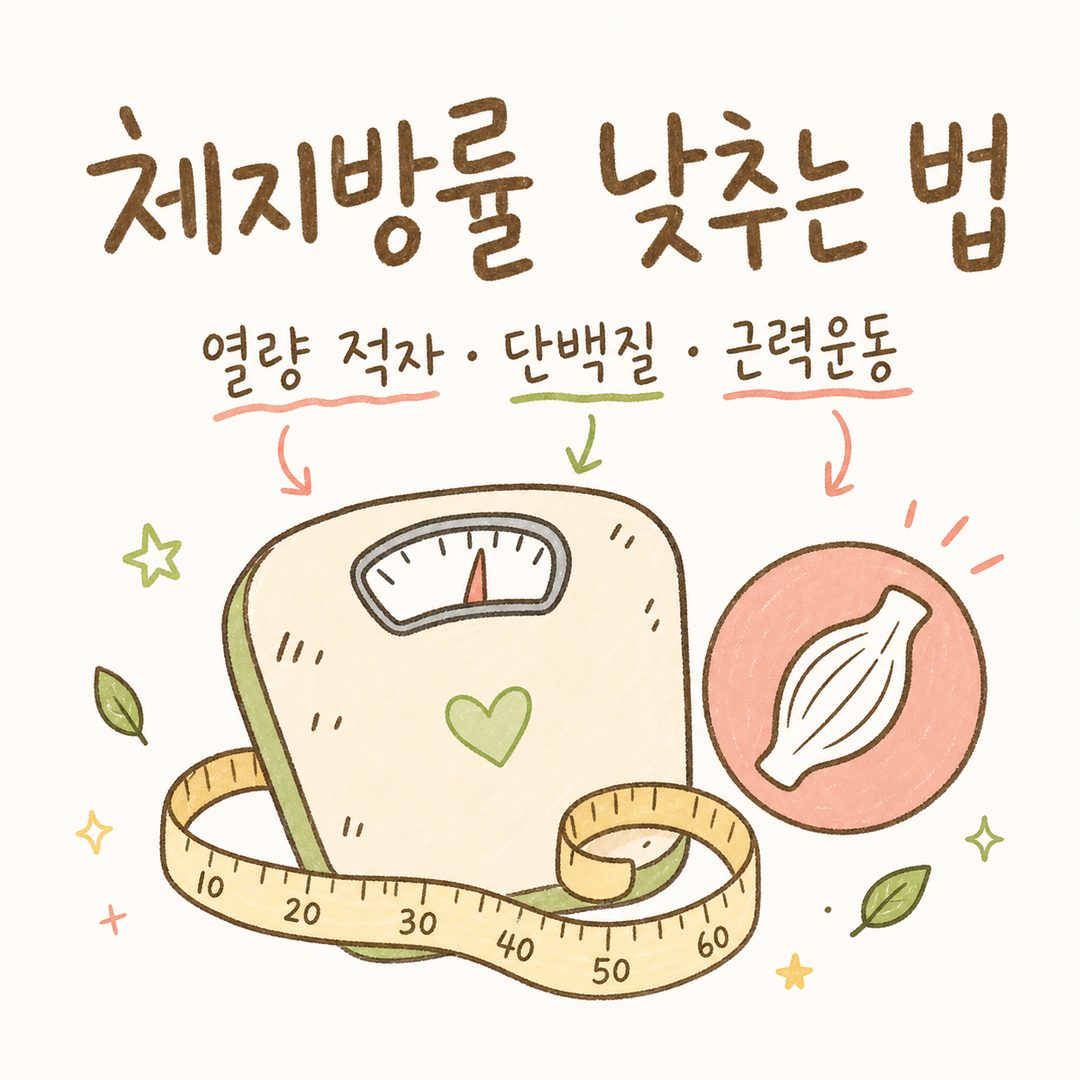
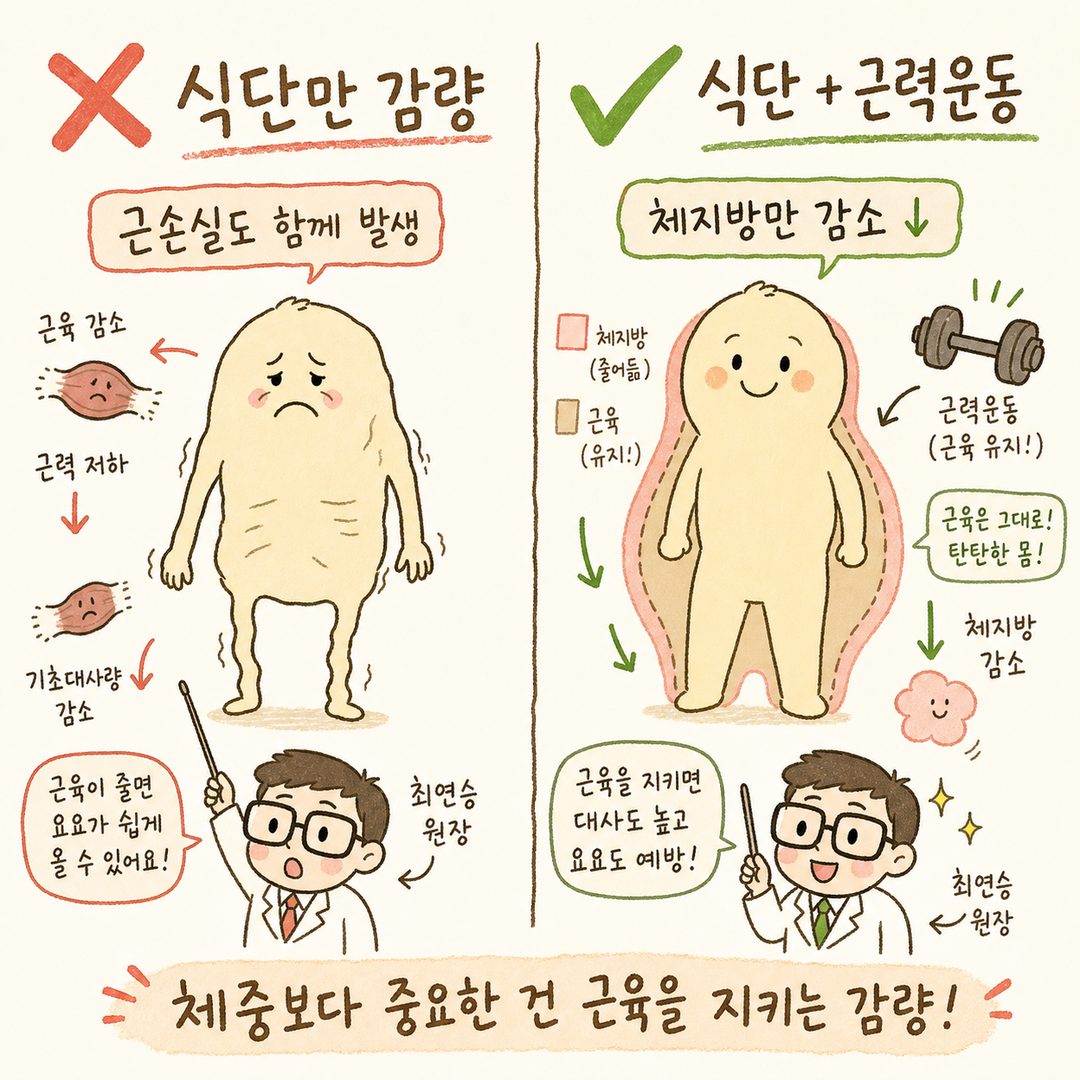
Body fat percentage is ultimately the ratio of the numerator (body fat) to the denominator (total body weight). Government health data also emphasizes doing two things simultaneously: "burning fat" and "increasing muscle to grow the denominator." If you lose weight through diet alone, muscle also decreases, which is why body fat percentage often doesn't drop as much as expected.
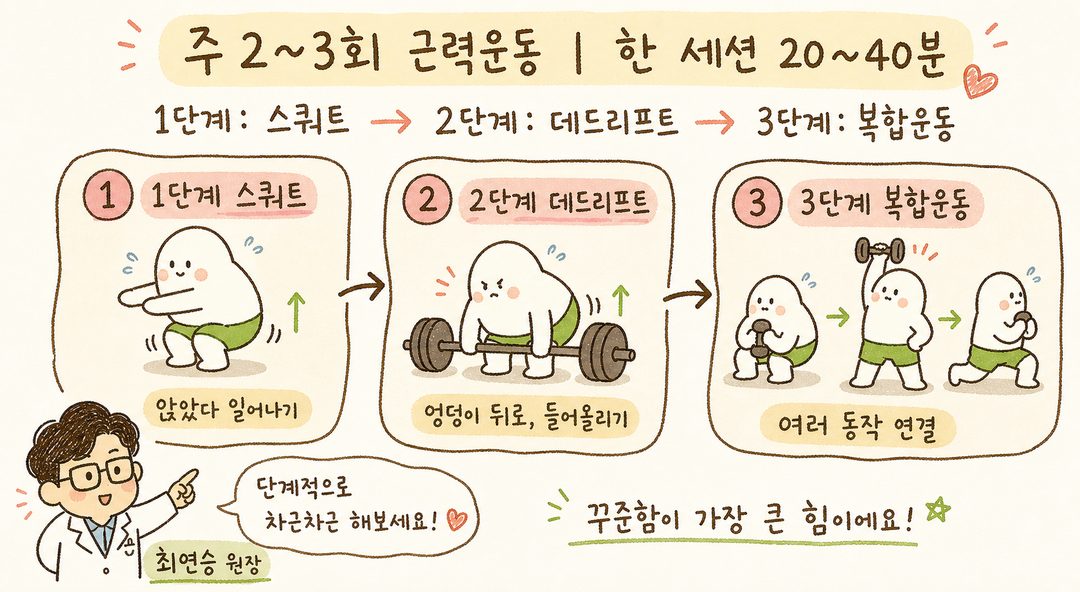
The basic prescription I give patients in the clinic is strength training 2–3 times a week. A session of 20–40 minutes is realistic and sustainable. Prioritizing large lower-body muscles (squats, lunges, deadlifts) provides better efficiency for the time spent. As muscle builds in the legs, the energy consumed while resting increases, creating an additional calorie deficit beyond your diet.
Aerobic exercise is best incorporated between strength training sessions. Rather than spending an hour on a treadmill every day, consistently doing about 40 minutes a day of brisk walking or light cycling places less stress on cortisol levels and carries a lower risk of muscle loss.
Small Changes Impact Body Fat Percentage
Lifestyle activity is just as important as diet and exercise. The longer you spend sitting at a desk, the less your body fat percentage will change, even with the same diet and exercise. Taking two flights of stairs instead of the elevator, a 10-minute walk after lunch, or walking short distances—these subtle activities account for a significant portion of your total daily energy expenditure.
You must also prioritize sleep. Lack of sleep increases the hunger hormone (ghrelin) and decreases the satiety hormone (leptin), making you crave sweets and refined carbohydrates more the next day. This means it becomes twice as hard to stick to your 1,600 kcal goal. While alcohol itself is caloric, it also deprioritizes fat burning, so it is best to consciously reduce it during a weight management period.
These lifestyle factors may not show immediate results. However, after about 2–4 weeks of accumulation, patients are the first to notice changes in how their clothes fit, their energy levels, and their degree of edema, even beyond the numbers on the scale.

What to Check When Body Fat Percentage Won't Budge
Many people find their body fat percentage stagnating despite following a diet and exercise plan. These are the items I check first in the clinic:
Does protein intake actually reach 1.2g per 1kg of body weight? (It is often surprisingly insufficient during weight loss.)
Do carbohydrates fall within the 60–200g per day range, and what is the proportion of refined carbs within that?
Is the calorie deficit from 5 weekdays being completely undone over the 2 weekend days?
Has the intensity of strength training plateaued at the same weight? (Repeating the same movement with the same weight for over 4 weeks weakens the stimulus.)
Does sleep time frequently fall below 6 hours?
Checking just these five items can resolve about half of all plateaus. Since it is normal for body fat percentage to fluctuate by 1–2% daily, getting into the habit of looking at weekly averages is also helpful.
In Korean medicine, we believe that even with the same body fat percentage, the way fat accumulates and sheds varies depending on constitutional patterns such as Phlegm-fluid (Damyum), Qi deficiency (Giheo), and Blood stasis (Eohyeol). While the general framework of diet and exercise remains the same, adjusting herbal medicine and lifestyle habits according to your constitution can further increase the range of body fat reduction for the same amount of effort. If you have been dieting and exercising on your own for more than 4 weeks and your body fat percentage is not moving, consider a check-up with a personalized prescription like Baekrok Gambi-jung. At our clinic, we will help you find the right weight loss speed and direction through pulse diagnosis.