Pilates Diet Reviews: Calorie Burn and Body Changes

Table of Contents
- Why Pilates is Less Effective for Short-Term Weight Loss
- Weight Loss vs. Body Shape Changes in Reviews
- What Research Says About the Effects of Pilates
- Dietary Principles to Increase Weight Management Efficiency
- Exercise and Metabolism from a Korean Medicine Perspective
- How to Start Your Pilates Diet Strategy Today
When searching for Pilates diet reviews, you'll find many posts about improved body lines. However, you might wonder if you'll actually lose weight or just improve your posture. I often hear this question in the clinic.

Why Pilates is Less Effective for Short-Term Weight Loss
Pilates is not an exercise designed for rapid, short-term weight loss. It is closer to long-term body management that reduces body fat, refines body lines, and boosts basal metabolism.
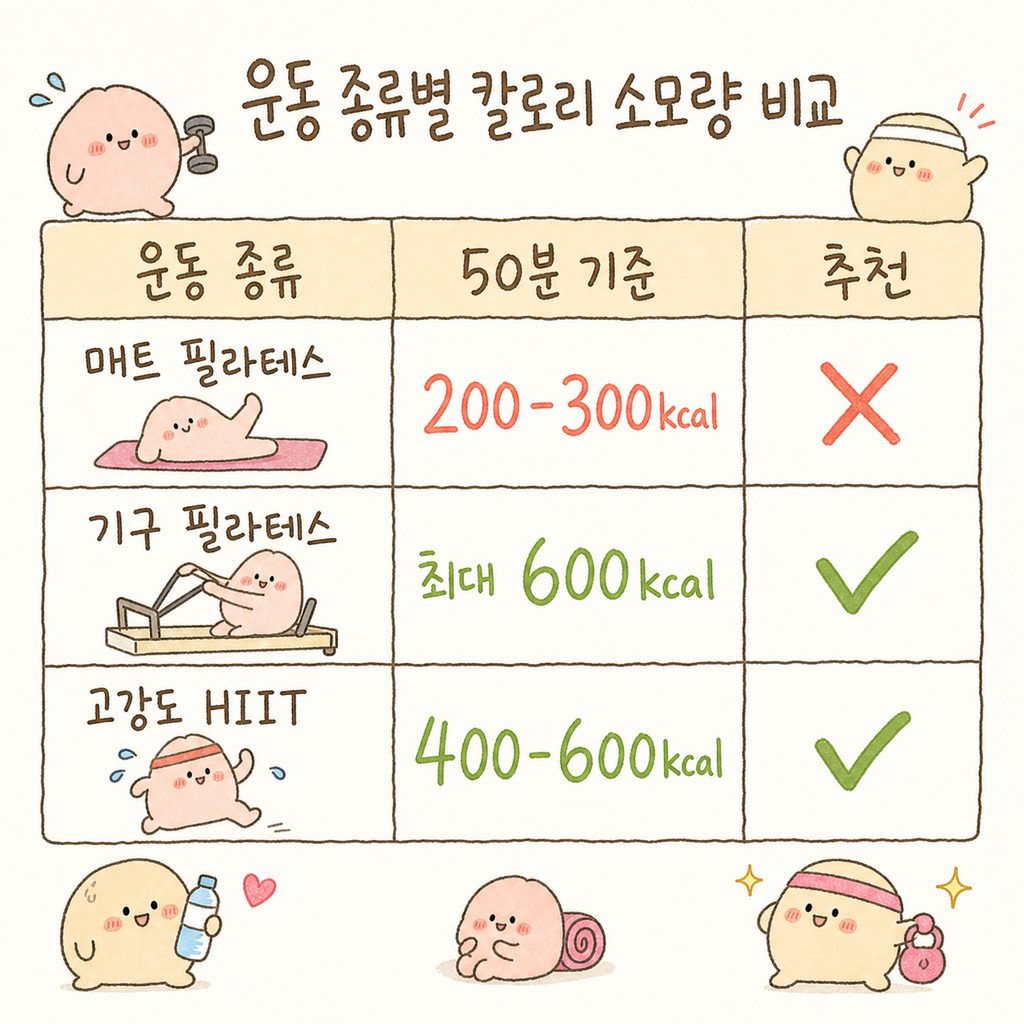
It’s easier to understand when you look at the calorie burn. According to data from Kormedi, Mat Pilates burns about 200–300 kcal in 50 minutes. This translates to roughly 200–350 kcal per hour, and even high-intensity equipment Pilates peaks at around 600 kcal per hour.
When placed alongside High-Intensity Interval Training (HIIT), which burns 400–600 kcal in just 30 minutes, the consumption is relatively low. Therefore, rather than aiming to lose 5kg in a short period through Pilates alone, it is more realistic to use it as one pillar of a routine that includes dietary control and aerobic exercise.
Weight Loss vs. Body Shape Changes in Reviews
Reading through various reviews reveals a common theme. While many are satisfied with corrected posture, a stronger core, and refined lines, most successful weight loss stories involve a combination of diet and aerobic exercise.

Those who experienced significant changes usually exercised 2–3 times a week for 30–60 minutes per session while managing their diet. Some reported losing 2kg in a month or reducing body fat after about 40 sessions over five months, but it's important to remember that these results were supported by dietary management. There are also many reviews stating that weight doesn't move noticeably with Pilates alone.
What Research Says About the Effects of Pilates
This doesn't mean Pilates isn't helpful for weight management. According to orthopedic specialists, Pilates can contribute to improvements in weight, BMI, body fat, and waist circumference. However, to see meaningful changes, you need to move for about 180 minutes per week (60 minutes × 3 times a week).
One study involved obese women with no other health issues performing Pilates twice a week for 12 weeks. Not only did they lose weight, but their brachial systolic blood pressure dropped by 5 points and aortic systolic blood pressure by 6 points. This shows that it doesn't just help with weight loss; it improves vascular health and systemic metabolism as well.
Dietary Principles to Increase Weight Management Efficiency
I often say the foundation of weight management is "80% diet, 20% exercise." While Pilates handles muscle tone and posture, the diet carries much more weight in actually reducing numbers on the scale. To increase weight loss efficiency, refer to the following nutritional ratios.
![A visual representation of how to calculate recommended protein intake in a formula box. The formula [Weight (kg) x 1.2~1.6g] is shown, with an example for 55kg (66~88g) highlighted.](/api/files/assets/2026-07/1b50065d.jpg?sig=45621156de97b110dbd6293294d67a413437d6a14427a65b557b758614b08d4a)
I recommend a ratio of carbohydrates, protein, and fat of approximately 2:3:1. It's good to keep fat within 10–20% of total calories. Most importantly, protein is crucial; if you are doing strength training, aim for 1.2–1.6g per 1kg of body weight. For someone weighing 55kg, that's about 66–88g per day.
Replace refined carbohydrates like white rice, white bread, and processed noodles with complex carbohydrates like brown rice, multi-grain rice, oats, whole wheat bread, sweet potatoes, or pumpkin. For fats, choose healthy oils like those found in avocados, nuts, and olive oil rather than fried foods.
Exercise and Metabolism from a Korean Medicine Perspective
In Korean medicine, we look more closely at "metabolic efficiency" than just burning calories. Pilates is an excellent exercise for correcting body shape and aiding the circulation of Qi and Blood. However, for those with a constitution prone to "phlegm-dampness" (accumulated metabolic waste) or stagnant energy, exercise alone often fails to produce weight loss.
When waste products are stagnant in the body, the basal metabolism drops, and exercise efficiency decreases along with it. In such cases, rather than blindly increasing exercise volume, the priority should be awakening the metabolism through a prescription tailored to one's constitution. When metabolism is functioning well, Pilates will burn body fat much more effectively in the same amount of time.
How to Start Your Pilates Diet Strategy Today
If you want to start Pilates for weight management today, try this approach:


First, set your goal on your "visual body check (Numbady)" rather than the number on the scale. Since Pilates builds muscle and slims the body, you will notice your clothes fitting differently even if your weight remains the same.
Second, add aerobic exercise. Adding light jogging or brisk walking before or after Pilates can make up for the lower calorie burn.
Third, maintain a protein-focused diet. Calculate your intake based on your weight as mentioned earlier; simply reducing refined carbohydrates will change your weight loss speed.
If you feel frustrated because your weight isn't dropping despite hard work, I recommend checking your constitution and metabolic state. By combining your efforts with the Baekrok Gambi-jung program, you can expect better results by awakening a stagnant metabolism. Give it a try and let me know how it goes during your next consultation.
References