
Daily Calorie Burn — From BMR to TDEE and Activity Calories

Table of Contents
"Doctor, I eat so little — why won't the weight come off?" This is the question I hear most often in the clinic. I understand the frustration of watching the scale refuse to budge despite your careful diet efforts.
The Baseline Burn: BMR and Thermogenesis
Your body burns energy even when you're completely at rest. This is your BMR (Basal Metabolic Rate). According to research, BMR accounts for 60–70% of your total daily energy expenditure — a larger share than most people realize. Think of it as the fuel needed for essential functions like your heartbeat and maintaining body temperature, the processes that keep you alive.
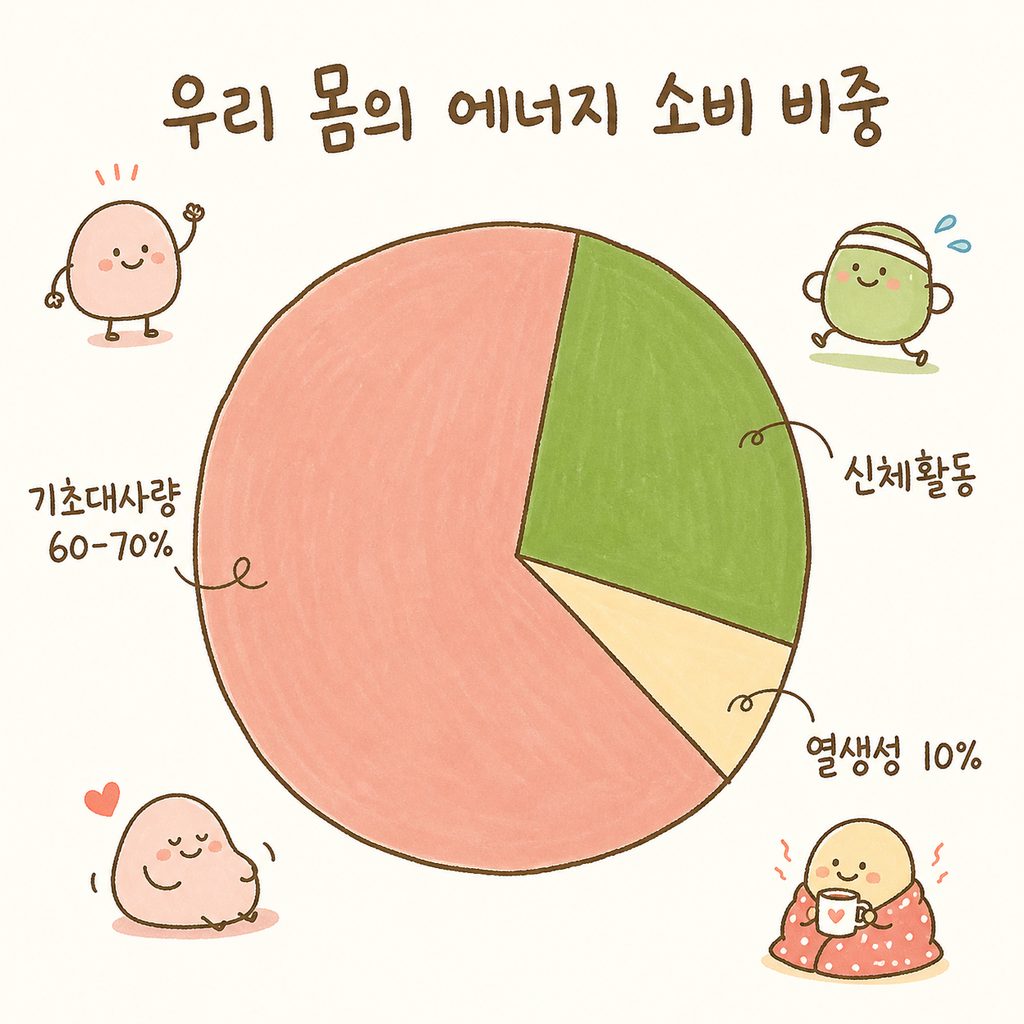
Energy is also consumed during digestion. This is called thermogenesis, where up to 10% of the food you eat is used for digesting, transporting, and storing nutrients. Even on days when you don't exercise, your body never stops burning calories.
Physical Activity and Healthy Calorie Expenditure
Beyond baseline metabolism, the energy you use through movement is your physical activity calories. It doesn't have to be an intense gym workout — light movements throughout your day add up significantly. Many experts recommend about 30 minutes of daily activity, which is enough to maintain overall health while increasing calorie burn.
Of course, the intensity of movement affects energy expenditure. Between a gentle stroll and vigorous exercise, daily calorie burn can vary enormously depending on your activity level.
Calculating Your Maintenance Calories with TDEE
TDEE (Total Daily Energy Expenditure) is the sum of your BMR, thermogenesis, and physical activity. Think of it as the total calories your body actually burns in a day.
![A simple flowchart showing how [BMR] → [Thermogenesis] → [Physical Activity] converge into [TDEE (Total Energy Expenditure)].](/api/files/assets/2026-08/1cc076ac.jpg?sig=1bfe603caeb75cdaa5b76b1f4615b52908d9dde8bbecfe9167baa73ba4c82fd8)
Think of your body like a car's fuel tank. If you put in fuel equal to your TDEE, your weight stays the same. But if you put in more? The excess gets neatly stored in fat cells. When this becomes a pattern, weight gain is inevitable.
Why Muscle Loss Makes Weight Management Harder
Many people say they used to lose weight easily with just a little less food when they were young, but find weight management increasingly difficult with age. It's not in your head. Generally, after age 30, muscle mass begins declining by 3–5% every decade.
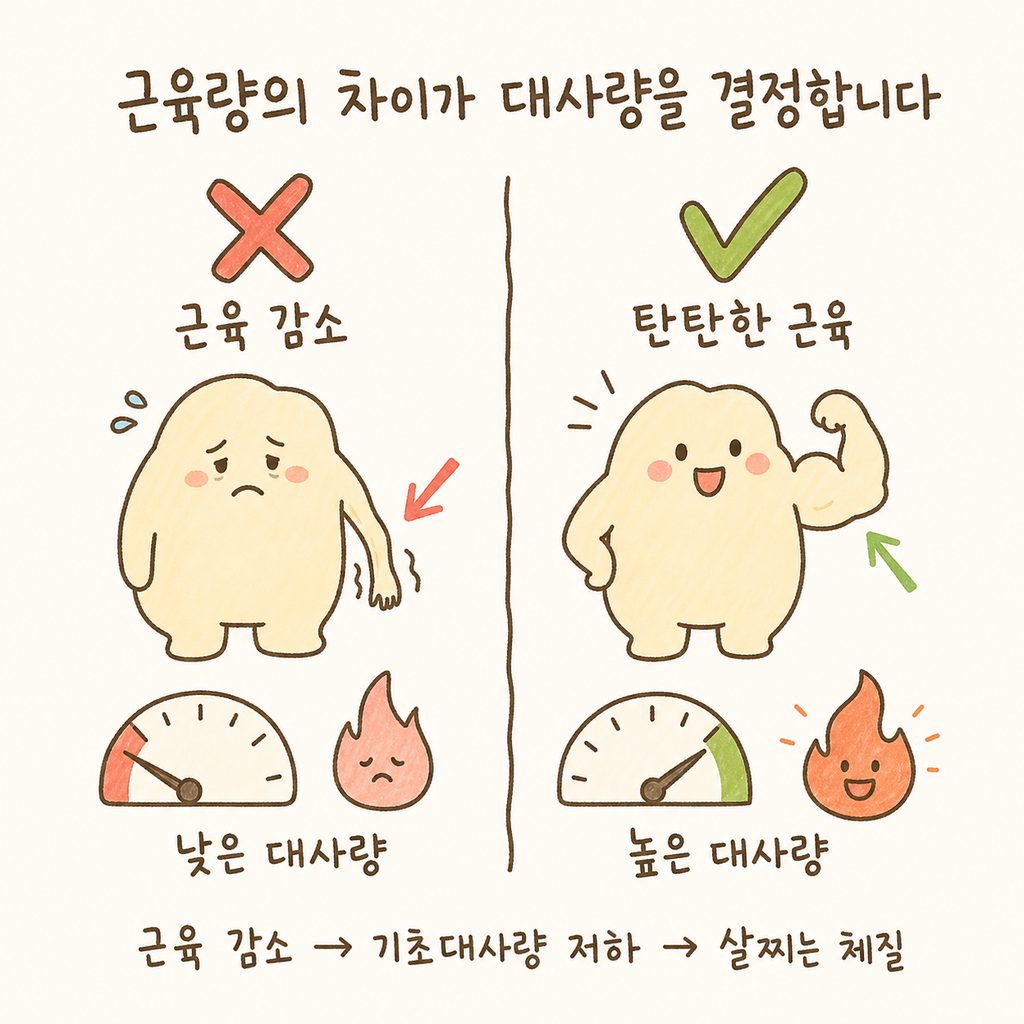
Muscle is a tissue that consumes a lot of energy. As muscle mass decreases, BMR drops along with it. Even if you eat and exercise exactly as before, your daily calorie burn decreases. Your body becomes one that's prone to weight gain.
Addressing Metabolic Imbalance at Baekrokdam Korean Medicine Clinic
In Korean medicine, we don't just look at calorie numbers. Some people burn through the same amount quickly while others easily store it — we find the difference in metabolism efficiency. When qi becomes stagnant or waste products accumulate in the body, metabolic flow gets blocked and calorie burn slows down.
That's why during consultations, I first assess the patient's constitution and current metabolism status. Only by improving circulation and breaking through stagnant metabolism can the same exercise and diet yield better weight loss results.
Calorie Management Tips You Can Apply Today
Crash dieting actually lowers BMR further and leads to yo-yo weight cycling. That's why a strategy is needed. It's generally understood that approximately 7,700kcal of expenditure is needed to lose 1kg of body fat.

Let me give you practical numbers. Reducing approximately 300kcal from your daily expenditure can expect about 0.3kg per week, and reducing 500kcal can expect about 0.5kg per week of gradual weight loss. Instead of extreme fasting, try cutting back slightly from your regular diet and start with 30 minutes of walking daily.
If your metabolism feels too sluggish or you're looking for a weight loss approach tailored to your constitution, consider trying the Baekrok Gambi-jung program. Breaking through stagnant metabolism means the same effort can yield different results. Give it a try and let me know how it goes during your next visit.
References