
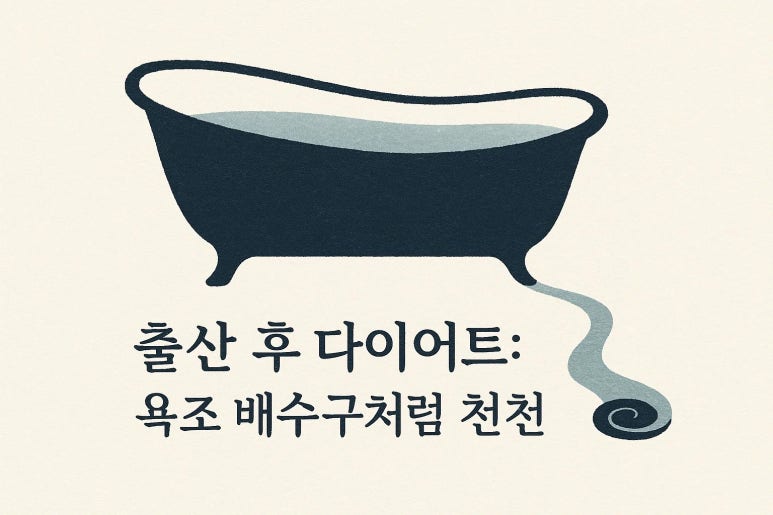
Tired Postpartum Body, Which Postpartum Diet Method Is Safe?

Exhausted body after childbirth, what postpartum weight loss methods are safe?
“Doctor, it feels like my body is completely ruined after having a baby. Every time I look in the mirror, all I can do is sigh.”
These are often the first words many postpartum mothers share with me when they visit my clinic.
| “In the morning, my face feels like a waterlogged sponge. When will the swelling go down?” The blood volume and bodily fluids that increased during pregnancy do not easily decrease after childbirth, and can manifest as 'dameum' (pathological fluid retention in TCM) or 'edema'. Additionally, lactation hormones like prolactin can affect appetite signals. |
A woman's body undergoes immense changes after childbirth.
Hormones fluctuate dramatically like a rollercoaster, and breastfeeding coupled with sleep deprivation exhausts both body and mind.
Parenting stress becomes yet another unexpected hurdle in weight management.
Amidst all these circumstances, safe and healthy postpartum weight loss, aimed at recovering 'you', holds a meaning beyond simple weight reduction.
What methods are truly right and safe for me?
I would like to share the methods I discuss and design with my patients in the clinic.
Why Has My Body Changed After Childbirth?
A woman's body after experiencing pregnancy and childbirth doesn't 'reset,' but rather enters a 'new environment' different from before.
This involves uterine recovery, stabilization of the widened pelvis, and most significantly, hormonal changes.
Furthermore, fragmented sleep of three to four hours a day can increase cortisol levels, promoting fat accumulation.
When sleep deprivation persists, our body's metabolic flexibility inevitably decreases.
Understanding these changes is the first step in postpartum weight loss.
These physical changes not only lead to weight gain but also hinder bodily recovery and make postpartum obesity management even more challenging.
Impatience, But Safety First
“I want to get my old body back within a month.” I fully understand such earnest desires.
However, the body immediately after childbirth prioritizes recovery above all else.
Nutritional deficiencies or excessive exercise can lead to greater long-term side effects.
| A patient in her late 30s began extreme dietary restrictions and high-intensity exercise just two months postpartum for breastfeeding weight loss. While her weight quickly dropped by 5kg, her milk supply drastically decreased, and she suffered from chronic fatigue and hair loss. Ultimately, the rapid weight loss was halted, and she subsequently gained back 7kg due to stress-induced binge eating. The key issue was 'ignoring the body's recovery signals'. Initially, she should have prioritized recovery by focusing on light walking exercise and protein-rich nutritional intake. |
Like this case, impatience can actually be poisonous.
Our bodies are naturally resistant to rapid changes.
| Rapid weight loss within six months postpartum can hinder the supply of essential nutrients for breastfeeding or impede the body's overall recovery. In particular, starvation diets or single-food diets should be avoided. These can inadvertently lead to muscle loss, negatively impacting long-term metabolic health. It is crucial to consult with medical professionals to establish a safe weight loss plan tailored to one's individual health condition. |
If you are breastfeeding, even greater caution is needed as it can affect the baby.
So, amidst these constraints, how can one devise a safe weight loss plan that is right for them?
How Do I Find the Right Postpartum Weight Loss Plan for Me?
No two postpartum bodies are the same.
All factors such as breastfeeding status, maternal recovery speed, sleep patterns, and childcare environment must be considered.
| Postpartum body recovery is like a marathon. For the first three months, it's best to focus on recovery, and for the following three months, to work on gradual lifestyle adjustments. In other words, it is wise to treat the first six months as a period of recovery and preparation, adjusting the pace of weight loss as if gradually opening a 'bathtub drain'. This is similar to how fully opening a bathtub drain from the start can cause the water flow to be too strong or put strain on the pipes. Since the postpartum body is in a critical recovery process, the drain should be opened gradually, little by little, to allow the water to flow out smoothly. That is, rather than rapid reduction, focusing on restoring a healthy body balance at a gradual pace of about 0.5kg per week will be far more beneficial in the long run. |
Listen to your body.
From a traditional Korean medicine perspective, the approach focuses on aiding the recovery of 'Qi, Blood, and Body Fluids (기혈진액),' strengthening 'Spleen and Stomach (Digestive organs) (비위)' functions, and resolving 'dameum' (pathological fluid retention in TCM).
From a modern perspective, we recommend sufficient protein intake, aiming for 1.2-1.5g per 1kg of body weight, a healthy diet focused on low carbohydrates, and at least 30 minutes daily of NEAT (Non-Exercise Activity Thermogenesis) as light activity.
Stress management is also important.
Some describe it as feeling 'frustrated and resentful, like Hwabyung' (a Korean culture-bound syndrome characterized by anger, frustration, and physical symptoms).
Stress is not just a psychological issue. Sleep deprivation and irregular routines due to childcare continuously stimulate our body's 'HPA axis (hypothalamic-pituitary-adrenal axis),' which is a major factor in increasing cortisol levels and promoting abdominal fat accumulation. Chronic stress can also affect appetite control, leading to cravings for sweet foods or even binge eating.
Key Path for Sustainable Recovery and Weight Management
Ultimately, postpartum weight loss is a process of reorganizing the 'universe' that is 'you'.
It is crucial to set aside impatience for a moment and create your own sustainable plan.
| Phase 1 prioritizes bodily recovery, focusing on rest, adequate nutrition, and light stretching for three months postpartum. Phase 2 involves lifestyle review and adjustment for three to six months postpartum, including establishing regular meal times, a protein-focused diet, efforts to stabilize sleep patterns, and starting aerobic exercise for under 30 minutes. Phase 3 is the start of gradual weight loss, aiming for a gradual increase in exercise intensity appropriate for the individual, maintaining a healthy diet, and establishing a stress management routine six months postpartum and beyond. |
In my clinical experience, patients who consistently followed this path were able to achieve fundamental changes in their bodies, without being fixated on short-term numbers.
The goal is not merely to reduce a number on the scale, but to build the strength to sustain a healthy life as a mother.
Postpartum weight loss is a process of self-love and self-care.
Rather than relying on sensational promises, listen to the signals your body sends and try making small changes today.
I am confident that even if it's a bit slow, the steady path forward is the safest and most sustainable way to achieve postpartum weight loss.
Because when mom is healthy, the whole family is happy.
I will accompany you on your journey to find balance in body and mind.