BRD Clinic
Only people currently living in Korea with their own Korean 010 mobile number can apply. Overseas residents are not eligible.
Home › Blog › Pain
Cervicogenic Headache - A Korean Medicine Doctor's Comprehensive Guide
Blog October 10, 2025

Cervicogenic Headache - A Korean Medicine Doctor's Comprehensive Guide

Dr. Yeonseung Choe
Dr. Yeonseung Choe
Chief Director

Understanding Cervicogenic Headache - A Korean Medicine Doctor's Guide

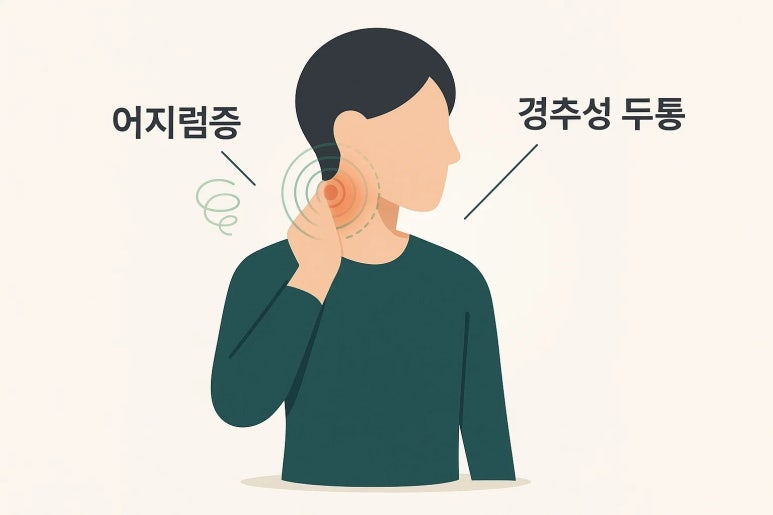
Cervicogenic headache is a type of headache caused by problems in the cervical spine or neck soft tissues. It's often misdiagnosed as migraine or tension headache.

Characteristics of Cervicogenic Headache

1. Unilateral Presentation Usually affects one side of the head only, with a relatively fixed pain location.

2. Aggravated by Neck Movement Turning or tilting the head may worsen the headache.

3. Neck Trigger Points Pressing certain points on the neck can trigger or intensify the headache.

4. Pain Radiation Pain may radiate from the back of the head toward the forehead and around the eyes.

Differentiating from Other Headaches

Type Cervicogenic Migraine Tension
Location Usually one-sided One or both sides Both sides, band-like
Quality Dull, radiating upward Throbbing Pressure sensation
Trigger Neck movement Light/sound Stress/fatigue
Associated Neck stiffness Nausea, light sensitivity No obvious association

Korean Medicine Treatment

1. Acupuncture Targeting specific points on the neck and head to relieve pain and improve blood circulation.

2. Manual Therapy (Tuina) Relaxing neck muscles and adjusting cervical spine alignment through hands-on treatment.

3. Herbal Medicine Prescribing formulas based on individual constitution and symptom characteristics.

4. Posture and Lifestyle Guidance Preventing recurrence from the root cause.

Accurate diagnosis is the first step to effective treatment. If your headaches always seem connected to neck issues, consider the possibility of cervicogenic headache.

Need Consultation?

Get personalized treatment.

Dr. Yeonseung Choe

Dr. Yeonseung Choe Chief Director

I have met many patients who came after visiting multiple medical institutions and departments for persistent or recurrent conditions. Symptoms normally handled by different specialties—such as abdominal pain, headaches, palpitations, dizziness, and insomnia—may overlap in one person. Sometimes there is no clear improvement despite taking medication for each symptom, and being unwell gradually becomes part of daily life. In these cases, I look beyond individual diagnoses and examine how the symptoms connect and change together. Asking only about the most uncomfortable symptom today does not reveal the full course. I look at when the body first began to change and what happened after illness, surgery, childbirth, or starting and stopping medication. I also review changes in weight, diet, and sleep, then trace which symptoms improved with previous treatment and which remained. Test results, diagnoses, and the course of previous treatment are important for understanding the current condition. Clinical research in modern Korean medicine, physiological and pathological research in modern medicine, and observations recorded in classical Korean medicine texts offer different perspectives on the same body. Rather than fitting a patient into one perspective, I consider what each can and cannot explain and look for clues that connect symptoms and treatment histories that were previously considered separately.

More Info →
Page summary and review information

Page summary

A reviewed summary for this page isn't ready yet. Please read the full content below.

A reviewed summary isn't ready yet, so the page description or a general note is shown instead.

The clinic is outside telephone hours

You can leave your inquiry now.

Leave an inquiry Call anyway