Real Hunger and Fake Hunger — A Traditional Korean Medicine Perspective on Distinguishing Appetite from the Feeling of an Empty Stomach

Table of Contents
- How to Distinguish Real Hunger from Fake Hunger
- Why Do We Seek Food When We're Not Actually Hungry?
- Hormonal Mischief: What Are the Dissonance of Ghrelin and Leptin?
- Practical Judgment Criteria for Overcoming Fake Hunger
- Alternatives for Those Who Find Appetite Control Especially Difficult
- Frequently Asked Questions
Real Hunger and Fake Hunger — A Korean Medicine Perspective on Distinguishing Appetite from Hunger
"I just ate, so why am I craving something again?"
This is the question I hear most often when consulting with patients about dieting in the clinic. Your stomach feels full, yet certain foods' flavors or textures keep circling in your mind. Many people blame this on "lack of willpower" or "food obsession" and criticize themselves. I completely understand that feeling—sometimes on particularly stressful days, even when I'm not actually hungry, I desperately want spicy tteokbokki. However, this isn't a matter of willpower; it's closer to a kind of "signal error" that occurs when signals from our body become tangled together.
How to Distinguish Real Hunger from Fake Hunger
The easiest way to tell the difference is to look at "time" and "scope." Real hunger (physiological hunger) comes on gradually. At first, you feel slightly peckish, and as time passes, your stomach starts growling, you lose energy, and concentration declines. Above all, there's a strong universal desire to "fill your stomach with anything available."
Fake hunger (psychological hunger), on the other hand, comes on suddenly. Like, "Right now I want an iced Americano with a sweet slice of cake," a specific menu item appears very clearly in your mind. Because the signal isn't coming from your stomach but from your brain demanding "reward," when you actually put food in your mouth, satisfaction disappears quickly, or you end up seeking even more stimulating foods.
Why Do We Seek Food When We're Not Actually Hungry?
In Korean medicine, this is viewed not simply as a stomach problem but as an imbalance in the flow of qi (ki) and the organs. Particularly when stress causes qi to become stagnant—gan-ul (肝鬱)—our body becomes obsessed with foods that provide immediate pleasure to relieve this feeling of heaviness.
Additionally, when digestive function weakens in a bi-heo (脾虛) state, nutrients aren't properly absorbed, creating a contradictory situation where actual energy is depleted but the stomach remains distended. The brain then sends "energy shortage" signals, and we mistake this for "hunger," continuing to eat. Consequently, dam-eum (痰飲)—unnecessary waste products—accumulate in the body, making you feel heavier, and appetite regulation becomes even more difficult, falling into a vicious cycle.
Hormonal Mischief: What Are the Dissonance of Ghrelin and Leptin?
From a physiological perspective, this can be understood as an imbalance between two hormones: ghrelin and leptin. Ghrelin is secreted from the stomach and directs "you're hungry, eat quickly," while leptin is secreted from fat cells and signals "you're full, stop eating."
The problem arises when extreme dietary restrictions are repeated. To survive, our body tends to maintain ghrelin levels chronically high. This causes the brain to continuously send hunger signals even when energy is actually sufficient. This is the true nature of the "fake hunger" we experience, and why it can never be resolved through simple fasting.
Practical Judgment Criteria for Overcoming Fake Hunger
So what should you do when appetite strikes? I recommend that patients check the following three variables.
First, the "glass of water" rule. The cases where thirst is mistaken for hunger are truly numerous. Drink a glass of water and wait just 15 minutes. If you're still hungry, there's a higher chance it's real hunger.
Second, the "apple or broccoli" test. Instead of the food you're currently thinking about, consider whether you'd be willing to eat something completely unappealing but healthy. If your response is "I hate apples, it absolutely has to be chocolate," that's 100% fake hunger.
Third, check your emotional state. Look at whether you're feeling lonely, bored, or angry right now. Simply recognizing whether you have the habit of filling emotional emptiness with food can be a huge help in breaking the cycle of binge eating.
Alternatives for Those Who Find Appetite Control Especially Difficult
Trying to correct this signal error through willpower alone is extremely painful. Especially for those with significant eo-hyeol (瘀血) or reduced metabolic capacity, the hormone rhythm itself is often disrupted, making self-control non-functional. In these cases, rather than just enduring it, it's more effective to receive help calming the body's excessive appetite and normalizing metabolism.
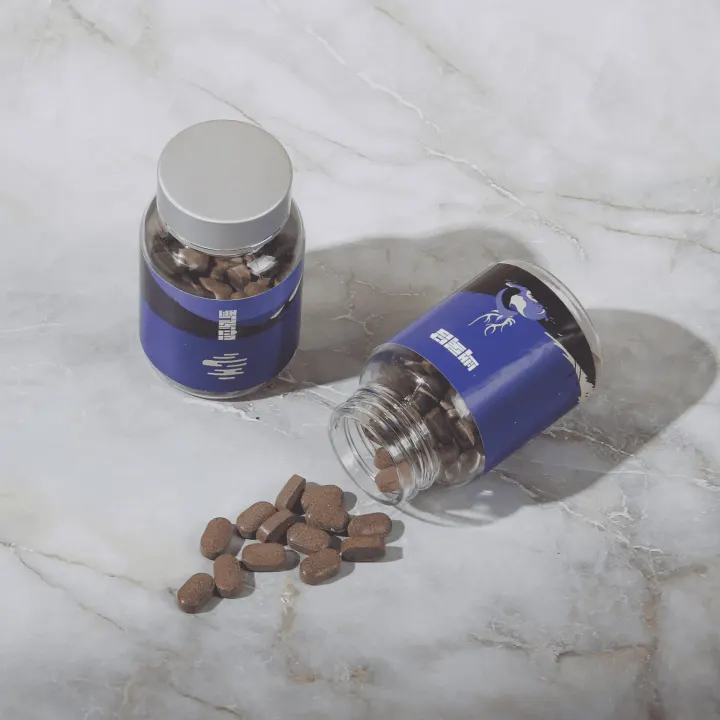
Through our Baekrok Gambi-jung program, we focus on correcting these imbalances to reduce the frequency of fake hunger, helping create a body state where you can naturally adjust food intake without forcing yourself to starve.
Frequently Asked Questions
Q. Is simply enduring fake hunger always the right answer?
Just enduring it can lead to larger binge eating episodes later. Instead, giving "alternative rewards" is better. Taking a light walk or drinking warm tea to give your brain different stimulation and redirect your attention can help.
Q. Whenever I'm stressed, I crave sweets—is this also fake hunger?
Yes, this is a typical emotional craving. When cortisol levels rise due to stress, the brain starts craving monosaccharides that can provide quick energy. This is not hunger caused by an empty stomach, but rather a phenomenon where the brain's reward circuit is activated.
Q. Why is it so important to distinguish between real hunger and false hunger?
It's because if you keep eating without distinguishing between them, your insulin resistance increases, making you more prone to gaining weight and turning into a body type that gains weight more easily. Distinguishing whether the signal your body is sending is 'nutritional deficiency' or 'emotional deprivation' is the starting point of a healthy diet.