Real vs. Fake Hunger: A TKM Perspective

Table of Contents
- Real vs. Fake Hunger: A TKM Perspective on Appetite
- How to Distinguish Real Hunger from Fake Hunger?
- Why Do We Seek Food When We Aren't Hungry?
- What is the Dissonance Between Ghrelin and Leptin?
- Practical Criteria for Overcoming Fake Hunger
- Alternatives for Those Who Struggle with Appetite Control
- Frequently Asked Questions
Real vs. Fake Hunger: A TKM Perspective on Appetite
"I just ate, so why am I craving something else?"
This is the most common question I hear during weight loss consultations. Your stomach feels full, but your mind is fixated on a specific taste or texture. Many people blame a "lack of willpower" or "greed" and feel guilty. I understand that feeling—even I crave spicy tteokbokki on high-stress days when I'm not actually hungry. However, this isn't a matter of will; it's a "signal error" caused by tangled messages within the body.
How to Distinguish Real Hunger from Fake Hunger?
The easiest way to tell them apart is by looking at 'timing' and 'scope.' Real hunger (physiological hunger) develops gradually. It starts as a slight emptiness, then progresses to stomach growling, low energy, and decreased concentration. Most importantly, it is a universal desire to fill the stomach with 'any kind of food.'
In contrast, fake hunger (psychological hunger) strikes suddenly. It manifests as a very specific craving, such as "I need an iced americano and a sweet cake right now." Since the brain is demanding a 'reward' rather than the stomach sending a signal, the satisfaction often vanishes quickly after eating, or you may find yourself seeking even more stimulating flavors.
Why Do We Seek Food When We Aren't Hungry?
In Traditional Korean Medicine (TKM), we view this not just as a stomach issue, but as an imbalance of the Zang-fu organs (internal organs) and the flow of energy (Qi). Specifically, when stress causes Liver Qi Stagnation (간울, 肝鬱), the body becomes obsessed with foods that provide instant pleasure to relieve that feeling of oppression.
Furthermore, in a state of Spleen Qi Deficiency (비허, 脾虛), where digestive function is weakened, nutrients are not properly absorbed. This creates a paradoxical situation where the stomach is distended, but the body lacks actual energy. The brain then sends a signal that "energy is low," which we mistake for hunger. Consequently, unnecessary waste products called Phlegm-fluid (담음, 痰飲) accumulate, making the body heavier and creating a vicious cycle where appetite control becomes even more difficult.
What is the Dissonance Between Ghrelin and Leptin?
Physiologically, this can be seen as a breakdown in the balance between two hormones: Ghrelin and Leptin. Ghrelin is secreted by the stomach to signal "I'm hungry, eat now," while Leptin is secreted by fat cells to signal "I'm full, stop eating."
Problems arise when extreme dietary restrictions are repeated. To ensure survival, the body tends to keep Ghrelin levels chronically high. This causes the brain to send hunger signals even when energy stores are sufficient. This is the reality of the 'fake hunger' we experience, and it is why simple starvation can never be the solution.
Practical Criteria for Overcoming Fake Hunger
How should you handle a sudden surge in appetite? I recommend my patients check these three variables:
First, the 'Rule of a Glass of Water.' Thirst is very often mistaken for hunger. Drink a glass of water and wait 15 minutes. If you are still hungry, it is likely real physiological hunger.
Second, the 'Apple or Broccoli Test.' Instead of the food you are craving, ask yourself if you would be willing to eat something healthy and unexciting. If you think, "No, I don't want an apple, it has to be chocolate," then it is 100% fake hunger.
Third, Check Your Emotional State. Observe if you are currently feeling lonely, bored, or angry. Simply recognizing the habit of trying to fill emotional emptiness with food can be a huge help in breaking the cycle of binge eating.
Alternatives for Those Who Struggle with Appetite Control
Correcting these signal errors through willpower alone is incredibly painful. Especially for those with significant Blood Stasis (어혈, 瘀血) or low metabolic capacity, the hormonal rhythm itself is often broken, making self-control nearly impossible. In these cases, rather than just enduring it, it is more efficient to seek help to calm the excessive appetite and normalize metabolism.
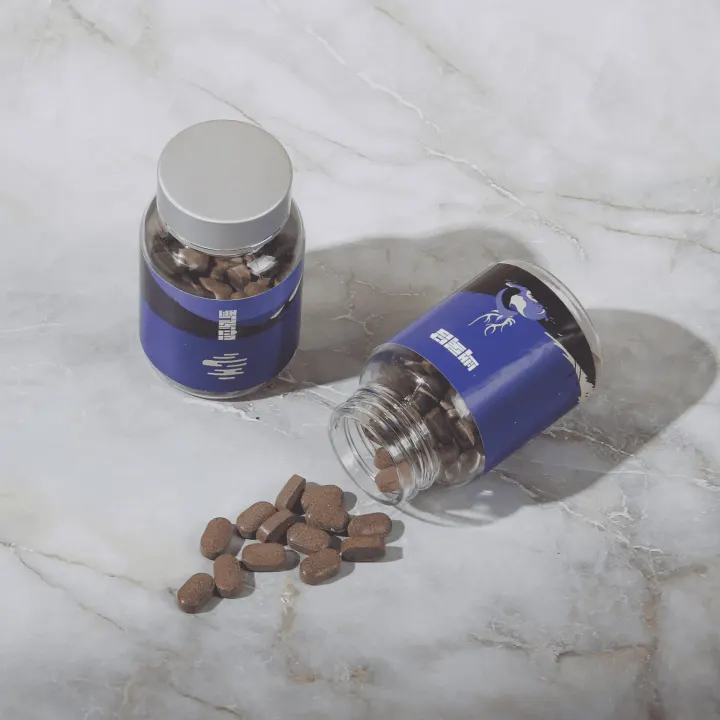
We focus on creating a bodily state where you can naturally control your food intake without forced starvation through the Baekrok Gambijeong program, which corrects these imbalances to reduce the frequency of fake hunger.
Frequently Asked Questions
Q. Is just enduring it the only answer for fake hunger?
Simply suppressing it can lead to even bigger binges later. Instead, try providing an 'alternative reward.' Divert your brain's attention by taking a light walk or drinking warm tea to provide a different kind of stimulation.
Q. I crave sweets whenever I'm stressed. Is this also fake hunger?
Yes, this is a classic example of emotional hunger. When cortisol levels rise due to stress, the brain craves simple sugars that can provide energy quickly. This is not hunger from an empty stomach, but the brain's reward circuit in action.
Q. Why is it so important to distinguish between real and fake hunger?
If you continue to eat without distinguishing between them, your insulin resistance will increase, changing your constitution into one that gains weight more easily. Distinguishing whether your body's signal is a 'lack of nutrients' or an 'emotional deficiency' is the starting point of a healthy diet.