
Headaches MRI/CT Can't Detect: Where's the Real Culprit? | Incheon Headache Korean Medicine Clinic

Headaches Not Caught by MRI/CT: Where's the Real Culprit?
| "My head feels like it's going to burst, so I had an MRI and CT scan, but they said nothing was wrong. Does that mean I'm not really sick?" |
This is the story of Kim Min-jun (pseudonym), a professional in his late 30s.
| [CASE] Clues from Kim Min-jun's (pseudonym) Daily Life He had been suffering from headaches of unknown cause for two years. At first, he thought it was simple fatigue from frequent overtime, but the throbbing pain that even visited him on weekends plunged him into despair. After undergoing brain MRI and CT scans at a general hospital, the doctor's answer was, "There are no significant structural abnormalities." |
Have you ever experienced a headache before an important exam or during extreme stress? That is the starting point of this article.
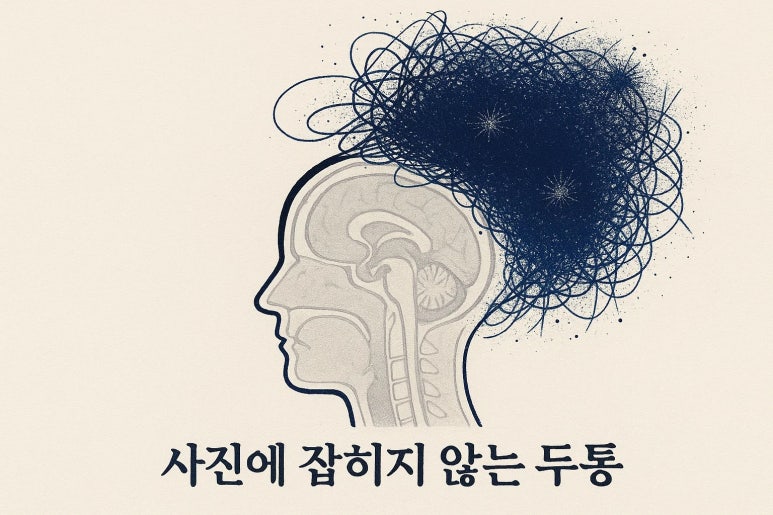
Not all headaches are "red flag" signals caught by an MRI. Headaches caused by structural problems like brain tumors or cerebral hemorrhages account for only a small fraction of all headache patients. The real problem lies in "functional headaches," which don't show up on scans.
| [Terminology Explanation: Dam (Phlegm) and Eo-hyeol (Blood Stasis)] In Traditional Korean Medicine, 'Dam' and 'Eo-hyeol' refer to waste products in the body and stagnation of blood circulation, respectively. These are interpreted not merely as symptoms but as indicators of overall bodily imbalance. |
This complex situation is like a "malfunctioning fire alarm." It's a scenario where the actual ember is small, yet the entire system overreacts, blaring a loud siren. Our bodies, too, overload the communication system between the brain and body due to chronic stress and poor posture, generating a signal we perceive as a headache.
| [Clues to Pay Attention To] If this headache were merely a musculoskeletal issue, it should be resolved with painkillers or physical therapy. However, if the pain persists despite repeated use of painkillers, it's a sign that a deeper cause needs to be investigated. |
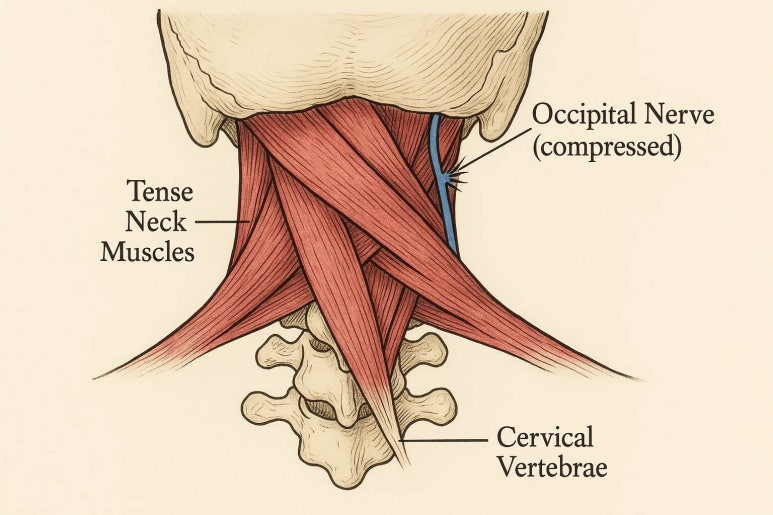
This chronic muscle tension goes beyond simple physical fatigue. The pinprick-like pain, stiff neck, and heavy shoulders are due to poor posture, such as military neck or forward head posture, which continuously compress the muscles and nerves around the cervical spine. This type of pain is only temporarily relieved by painkillers, and frequent use of drugs like Ibuprofen can even lead to another problem called "medication overuse headache."
So, what kind of "red flag" headaches necessitate an MRI?
Generally, these include headaches that suddenly appear after age 50, extremely severe pain described as being hit by a hammer, accompanying vision impairment or paralysis symptoms, or when fever and nuchal rigidity are present.
In the case of a 35-year-old patient who recently visited the hospital for a cerebral hemorrhage, their VAS (Visual Analog Scale) score upon emergency room arrival was 9 out of 10, and they reported the most severe headache they had ever experienced. (VAS 9/10) Such symptoms suggest serious structural problems like cerebrovascular disease or tumors, making MRI or CT scans essential.
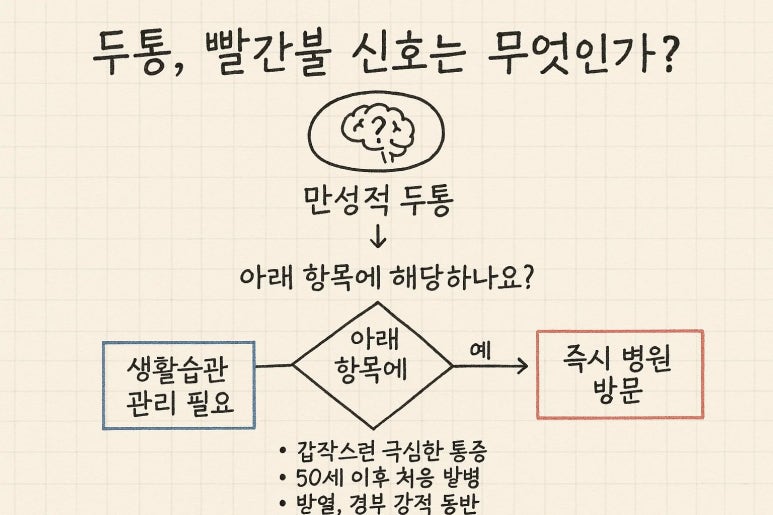
However, most patients with chronic, recurrent headaches do not fall into the category of these "red flag" headaches. Instead, their problems stem from poor lifestyle habits, failed stress management, and chronic muscle tension. Our bodies react honestly. A stiff neck and shoulders due to poor posture, and an autonomic nervous system exhausted by excessive stress, scream out in the form of a "headache."
If your headache shows no abnormalities on examination and is accompanied by other symptoms like neck and shoulder stiffness or indigestion, it's necessary to explore the entire interconnected chain—"neck-shoulder-nerves-stress"—rather than simply looking for the problem in your "head." This is a new approach that views headaches from a "functional" rather than "structural" perspective.
The first step to resolving headaches begins with reducing the frequency of painkiller intake. Simultaneously, efforts are needed to maintain good posture and consciously stretch the neck and shoulders to release muscle tension. As these small changes accumulate and communication between the brain and body becomes smoother, you may no longer suffer from headaches that don't show up on scans.
Headache is one of the most important signals sent by the brain. However, whether that signal indicates a "fire" or a "malfunctioning fire alarm" depends on how much we listen to our body's voice.
Understanding and managing the cause of headaches in this way suggests the need for a "shift in perspective"—viewing the problem not merely as "suppressing it," but as "restoring the body's balance."