

Bloating and Wild Blood Sugar Swings | Indigestion & Blood Sugar Management for 40s Women

Table of Contents
Indigestion and Unstable Blood Sugar: Why Do They Often Occur Together in Middle-Aged Women?
Our body is a single organism. While digestion and blood sugar regulation might seem distinct, they are, in fact, interconnected processes within the larger framework of vital bodily functions, constantly influencing each other. When explaining the relationship between these two, I often liken our body to a ‘precisely interconnected city’. Food is the energy source that powers the city, and the digestive system acts as a ‘logistics system’ that breaks down this energy and delivers it to each organ. Furthermore, blood sugar regulation is a key factor in maintaining the stability of the city’s ‘energy supply network’.
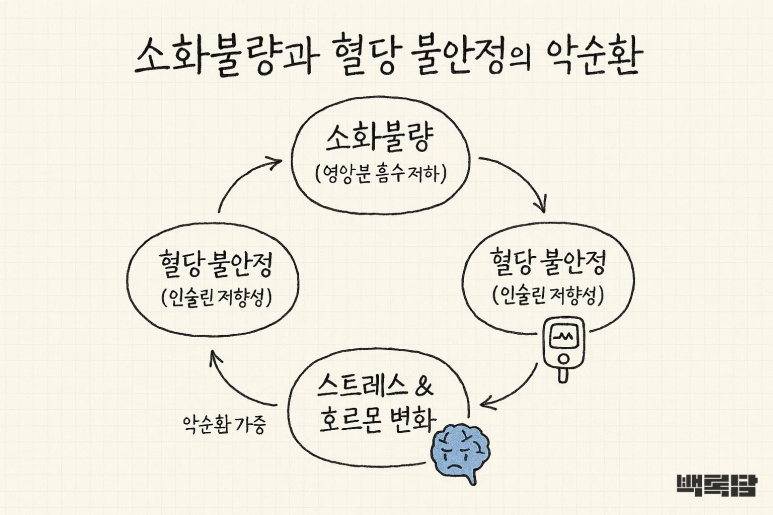
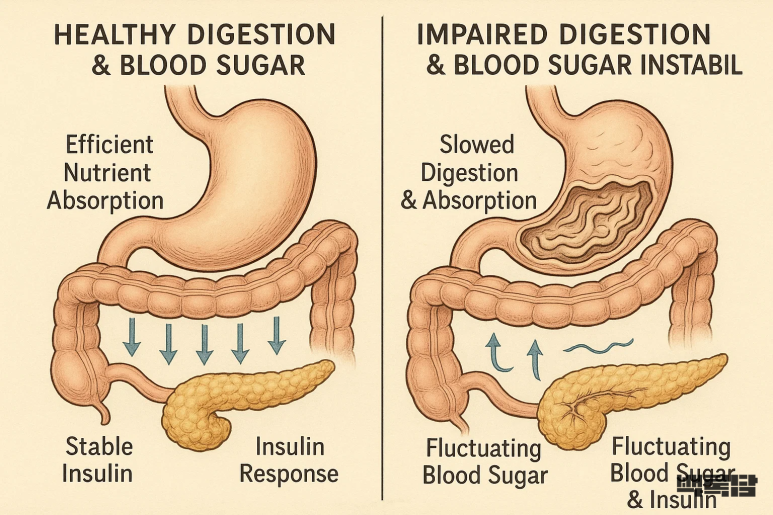
| Indigestion isn't merely a stomach issue. When food isn't properly digested, nutrient absorption slows down, creating an unstable pattern of rapidly rising or falling blood sugar. For instance, if undigested carbohydrates remain in the intestines for too long, it can lead to blood sugar spikes or worsen insulin resistance. Moreover, if blood circulation isn't smooth, the gastrointestinal tract receives insufficient oxygen, leading to a decrease in digestive efficiency. Reduced gut motility hinders food movement, causing digestive delays, which, in turn, stresses blood sugar regulation. Our body's autonomic nervous system engages in a complex interplay, responding to stress or unstable blood sugar by impairing digestive function. |
Thus, indigestion and blood sugar issues are interlocked like gears. If one becomes unstable, the other is bound to be easily affected. Particularly in middle-aged women aged 40 and over, these imbalances tend to be exacerbated by additional hormonal changes and stress.
Sunyoung's (Pseudonym) Case: The Link Beyond the Symptoms
This is the story of Sunyoung (pseudonym), a woman in her mid-40s whom I recently treated.
| Sunyoung (pseudonym) always woke up feeling bloated and suffered from severe post-meal drowsiness after eating. She mentioned that she found it difficult to concentrate at work due to overwhelming sleepiness, especially after lunch. In the evenings, along with lethargy, she had intense cravings for sweets and frequently sought out snacks and bread for late-night meals. As this lifestyle continued, she gained weight, and during her health check-up, she was told she had 'borderline blood sugar,' though not yet diabetes. Sunyoung (pseudonym) endured each day with digestive aids and coffee, believing all these symptoms were simply due to 'fatigue'. |
Sunyoung's (pseudonym) case highlights aspects we often overlook. Feeling uncomfortable and lethargic wasn't merely a digestive issue. Unstable post-meal blood sugar levels were causing severe post-meal drowsiness and cravings for sweets, leading to a vicious cycle of unhealthy eating habits. I thoroughly explained to Sunyoung (pseudonym) the reciprocal impact of digestion and blood sugar and proposed a strategy to adjust both her diet and lifestyle habits.
Dietary Strategies to Manage Digestion and Blood Sugar Simultaneously
The first step in managing both indigestion and unstable blood sugar simultaneously begins with dietary changes. We often search for healthy foods, but sometimes we miss the 'how-to' of healthy eating itself. I emphasize three principles to my patients.
Firstly, when eating, it is essential to proceed slowly and with ample time. Eating too quickly places a significant burden on the stomach, hinders digestive enzyme secretion, and consequently becomes a major culprit in rapidly raising blood sugar. I recommend dedicating at least 20 minutes to each meal. Secondly, it's important to include plenty of diverse whole grains and vegetables in your diet. These are rich in fiber, which helps mitigate rapid blood sugar spikes, improves gut health, and supports overall digestive function. Finally, try slightly altering your meal order. Eating vegetables first, followed by protein, and then carbohydrates last, is highly effective in significantly reducing blood sugar spikes and maintaining satiety for longer.
| Processed foods, refined carbohydrates, and excessive sugar intake can burden digestive organs, rapidly raise blood sugar, and worsen insulin resistance. Additionally, lying down immediately after eating can cause acid reflux and hinder digestion, so it's advisable to sit or engage in light activity for at least 2 to 3 hours after meals. |
Lifestyle Improvements to Restore Body Vitality

Moving your body is one of the most reliable ways to kill two birds with one stone: managing both digestion and blood sugar control. Especially for middle-aged women, regular exercise is immensely helpful in correcting physical imbalances caused by hormonal changes.
Regular aerobic exercise is essential for restoring overall body vitality. Activities like walking, jogging, and swimming promote systemic blood circulation, which in turn increases blood flow to the intestines, leading to a direct activation of digestive functions. Furthermore, it is also highly effective in stably regulating blood sugar and increasing insulin sensitivity. Alongside this, core strengthening and stretching cannot be overlooked. Core exercises like planks or Pilates strengthen abdominal muscles, providing strong support for internal organs and assisting digestive movements. Stretching, such as yoga, helps reduce stress and activates the parasympathetic nervous system, thereby making digestive function more comfortable.
| If you have severe digestive issues, or if you engage in high-intensity exercise immediately after meals, it can actually reduce blood flow to the gastrointestinal tract, worsening indigestion symptoms or causing conditions like acid reflux esophagitis. Therefore, it's important to start with a light walk after meals and choose exercise of an appropriate intensity for your body's condition. |
I believe this entire process goes beyond merely eliminating symptoms; it is a journey to find balance within our entire body. Indigestion and unstable blood sugar are valuable signals our body sends. If we listen to these signals and consistently implement small changes, our body will undoubtedly reward us with a healthier and more vibrant state. Even if not with me, I sincerely recommend you embark on that journey with a healthcare professional who can carefully examine your entire body and offer advice. For the very process of understanding and caring for your own body is already the beginning of recovery.