Tips for Accurate InBody Results: Timing and Conditions

Table of Contents
Have you ever felt your shoulders slump after receiving your InBody result sheet? That moment when you’ve been sticking to your diet and exercising until yesterday, yet your body fat percentage remains the same and your skeletal muscle mass actually seems to have decreased. I often see patients in the consultation room handing over their results with that same discouraged look. However, "measurement conditions" account for more than half of the InBody results. Today, I will summarize how you can get InBody results that most accurately reflect your body and help you feel better about your progress.
Why InBody Results Vary Every Time
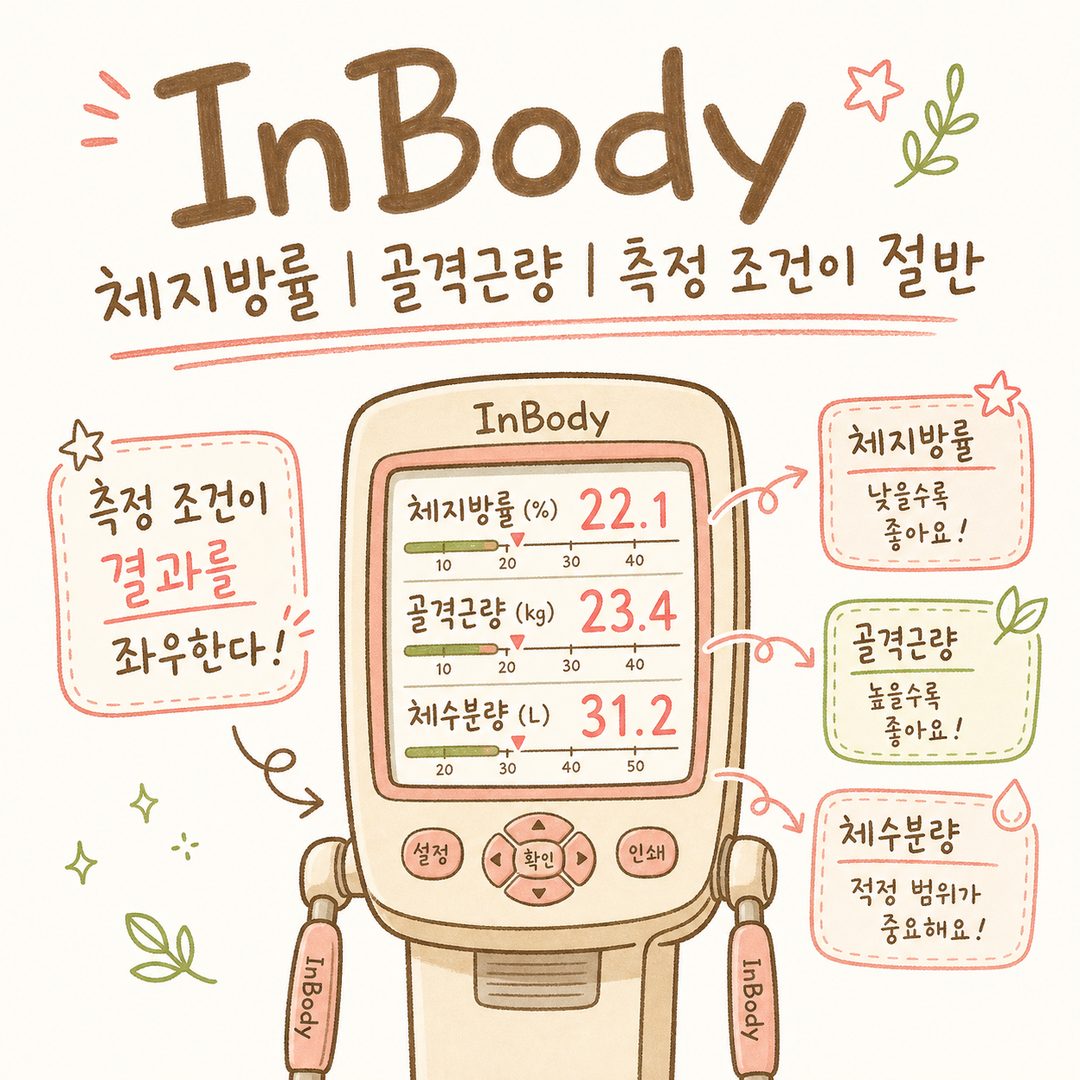
InBody is a device that estimates body water, muscle, and fat by sending a weak electrical current through the body. Therefore, your physical state immediately before the measurement is directly reflected in the results. According to some data, right after a meal, the food and water in your stomach and intestines can be misidentified as body fat, leading to a higher body fat percentage reading. The same applies if you postpone going to the bathroom. Even the waste remaining in your intestines is captured as fat.
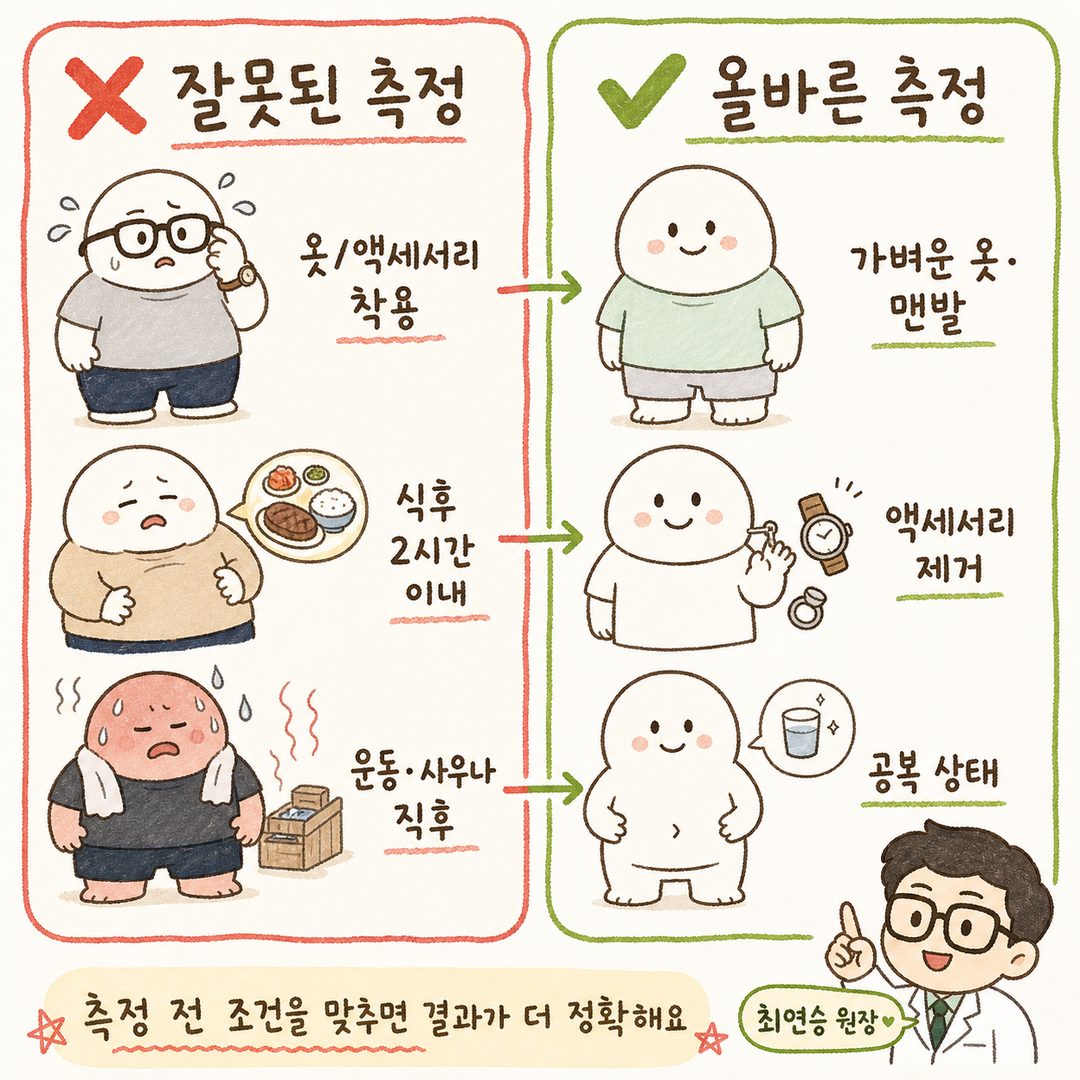
Clothing and accessories cannot be ignored either. InBody recognizes the weight of clothes, watches, and phones as part of your body and calculates them into the fat category. A single thick hoodie can fluctuate your body fat percentage for that day. Metal watches or necklaces can even interfere with the flow of the current, increasing the margin of error. In short, even if the same person is measured twice at 30-minute intervals, the results can differ.
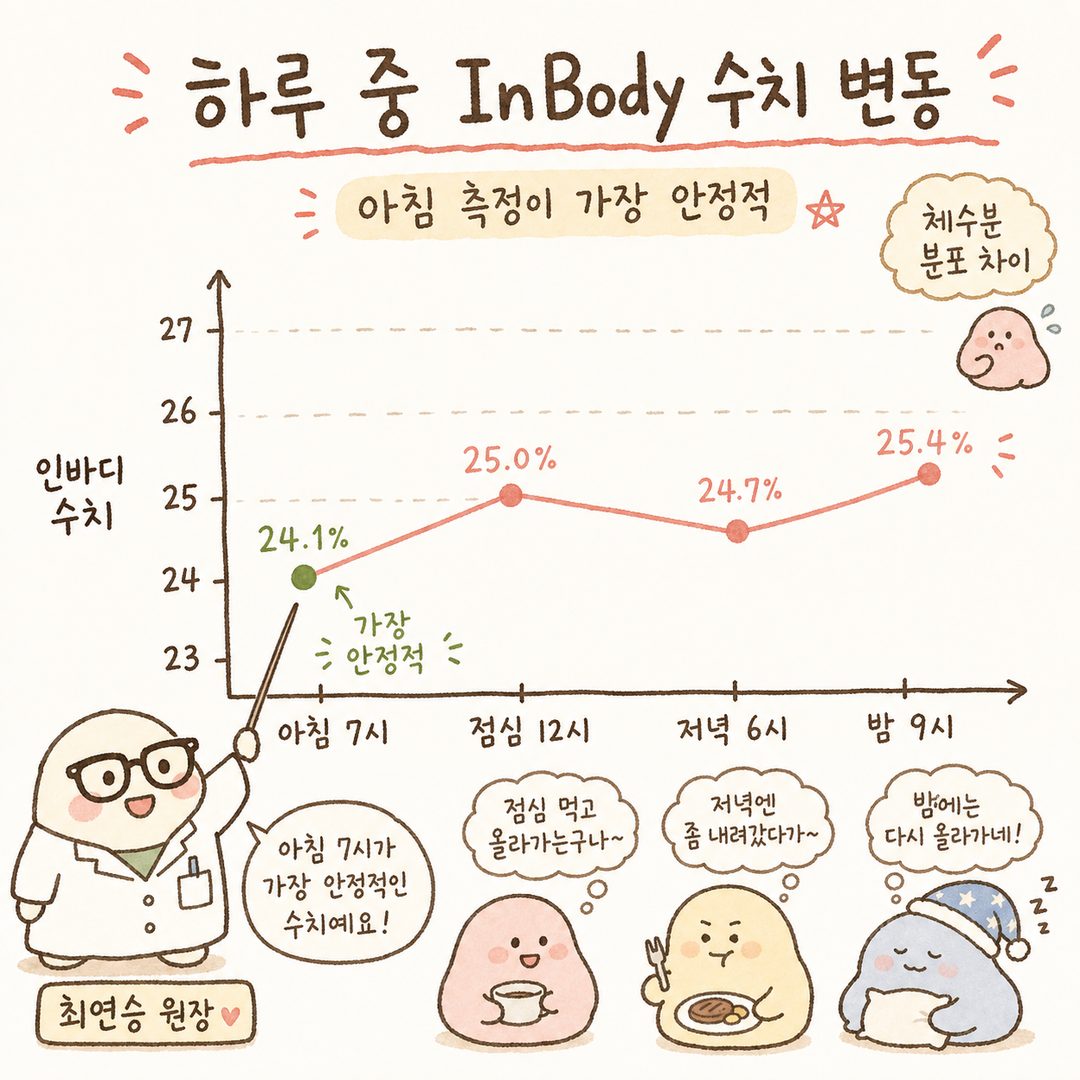
Same Body, Different Results — The Impact of Timing
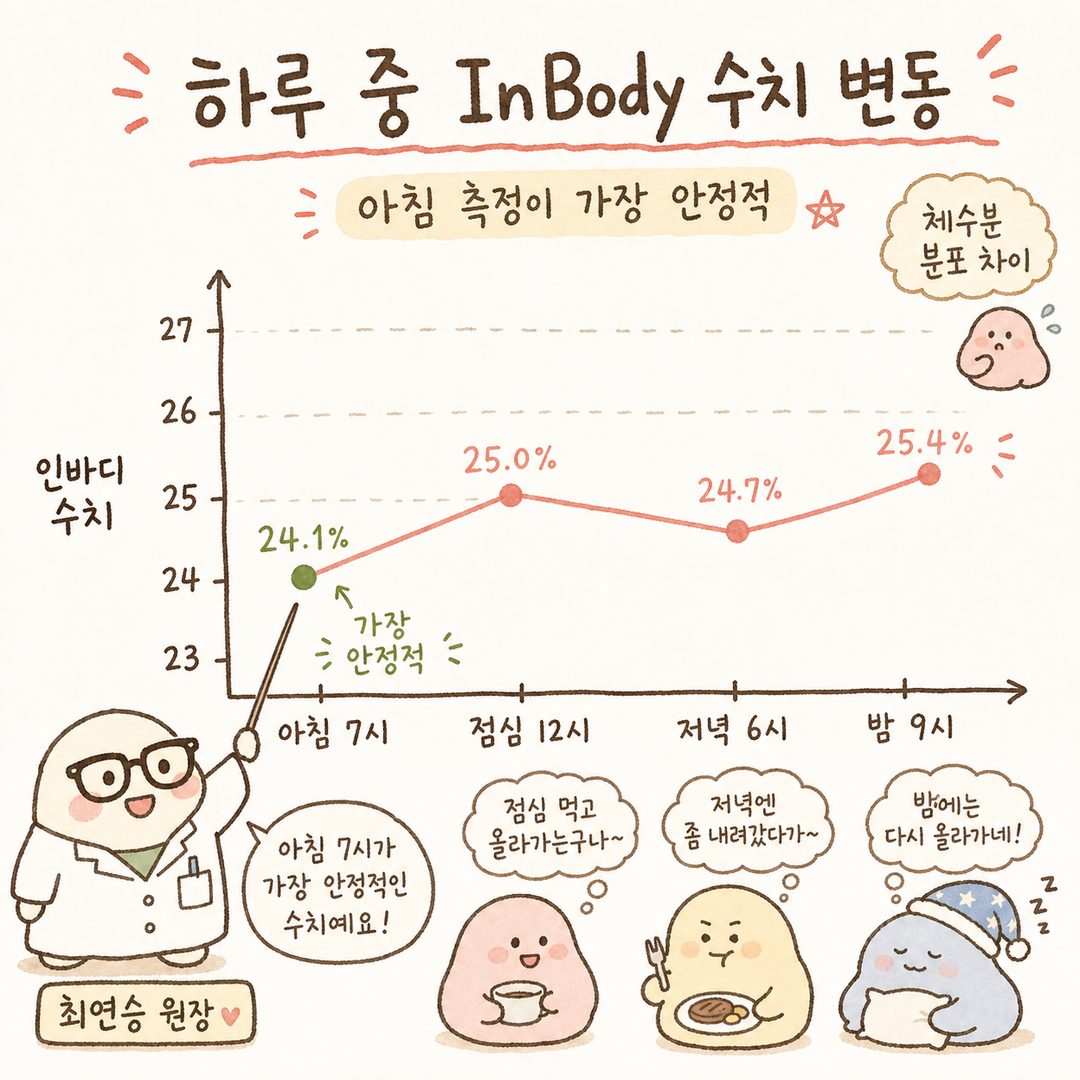
This is a common story I hear in the clinic: "It came out well in the morning, but I ruined it again in the evening." In reality, it's not that your body changed, but that your body water distribution shifted during the day. Some data explains that body water and edema (swelling) change between morning and evening, causing InBody results to fluctuate slightly. This is even more pronounced right after exercise or a sauna session. Blood flow and body temperature are different from usual, and saunas can easily distort figures due to dehydration.
Immediately after waking up is also an unexpected trap. If you have been lying down for a long time, body water may not be evenly distributed, which can result in a higher measurement of lower body muscle. Therefore, it is best to measure about 2 hours after waking up, once your body has found its normal rhythm. Setting a schedule for 2–3 days a week at the same day and time will make the trends look much clearer. This allows you to distinguish whether it's a real change or just a difference in that day's condition.
Baekrokdam Clinic's View on InBody — Trends Over Constitution
In Korean medicine, we believe that even with the same weight, the way each person's body is composed differs. Some have an edema-prone constitution where water stagnates easily, while others have sufficient muscle mass but accumulate visceral fat. These are aspects that are difficult to conclude with just one InBody sheet. That’s why, when I show patients their results, I suggest looking at the overall trend over the last three months rather than a single line of numbers.
Particularly for those who experience frequent edema, their weight can fluctuate by nearly 1kg depending on their condition on the day of measurement. In such cases, rather than blindly reducing food intake, it is safer to combine Korean medicine prescriptions that manage water metabolism with lifestyle adjustments. Protein should be consumed at about 1.2 to 2.2g per 1kg of body weight, adjusted according to your gastrointestinal condition. When you understand that fluctuations in InBody numbers are variations fully explainable from a constitutional perspective, you stop being swayed by daily results.
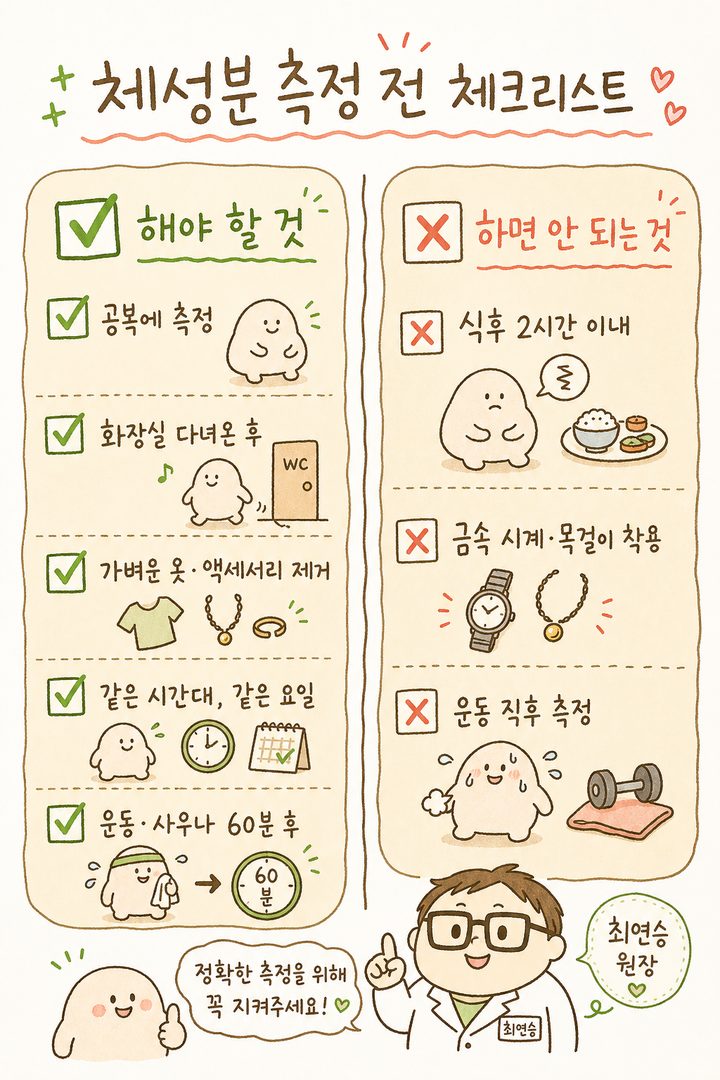
Measurement Routine to Apply Today
It doesn't have to be complicated. I’ll summarize the exact sequence I recommend to patients in the clinic.
Measure on an empty stomach: Try measuring at least 2 hours after a meal. If possible, a morning fast is the most stable.
Measure after using the bathroom: You must empty your bladder and bowels so that residual waste is not captured as fat.
Light clothing and remove accessories: Please remove all metal items like watches and necklaces, and wear thin clothing with bare feet.
Same time, same condition: It is more accurate to collect results measured at the same time about 3 days a week to see the trend.
Avoid measuring right after intense exercise or sauna: Avoid measuring within 60 minutes of intense exercise or right after a sauna, as the numbers will fluctuate significantly.
Let’s add a lifestyle tip here. When adjusting your diet, rather than an unreasonable weight loss approach like suddenly cutting 700kcal, adjusting slowly within your basal metabolism will help prevent muscle loss. Since exercising every day can be difficult at first, try starting about 3 times a week according to your physical strength. Above all, keeping measurement conditions consistent is the priority. Only then can you confirm if the diet and exercise changes you've made are actually effective.
InBody is a tool like a mirror. Just as the same person looks different depending on how they stand in front of a mirror, your mindset when receiving the result sheet becomes much lighter just by aligning the measurement conditions. Still, if you experience frequent edema or large fluctuations in results despite your weight remaining the same, I recommend checking from a constitutional perspective. At Baekrokdam Clinic, rather than obsessing over a single InBody figure, we look at the patient's constitution and lifestyle patterns together to provide Baekrok Gambi-jung prescriptions and lifestyle guides. If your heart is often shaken by the result sheet, feel free to come in for a consultation.