
Student Diet Plan: School Lunches & Healthy Habits

Table of Contents
"Late-night snacking increases as exams approach. I sigh every time I look in the mirror." This is a common sentiment I hear from student patients in the clinic. I can only imagine how complex it feels to balance growth, studies, and weight management all at once.
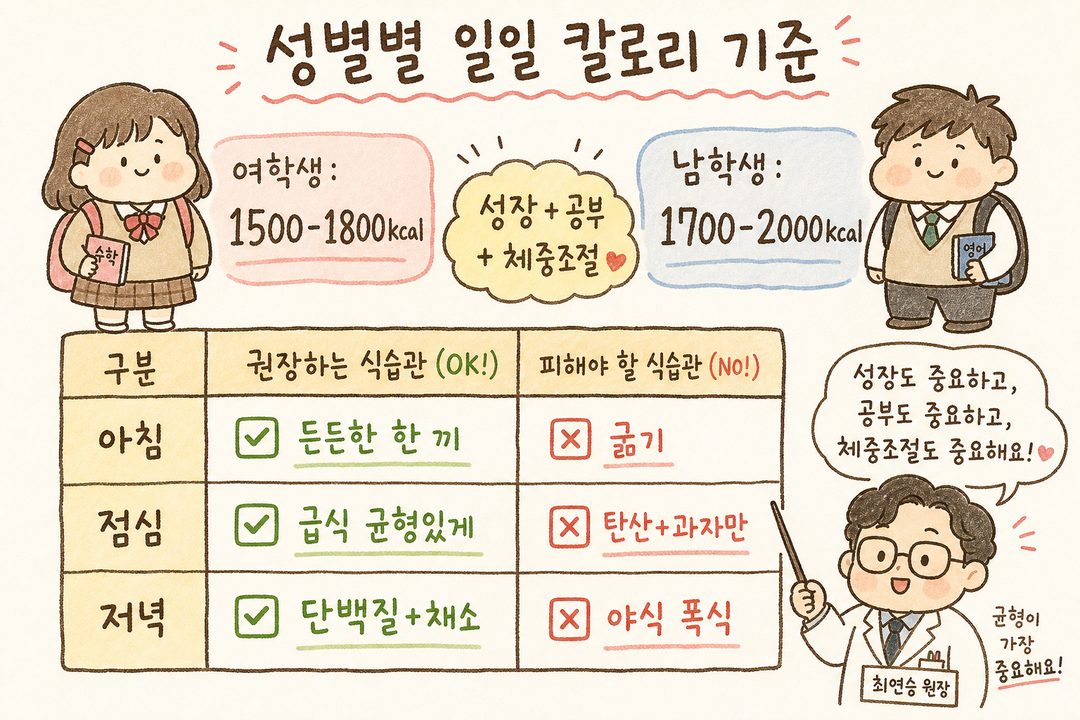
Why Student Weight Management Must Differ from Adults
A student diet is not just about losing weight. Growth, academic performance, and weight control must all function together. If you drastically cut calories like an adult, it can stunt growth and leave you feeling dazed during class. This is why doctors recommend reducing instant foods and snacks while increasing activity levels for students rather than reckless fasting.
Calorie standards are similar across most data. It is reported that it is safe to reduce weight gradually while consuming at least 1,500–1,800 kcal per day for female students and 1,700–2,000 kcal for male students. While this varies by weight and activity level, dropping below these levels will inevitably affect both growth and learning.
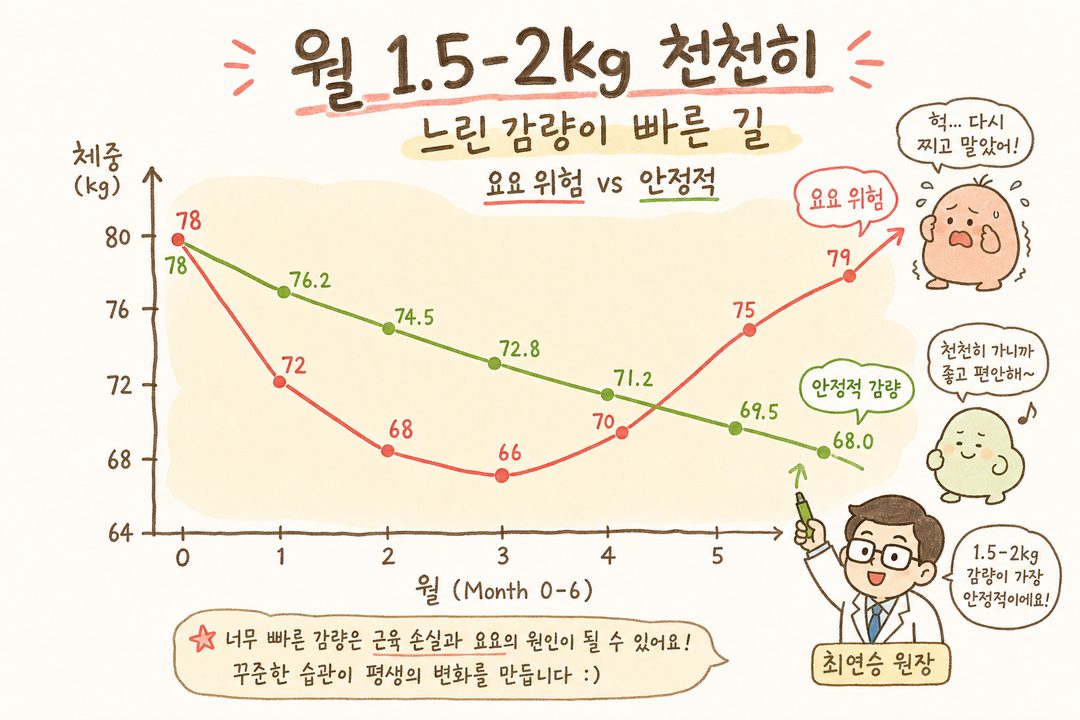
The most unfortunate cases I see in the clinic are extreme diets where students eat only sweet potatoes and eggs to lose 5kg or 7kg in a short period. This approach causes muscle and water loss before body fat. Often, this leads to a massive rebound in appetite once the diet ends. This is a path that is difficult to recommend during the growth period.
How Students Who Lose Weight Slowly Differ
The World Health Organization (WHO) generally recommends a weight loss of 1.5–2 kg per month. Interviews with student dieters show a similar trend. They report that eating only "one meal a day" or skipping meals makes it harder to lose weight and leads to a yo-yo effect. The habit of eating three meals a day at set times is evaluated as the most effective.
One high school student I met in the clinic initially had a pattern of skipping lunch and overeating at dinner. Once the focus shifted to eating school lunches properly and only reducing snacks, body fat began to decrease subtly within a month. Their condition changed before the numbers on the scale did. It became much easier to wake up in the morning, and drowsiness during late-night self-study sessions decreased.
Those who stopped after trying to lose weight too quickly share similar regrets: "I lost weight for a bit, but it all came back after exams." During student years, speed equals safety. The fact that slow weight loss is actually the fastest way is repeatedly confirmed by both statistics and clinical experience.
Student Weight Management at Baekrokdam Clinic
In Korean medicine, when looking at student weight management, the first things we examine are digestion, sleep, and academic stress. During periods when late-night snacks and sugary drinks increase, the stomach is under constant pressure, which disrupts the appetite control circuit itself. For students who frequently binge eat due to stress, it is not a matter of willpower but a state where the body's signals are misaligned.
Approaches vary by constitution. Those with a Damyum (waste/phlegm-dampness) constitution who swell easily find that snacks and salty foods quickly turn into fat. Conversely, those with a Qi deficiency (energy lack) constitution feel dizzy and lose concentration even with slight fasting. This is why the same meal plan can yield different results. For students, a direction of awakening metabolism by eating well rather than starving is safer. Korean medicine treatment focuses on gently restoring stomach function and managing the desire for late-night snacks in line with this flow.
During the growth period, we do not judge based on a single number on the scale. We adjust slowly while monitoring appetite patterns, sleep quality, constipation, and fluctuations in physical condition. This is why we recommend a method where the body remains stable, even if it is slow, rather than places that promise rapid results.

Practical Points to Apply Starting Today
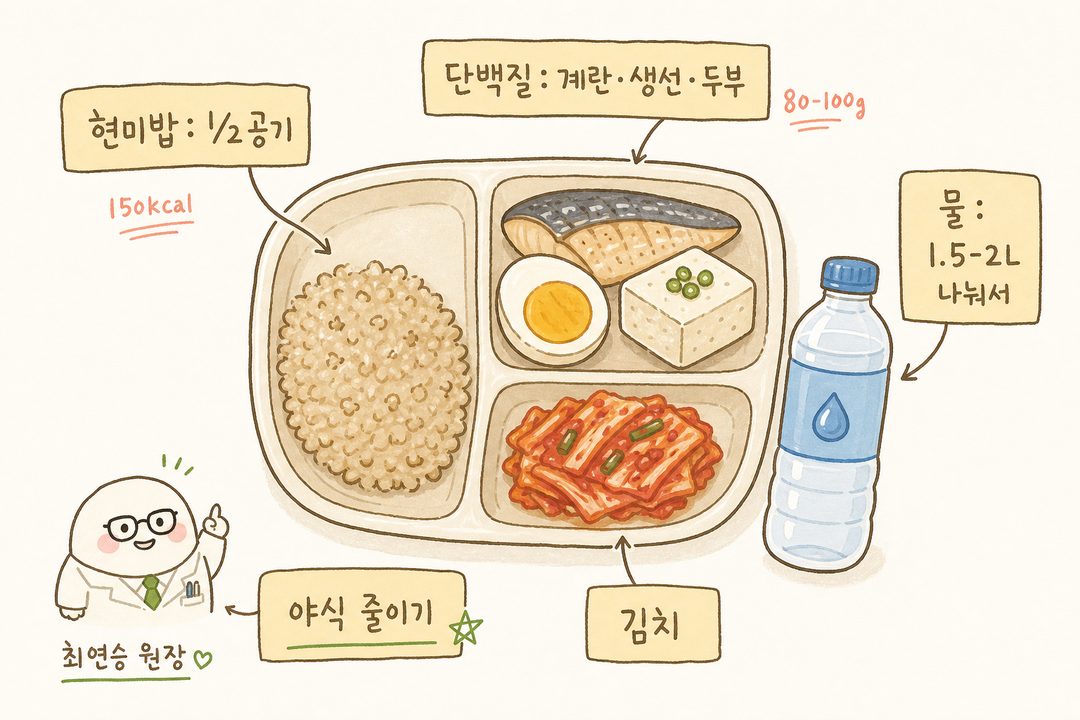
The general principles of a diet plan are not difficult. Start by making sure to eat your school lunches. School lunches are planned by nutritionists and are generally more balanced than diet lunch boxes. Try to adjust your portion to 1/2 to 2/3 of a bowl of brown or multi-grain rice instead of white rice whenever possible. Do not forget to include a palm-sized portion of protein (about 80–100g)—such as lean meat, fish, tofu, or eggs—with every meal.
It is good to drink 1.5–2L of water a day in small portions. Rather than gulping it down all at once, it is more realistic to fill a cup during every break. Since it is hard to quit snacks and late-night meals instantly, start by reducing cookies, bread, ramen, ice cream, and soda. If you prioritize cutting out high-sugar carbohydrates, fried foods, and salty or spicy menus, you will see changes without feeling overwhelmed.
Breakfast can be kept light. 1/2 bowl of brown rice (100g, about 150 kcal), 1–2 eggs (about 70 kcal each), and a little kimchi can be easily managed before school. Aiming for a total of 1,500–1,700 kcal for the day is reasonable. For active students, do not cut out carbohydrates completely; instead, simply reduce the portion size appropriately.
What is more important than the meal plan itself is consistency. Eat three meals at roughly the same time and avoid pushing late-night snacks later into the night. Following just these two rules can change your month.
To the students carrying the burden of weight management between growth and studies, and to the parents watching from the side, my message is the same: the slow and safe path is ultimately the fastest. If you are concerned about your physical condition or appetite patterns being disrupted by diet alone, consider a student weight management consultation tailored to your constitution along with Baekrok Gambi-jung. Baekrokdam Clinic will help you find a direction that is safe for your growth period.