
Sebum and skin cells clog the pores
When sebum increases and skin cells that should be shed accumulate inside the hair follicle, closed comedones or open comedones may form.
Acne is a process where sebum and shed skin cells block the hair follicle, allowing bacteria naturally present on the skin to multiply and cause inflammation. Hormonal changes such as puberty or pregnancy, family history, and certain medications can increase the risk, and skin or hair products that clog pores may also be related to the lesions. While diet or stress can be aggravating factors for some people, a single food or cleansing habit cannot be concluded as the sole cause of all acne.
Guide to Causes of Acne
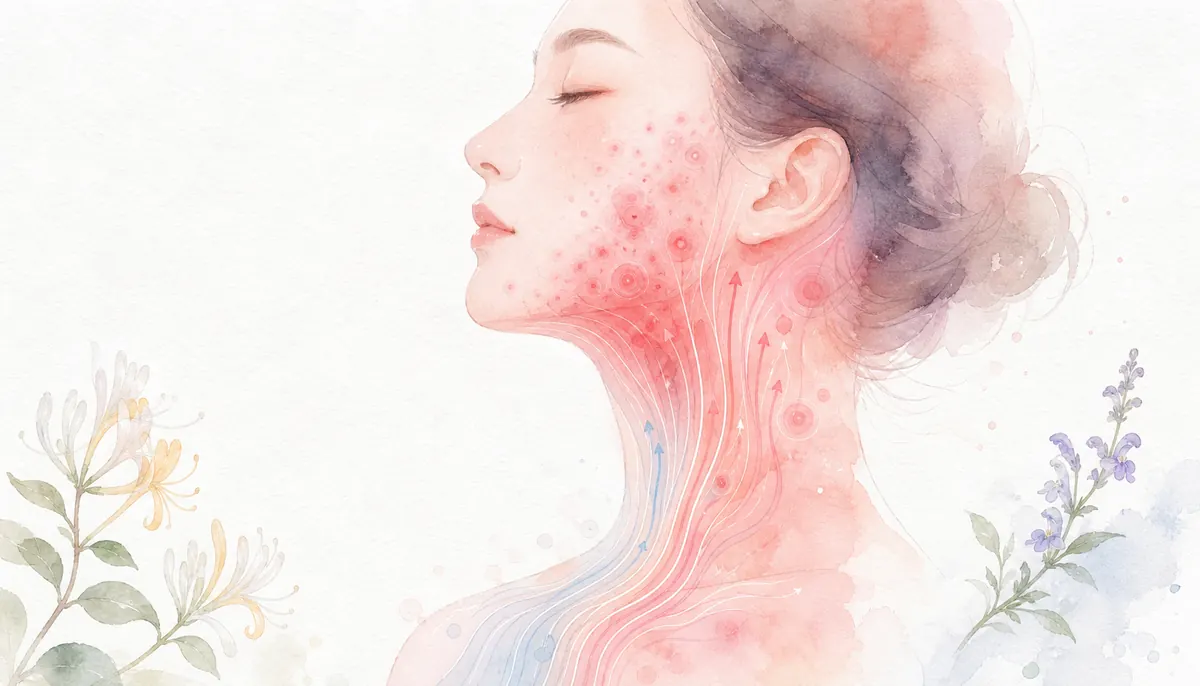
Distinguishing Causal Context
| Recurring Pattern | Possible Context | First Step |
|---|---|---|
| Blackheads, whiteheads, and red pimples appearing together | Clogged pores due to sebum and dead skin cells, and inflammation | Record the shape and location of lesions and the number of new lesions |
| Worsening around puberty, menstruation, or pregnancy | Effect of hormonal changes on sebaceous glands | Record the cycle, timing of worsening, and other bodily changes |
| Recurrence on the forehead or hairline after using new products | Effect of skin or hair products that clog pores | Check for 'oil-free' or 'non-comedogenic' labels and the area of contact |
| Sudden increase after starting a new prescription medication | Temporal relationship with certain medications | Do not discontinue medication arbitrarily; consult your prescriber |
| Increase in deep, painful nodules or remaining scars | Risk of severe inflammation and scarring | Prioritize diagnosis and treatment at a dermatology clinic |
What the clinic checks first
Acne is not caused by dirty skin, but is a condition created by a combination of sebum, skin cells, bacteria, and inflammation within the hair follicle. Since hormones, family history, and medications can affect the risk of occurrence, and stress, friction, and certain diets can contribute to worsening, it is helpful to distinguish between the causes and the aggravating factors.
When sebum increases and skin cells that should be shed accumulate inside the hair follicle, closed comedones or open comedones may form.
In follicles where sebum and cells have accumulated, bacteria naturally present on the skin can easily multiply, which may trigger an inflammatory response.
If the wall of the clogged follicle is damaged, sebum, cells, and bacteria spread to the surrounding skin, leading to swollen, red, and painful pimples or deep lesions.
Hormonal changes, such as the increase in androgens during puberty or during pregnancy, can stimulate the sebaceous glands and affect the occurrence and worsening of acne.
If close family members have acne, an individual may have a higher susceptibility. It may also be related to certain medications, including hormones, corticosteroids, and lithium.
Cosmetics or hair products that clog pores, pressure and friction from tight equipment, vigorous scrubbing, or squeezing lesions can worsen the condition in specific areas.
The process begins when sebum and skin cells clump together inside the pore and cannot be discharged. Do not attempt to resolve this with aggressive cleansing or repeated scrubbing.
Bacteria naturally living on the skin add to the inflammation within the environment created by blocked follicles and sebum. Sebum, pores, and inflammation must be viewed together.
Blocked pores may appear as blackheads or whiteheads, or they may turn into red, painful lesions as inflammation increases; therefore, it is important to record their appearance.
During periods of hormonal change, such as puberty and pregnancy, the sebaceous glands can be stimulated, causing lesions to start or worsen.
If close family members, such as parents, had acne, the likelihood of occurrence may be higher, but family history alone is not used to definitively diagnose current lesions.
Even if certain medications may be related to acne, do not arbitrarily discontinue important prescriptions; instead, inform the prescriber of the start date and the timing of any worsening symptoms.
Research is ongoing regarding the possibility that certain diets aggravate acne, but cutting out a single food is not a substitute for diagnosis or treatment.
Acne may worsen during periods of high stress, but changes in sleep, products, and hormonal context should be checked simultaneously.
Deep nodules, rapid scarring, or other rashes require a dermatological evaluation first. After maintaining standard treatment, you may consult on the supportive role of Korean herbal medicine for recurring discomfort.
Acne cause consultation at Baekrokdam
We check the depth and pain of lesions, rapid scarring, redness, heat, and systemic symptoms to ensure necessary dermatological care is not delayed.
We compare the location and onset date of lesions, hormonal changes, new products, and all medications within a single record.
Korean herbal medicine does not replace acne diagnosis or standard treatment; actual changes are verified through photos and the number of new lesions.
If you prepare photos of the lesions, the onset date and location, hormonal changes, new skin or hair products, all prescription drugs and supplements, and descriptions of recurring worsening, we can discuss the specific scope of support available at Baekrokdam.
It is a process where sebum and skin cells clog the pores, combined with bacteria and inflammation. Risk factors such as hormones, family history, medications, and products overlap differently for each person.
While the link between certain diets and flare-ups is being researched, a single food is not the cause for everyone. Record recurring reactions specific to yourself, but do not use this as a substitute for dermatological treatment.
Stress can worsen acne in some people, but it is not established as the sole cause. Hormonal changes, sleep, and product changes are also considered.
Do not stop taking medication on your own. Show the prescriber the name of the medication, the start or change date, and photos of the lesions to discuss the correlation and safe alternatives.
A single food cannot cure acne, nor does everyone require the same diet. Acne results from a combination of factors, including sebum, dead skin cells, inflammation of the hair follicles, and hormones. Record whether lesions repeatedly worsen after eating certain foods, but prioritize standard dermatological treatment and a balanced diet over excessive restrictive dieting.
Content reviewed:
This information supports, but does not replace, diagnosis or treatment by a qualified healthcare professional.