
Dermatology · Immunology Oriental Medicine Treatment
Cold Urticaria · Cold-induced Urticaria · Cold Wind Allergy· Cold Urticaria
Incheon Songdo Baekrokdam Oriental Medicine Clinic
Sensitive skin reacting to cold air; you must build the strength to endure it, not just suppress it.

Does your skin flare up whenever you're exposed to cold wind, and does medication only provide temporary relief?If you are afraid of even the air conditioner breeze that others find refreshing, or if you are scared to touch cold water, this page may be the answer.
Cold urticaria is not just a skin problem; it's a state where our body's temperature regulation switch is broken. Baekrokdam finds the way to return that switch to normal.
Key disease information at a glance
- Other names
- Cold urticaria, cold wind allergy, Hanjin (寒疹)
- Hanja
- 寒冷蕁麻疹 (Cold + Cold + Urticaria)
- Classification
- Dermatology · Immune Korean medicine disease
- Main symptoms
- Wheals (swelling), itching, and erythema upon exposure to cold stimuli
- Features
- Symptoms tend to worsen when it gets warm again
- Diagnosis
- Ice cube test, abdominal palpation, pulse diagnosis, and medical interview
- Treatment
- Focused on immune-modulating herbal medicine (Baekrokdam focuses on herbal medicine treatment)
- General treatment period
- 3–4 months (Chronic or severe cases may take longer)
- Telemedicine
- Possible
Frequently heard in the consultation room
Many patients visit with these descriptions
These are expressions often heard in the consultation room. If this sounds like you, it's worth suspecting cold urticaria.
Consult via non-face-to-face treatment →What is cold urticaria?
It is a condition where the skin becomes itchy and swollen when exposed to low temperatures such as cold air, cold water, or ice. It is different from simply 'feeling the cold,'Urticaria caused by physical stimuliit is a type of.
In Korean medicine, this is referred to as 'Hanjin (寒疹)'is what it's called. It is viewed as external cold energy (Hansa, 寒邪) invading the skin through weakened defenses, obstructing the circulation of Qi and blood, and causing an inflammatory response.
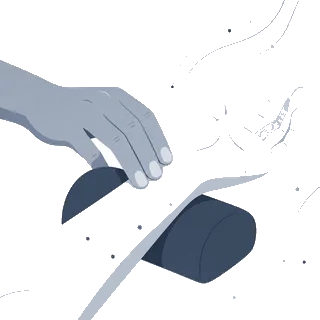
A unique point is that rather than when receiving the cold stimulus,symptoms often worsen when the body warms up again.this is because constricted blood vessels rapidly dilate, causing a surge of histamine, at which point patients experience extreme itching and pain.
In severe cases, exposure of the whole body to cold water can lead to anaphylactic shock, causing a drop in blood pressure or difficulty breathing, so it is by no means a condition to be taken lightly.
In terms of Western medical diagnosis,It is called Cold Urticaria (Cold Urticaria)**, and it is often confirmed through an ice cube test, where ice is applied to the skin.
Medical Staff

Chief DirectorDr. Yeonseung Choe
So many people visit because their skin flares up just from exposure to cold wind or even touching cold water. While antihistamines provide temporary relief, the symptoms often return once the medication wears off. This isn't just a surface-level skin issue; it's a sign that your body's temperature regulation system and immunity have weakened. Instead of treatment that merely suppresses symptoms, I will work with you to create a physical state where your body can overcome it on its own.
- Graduated from Gyeonggi Science High School
- Graduated from Kyung Hee University, Department of Pre-Korean Medicine
- Graduated from Kyung Hee University, College of Korean Medicine
- Current) Chief Director of Baekrokdam Korean Medicine Clinic
- Former) Chief Director of Miall Korean Medicine Clinic, Incheon Songdo Branch
- Former) Director of Miall Korean Medicine Clinic, Gangnam Main Branch
- Former Representative Director of Dolbom Korean Medicine Clinic, Seocho Main Branch
- [Publications]
- Overcoming Polycystic Ovary Syndrome
- Overcoming Chronic Vaginitis - Symptoms, Causes, and Treatment
- Post-miscarriage Care as Important as Postpartum Care: Post-miscarriage Herbal Medicine A to Z
Cold urticaria is not just due to the weather.Various reasons why my body's defense system has collapsed are overlapping.
Main causes of cold urticaria — how they accumulate
- 1 Deficiency of Yang energy in the body
A state where the energy that keeps the body warm and protects against external stimuli is depleted
- 2 Extreme stress and fatigue
It often occurs when the immune system becomes sensitive, such as in students or overworked office workers
- 3 Irregular eating habits
Consuming instant or cold foods weakens digestive functions and worsens skin metabolism
- 4 Autonomic nervous system imbalance
It is the result of a decreased ability of the autonomic nervous system to regulate the constriction and dilation of blood vessels according to temperature changes
- 5 Long-term use of antihistamines
Relying on medications that only suppress symptoms can cause the body's own regulatory abilities to gradually deteriorate
Cold urticaria involves not only skin symptoms but alsoSystemic discomfortis often accompanied by.
Main symptoms of cold urticaria — what patients actually experience
Skin area
- Wheals and edema — areas exposed to the cold swell up like mosquito bites
- Severe itching and stinging — unbearable itching or a needle-like pricking pain is felt
- Erythema (red spots) — The skin turns red and may feel warm
- Lip/tongue edema — Caution is needed as drinking cold beverages can cause the lips, tongue, or throat to swell
Accompanying symptoms — Systemic area
- Hands and feet are exceptionally cold and very sensitive to cold
- Easily fatigued and lacking energy
- Accompanied by headaches or dizziness
- Poor digestion and the abdomen often feels cold
- Palpitations or anxiety
In addition to the skin,Immunity and circulation of Qi and bloodsymptoms indicating problems with... appear together.
If these symptoms appear as a set, you shouldn't just look at the skinA signal that the entire body needs treatmentbecause.
Chronic cold urticaria, Baekrokdam's approach
Summary— Antihistamines that only suppress symptoms are not enough. The skin must restore its self-healing power to regulate temperature and defend itself.
Why Baekrokdam focuses on herbal medicine
The direction of herbal medicine is not just to suppress external symptoms, but to create a body that recovers on its own without medication.
Cold urticaria isIt's not just a simple allergic reaction.. It's because the 'Yang-gi (陽氣)' that protects our body has become insufficient, making it unable to overcome external cold energy. Antihistamines only block histamine, the resulting product, but cannot resolve the underlying cause of why histamine is being released excessively.
Herbal medicine strengthens the protective barrier (Wei-qi) on the skin's surface and builds the power to regulate internal body temperature.If Western medicine is 'putting out the fire now,' herbal medicine is closer to 'creating an environment where fires don't start.' Herbal medicine is the fundamental solution to breaking the cycle of recurrence that happens when you stop taking medication.
Why it doesn't show up well in tests
Tests look at numbers and structures, but the essence is often a 'bodily imbalance' that isn't easily captured by tests.
In many cases, nothing shows up in standard allergy tests (such as MAST). This is because it's not a reaction to a specific substance (food, dust, etc.), but ratherphysical stimulation called 'temperature'a reaction to
Therefore, 'normal test results' do not mean the patient is not in pain. It's a state where the sensitivity of skin cells to detect and react to temperature changes is too high, which is an area that cannot be fully explained by imaging or blood levels.
So how do we treat it? — The Baekrokdam way
We examine the whole body through medical history, pulse diagnosis, and abdominal diagnosis, and resolve the root cause with herbal medicine.
Beyond the visible symptoms,the environment inside the patient's bodywe approach by looking directly into
- Abdominal Diagnosis (腹診)— We check the digestive state and whether there is a lack of Yang-gi through coldness or tenderness in the abdomen. If the inside is cold, the skin's defensive power naturally decreases.
- Pulse Diagnosis (脈診)— We identify the degree of stagnation in Qi and blood circulation and the state of immune balance through the flow of the pulse.
- Medical Interview (問診)— We listen carefully to lifestyle habits, stress levels, sleep patterns, and eating habits. When and under what circumstances it becomes more severe is a major clue for the prescription.
Based on this diagnosisWarming the meridians and dispelling cold (溫經散寒, warming the meridians to drive out cold energy)andSupplementing Qi and securing the exterior (益氣固表, reinforcing energy to strengthen the skin barrier)are carried out simultaneously. The goal of herbal medicine treatment is not just to relieve itching, but to make the skin less sensitive to temperature changes.
Pattern identification classification of cold urticaria observed in clinical practice
The internal causes of cold urticaria vary from person to person. Treatment is divided into four main types.
Wind-Cold Type (風寒型)風寒
Those who react immediately to cold wind and have pale or light skin color
Treatment direction: Dispersing wind and dispelling cold (疏風散寒)
Exterior Yang Deficiency Type (表陽虛型)表陽虛
Those who are usually sensitive to cold, sweat easily, and have extremely low immunity
Treatment direction: Warming Yang and securing the exterior (溫陽固表)
Spleen-Stomach Disharmony Type (脾胃不和型)脾胃不和
Those with poor digestion, frequent swelling, and high levels of internal waste (phlegm-fluid)
Treatment direction: Strengthening the spleen and resolving dampness (建脾化濕)
Exterior Cold and Interior Heat Type (表寒裏熱型)表寒裏熱
Those with high internal heat due to stress, but whose toxins are stagnant because the exterior is blocked by cold energy
Treatment direction: Releasing the exterior and clearing heat (解表淸熱)
Adjusting the proportion of herbal medicine according to the patient's condition and in line with the pattern of improvement,Finely adjusting the prescription every 2 to 4 weeksis performed.

Step-by-step progress of cold urticaria treatment
Below is the general flow observed through Baekrokdam's herbal medicine treatment.
- Month 1 — Adaptation and Exploration Phase
This is the period when the herbal medicine begins to expel the cold energy from the body.
- The frequency of hives or the intensity of itching begins to change subtly
- Checking the status to see if the frequency of antihistamine intake can be gradually reduced
- Overall condition, such as digestion or sleep, may improve first
- Months 2–3 — Full Recovery Phase
This is the period when the skin's protective barrier thickens and becomes less sensitive to temperature changes.
- Noticeable decrease in the degree of swelling during the ice cube test
- Significantly reduced reaction to daily stimuli such as air conditioning or cold water
- Many people become able to carry out daily activities without Western medicine
- Months 3–4 — Consolidation and Relapse Prevention
This is the stage of stabilizing the constitution and completing the treatment.
- Resolving even the remaining subtle reactions and fully replenishing the body's Yang energy
- Checking if symptoms remain stable even as herbal medicine intake is gradually reduced
- Education on lifestyle habits and dietary management to prevent recurrence
Recovery speed may vary depending on the patient's condition and the duration of the illness.
Chronic patients of 5 years or moreIt may require a bit more patience. However, if you manage it consistently without giving up, you can certainly regain a much more comfortable daily life than before.
Get a comfortable non-face-to-face consultation for your current concerns.Herbal medicine prescriptions are available from anywhere in the country.
Chronic patients of 5 years or moreIt may require a bit more patience. However, if you manage it consistently without giving up, you can certainly regain a much more comfortable daily life than before.
Conditions easily confused with cold urticaria
It is easy to confuse with other types of urticaria, but cold urticaria has the distinct characteristic of being triggered by 'cold stimuli.'
Hives occur every day even without specific external stimuli. Cold urticaria must have a 'drop in temperature' as a trigger.
Contrary to cold urticaria, it occurs when exposed to hot stimuli. Although rare, some people experience both together.
It occurs when body temperature rises (exercise, bathing, etc.) and is characterized by small, millet-sized wheals. Cold urticaria appears as larger, clumped swellings.
It occurs when coming into contact with 'water' itself, regardless of temperature. It is very rare and has a different mechanism than cold urticaria.
It is characterized by chronic itching, dry skin, and lichenification in specific areas. It differs from the pattern of temporary swelling and disappearance seen in urticaria.
Cold urticaria treatment reviews
Cold Urticaria FAQ
Why does cold urticaria occur? Do I have to take medicine for the rest of my life?
Western medicine views it as excessive histamine secretion from mast cells, but Korean medicine sees it as a weakened state of the skin's protective barrier called 'Weigi (Defensive Qi)'. If you're only okay while taking medicine, it's just suppressing the symptoms. By reinforcing the body's Yang energy and balancing immunity, your body can adapt to temperature changes without medication.
I tested positive in the ice cube test; is Korean medicine treatment possible?
Yes, it is possible. In fact, such individuals are the primary candidates for Korean medicine. Swelling when ice is applied means the skin's temperature regulation function has become that sensitive. Reducing that sensitivity is the core of herbal medicine treatment.
I think I've developed a tolerance because I've been taking antihistamines for a long time.
In fact, many people come to us because increasing the dosage of antihistamines has no effect. Herbal medicine does not directly block histamine but rather improves the internal environment so that mast cells do not overreact. Rather than stopping Western medicine immediately, we recommend gradually reducing it while taking herbal medicine concurrently.
Even though it's summer, I get hives because of the air conditioning.
Cold urticaria doesn't just happen in winter. It appears with air conditioning, cold showers, and even when drinking cold beverages. Regardless of the season, the body perceives 'cold stimuli' as a threat, so systemic regulation is necessary.
How long should the treatment period be?
We usually recommend intensive treatment for about 3 to 4 months. If the duration of the illness is short, it may improve faster, but for those who have suffered for years, it may take more than 6 months for constitutional improvement. We will provide more specific guidance after observing the skin's reaction speed during the first month.
Is it possible to get herbal medicine prescriptions through telemedicine?
Yes, it is possible. Baekrokdam has a nationwide telemedicine system, so those who find it difficult to visit in person can receive herbal medicine prescriptions through detailed medical history taking and consultation. The medicine is safely sent by courier.
Are cold urticaria and cholinergic urticaria different?
Yes, the mechanisms of these two conditions can be seen as opposites. While cold urticaria appears when exposed to cold stimuli like cold wind or water, cholinergic urticaria occurs when body temperature rises. However, both share the commonality of the skin's immune system overreacting to external stimuli, so management to improve internal regulatory power is necessary.
My skin swells and turns red when it touches cold water; is this a symptom of cold urticaria?
As you mentioned, if wheals and itching occur when the skin warms up after being exposed to cold water or air conditioning, there is a high possibility of cold urticaria. Unlike simple winter itching, it is characterized by localized red swelling of the skin. If these symptoms repeat, it is necessary to check if the circulation of Qi and blood is stagnant, weakening the ability to adapt to temperature changes.
Dermatological conditions to consider alongside cold urticaria
These are immune and skin conditions that are good to manage along with cold urticaria.
함께 보면 좋은 문서
다음으로 보면 좋은 자료
현재 보고 있는 문서Cold Urticaria
관련 주제와 진료 정보를 이어서 확인하면 이해가 더 빠릅니다.