
Itchy, raised wheals appear
Skin exposed to cold wind, cold water, or cold objects may swell and feel itchy, tingling, or burning, and the reaction may spread to surrounding areas.
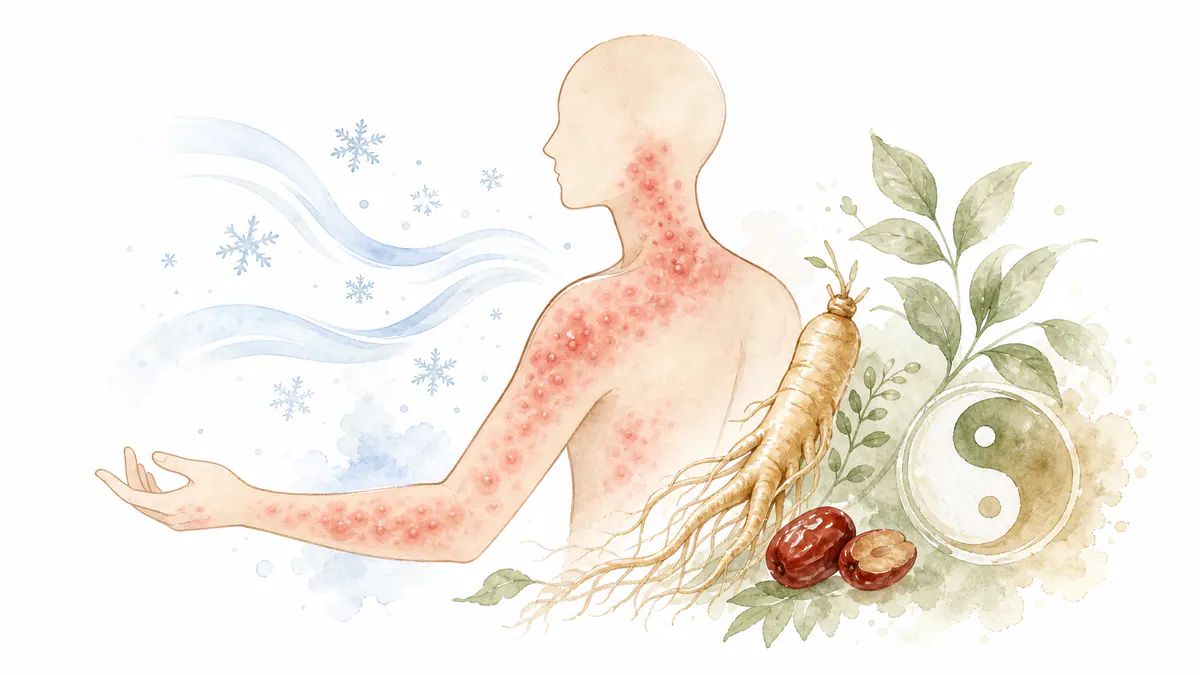
Cold urticaria occurs after exposure to cold air, cold water, or cold objects, resulting in itchy, red or dark-colored wheals (hives), stinging, burning sensations, and deep swelling. Touching cold objects can cause fingers to swell, and cold drinks may trigger angioedema (deep swelling) of the lips, tongue, and throat. Extensive cold exposure, particularly after swimming in cold water, may lead to systemic wheals, difficulty breathing, wheezing, abdominal symptoms, rapid heartbeat, low blood pressure, dizziness, or fainting. Wheals may become more pronounced as the skin warms up after the cold stimulus has ended.
Cold Urticaria Symptom Guide
Symptom Range
| Symptom Scenario | Possible Interpretation | Next Step |
|---|---|---|
| Itchy wheals where a cold object touched the skin | Localized cold urticaria | Photos, exposure, and recovery records |
| Deep swelling of hands, eyelids, or lips | Angioedema | Check extent and swallowing/breathing |
| Swelling of tongue or throat after cold drinks | Possible airway mucosal reaction | Immediate emergency evaluation |
| Generalized wheals and wheezing after swimming in cold water | Risk of anaphylaxis | Respond according to emergency adrenaline plan |
| Dizziness, fainting, or rapid heart rate | Hypotension or systemic reaction | Immediate emergency help |
What the clinic checks first
The key to cold urticaria is the recurring relationship between cold stimuli and symptoms. We examine the site and extent of exposure, changes that occur when the skin warms up again, and systemic symptoms.
Skin exposed to cold wind, cold water, or cold objects may swell and feel itchy, tingling, or burning, and the reaction may spread to surrounding areas.
Angioedema can interfere with finger movement and tasks; if it occurs in the lips, tongue, or throat, it may affect swallowing and breathing.
Along with generalized wheals, wheezing, shortness of breath, abdominal pain, vomiting, rapid pulse, dizziness, or fainting may occur.
Unlike dermatitis where dryness and cracking persist during cold seasons, cold urticaria involves recurring raised wheals immediately after cold stimulation.
Since the triggering conditions differ from wheals caused by heat, exercise, or pressure, compare photos with the exposure situation.
If there are symptoms affecting the airway, blood pressure, or consciousness, prioritize emergency anaphylaxis response over determining the cause by skin appearance.
Itchy, red, or dark-colored raised lesions may appear locally or spread depending on the extent of exposure.
Wheals and itching may become more apparent after entering a room or warming the hands rather than immediately after exposure; therefore, it is helpful to document the recovery process.
Deep swelling of the hands, eyelids, or lips can make it difficult to use fingers, speak, or eat, while swelling of the tongue or throat poses a risk to the airway.
If the entire body cools rapidly, widespread wheals, difficulty breathing, low blood pressure, and fainting may occur suddenly.
Wheezing, shortness of breath, abdominal pain, vomiting, rapid or irregular pulse, and dizziness are higher medical emergencies than skin symptoms.
If you have a history of systemic reactions, do not enter cold water or use ice to trigger a reaction; instead, follow a safety plan provided by medical professionals.
Identify whether hand swelling and decreased concentration occur during tasks involving ice machines, refrigerators, cold water, winter commutes, or strong air conditioning.
Document the extent to which wheals decrease and any drowsiness experienced during work, driving, or studying to help adjust prescriptions.
Prioritize emergency adrenaline plans and antihistamines; Baekrokdam only serves as a supplement for chronic itching, sleep, and activity burdens.
Consultation for cold urticaria symptoms at Baekrokdam
We check for swimming in cold water, airway edema, wheezing, dizziness, fainting, and abdominal symptoms to ensure emergency measures are not delayed.
We review photos of the skin after exposure to cold objects, air, or water, changes that occur when warming up, and the function of the hands and lips.
Rather than replacing antihistamines and emergency plans, we track the ability to go outdoors in winter, work in refrigerated environments, sleep, and concentrate.
Please prepare photos before and after cold exposure, the onset and recovery of wheals and edema, symptoms involving the lips, throat, breathing, abdomen, or dizziness, and your response to antihistamines (including drowsiness) and any limitations in work or swimming for your consultation.
When to seek urgent care
Itchy, raised wheals may become prominent immediately after cold stimulation or when the skin warms up again.
They can cause angioedema (deep swelling) of the lips, tongue, and throat. Throat swelling, hoarseness, difficulty swallowing, or difficulty breathing require immediate emergency evaluation.
Difficulty breathing, wheezing, abdominal pain, vomiting, fast pulse, dizziness, fainting, and generalized wheals are warning signs of anaphylaxis.
Note the situation and area of exposure, take photos of the skin, record the sequence of onset and recovery, and document any symptoms involving the throat, breathing, abdomen, or dizziness, as well as medication responses and drowsiness.
Content reviewed:
This information supports, but does not replace, diagnosis or treatment by a qualified healthcare professional.