
Skin Diseases · Impetigo Oriental Medicine Auxiliary Treatment
Impetigo · Yellow Crusts · Pyogenic Crusts· Impetigo
Incheon Songdo Baekrokdam Oriental Medicine Clinic
Auxiliary Oriental treatment that eliminates bacteria with antibiotics and strengthens skin immunity with herbal medicine to stop recurrence.
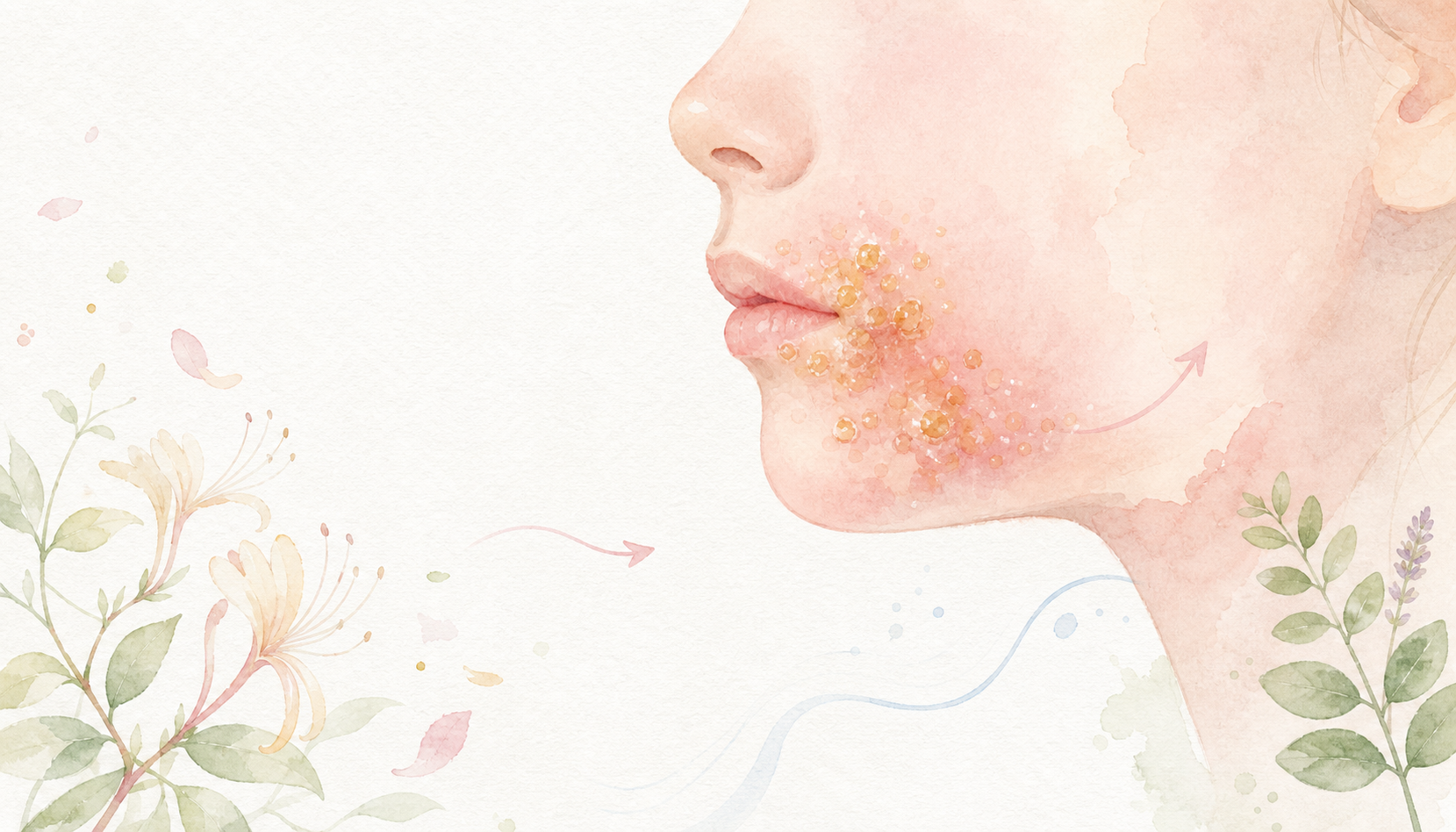
Were you startled to find yellow discharge and crusts spreading across your child's face after they woke up?We understand the anxiety of parents who cannot send their children to kindergarten due to fear of contagion and lose sleep worrying about lifelong scars. Beyond simple ointment application, the child's collapsed skin barrier must be strengthened to break the cycle of repeated infection.
Impetigo is not simply a problem of bacteria, but a disease that occurs when a 'skin environment favorable for bacteria' is created. Baekrokdam Oriental Medicine Clinic provides customized herbal prescriptions to lower damp-heat in the spleen and stomach and increase skin immunity, creating a healthy state where the skin can overcome bacteria on its own without worrying about antibiotic resistance.
Key disease information at a glance
- Other names
- Contagious impetigo, pediatric impetigo, yellow crust
- Hanja
- 膿痂疹 (Pus 膿 + Sore 痂 + Measles 疹)
- Classification
- Bacterial infectious skin disease
- Main affected areas
- Around the mouth, under the nose, chin, back of hands, legs (exposed facial areas)
- Main symptoms
- Small vesicles/pustules → yellow honey-colored crusts → widespread progression
- Causative bacteria
- Staphylococcus aureus (primary) + Streptococcus
- Contagiousness
- High (contact + sharing towels, clothes, toys)
- Treatment
- Antibiotics (1st line) + Herbal medicine (immune reinforcement, relapse prevention) + Hygiene management
- General treatment period
- Antibiotics 1–2 weeks / Immune stabilization 1–3 months
- Telemedicine
- Possible (however, prioritize Western medicine if widespread or complications are suspected)
Commonly heard in the clinic
Many patients visit using these expressions
These are expressions often heard in the clinic. If this sounds like your situation, you may want to suspect impetigo.
Consult via telehealth →What is Impetigo?
Impetigo is a contagious bacterial skin infection caused by Staphylococcus aureus or Streptococcus. It is most common in children and infants, characterized by small blisters or pustules appearing around the mouth, under the nose, on the backs of hands, or on legs, which then burst and form honey-colored or yellow crusts.
In traditional Korean medicine, impetigo is viewed as'a state where fire toxin (火毒) is concentrated on the skin'the state of 'fire toxin (火毒) concentrating on the skin.' However, the more fundamental cause is that the child's skin immunity and respiratory health are weak, leaving them unable to defend themselves when exposed to bacteria. Therefore, the roles are divided: antibiotics to eliminate the bacteria and herbal medicine to strengthen immunity.
Let me clear up one misunderstanding.Impetigo is not treated with herbal medicine alone.Since it is a clear bacterial infection, antibiotics are the primary treatment. However, antibiotics alone cannot break the pattern of recurrence in the same area. Herbal medicine plays a supportive role in recovering immunity and preventing recurrence after antibiotic treatment.
According to Western medical diagnoses, it is divided intoNon-bullous impetigo (contagious impetigo), bullous impetigo, ecthyma (severe)different types. If the infection is widespread or accompanied by fever or lymph node swelling, immediate Western emergency care is required.
Medical Staff

Chief DirectorDr. Yeonseung Choe
You may have been surprised to see oozing and yellow crusts on your child's face or hands. Impetigo is a bacterial skin infection that spreads easily in daycare centers and kindergartens. Fortunately, it responds quickly to antibiotics, but it often recurs in the same area or spreads to siblings. While antibiotics eliminate the bacteria, Baekrokdam's role is to use herbal medicine to strengthen your child's skin immunity and create a body where it does not recur.
- Graduated from Gyeonggi Science High School
- Graduated from Kyung Hee University, Department of Pre-medical Korean Medicine
- Graduated from Kyung Hee University, College of Korean Medicine
- Current) Chief Director of Baekrokdam Korean Medicine Clinic
- Former) Chief Director of Miol Korean Medicine Clinic, Incheon Songdo Branch
- Former) Director of Miol Korean Medicine Clinic, Gangnam Main Branch
- Former) Chief Director of Dolbom Korean Medicine Clinic, Seocho Main Branch
- [Publications]
- Overcoming Polycystic Ovary Syndrome
- Overcoming Chronic Vaginitis - Symptoms, Causes, and Treatment
- Post-Miscarriage Care, as Important as Postpartum Care: A to Z of Herbal Medicine After Miscarriage
Impetigo occurs due to exposure to external bacteria, butWhy the frequency of transmission differs for each childthe key lies in immunity.
Main causes of impetigo — How they accumulate
- 1 Exposure to external bacteria
It spreads through contact with affected areas or by sharing towels and toys at daycare centers, kindergartens, and playgrounds
- 2 Weakened skin barrier
Bacteria settle in areas where the skin's protective barrier has broken down due to atopy, eczema, insect bites, or wounds
- 3 Nasal colonization
Children with staphylococci in their noses may experience recurrent impetigo by touching their faces with hands that have picked their noses
- 4 Weakened immunity
It often manifests during periods of weakened immunity, such as the recovery phase after a cold, lack of sleep, or picky eating
- 5 Hygienic environment
Hot summers, environments with excessive sweat, and insufficient handwashing increase transmission
Impetigo isTypical progression stagescan be easily recognized by its shape.
Main symptoms of impetigo — What patients actually experience
Skin area
- Small vesicles/pustules — Initially, small blisters or pustules 1–3mm in size appear
- Rupture and exudate — Blisters rupture easily even with mild irritation, releasing yellow exudate
- Honey-colored crust — When exudate dries, thick honey-colored or yellowish crusts form — This is the most prominent sign of impetigo
- Widespread progression — Scratching or touching can spread the infection to other areas via the hands, leading to widespread distribution
Accompanying symptoms — Systemic area
- Mild itching or pain
- Swelling of surrounding lymph nodes (submandibular, neck)
- Fever in case of widespread or severe symptoms
- Children with weak immunity are at risk of progression to cellulitis
- Rare complications — Post-streptococcal glomerulonephritis
Impetigo is usually localized, but if widespread, systemic symptoms may accompany it.
Immediate emergency medical care if widespread symptoms, fever, or complications are suspectedis required.
Chronic impetigo, Baekrokdam's approach
Summary— Since impetigo is a clear bacterial infection, antibiotics are the primary treatment. Herbal medicine plays a supportive role in strengthening the child's skin immunity to prevent recurrence and aiding recovery after antibiotics.
Why Baekrokdam focuses on herbal medicine
The goal of herbal medicine is not just to suppress external symptoms, but to create a body that can recover on its own without medication.
Impetigo isPrioritize quickly eliminating bacteria with antibioticsis. We do not recommend proceeding with herbal medicine alone. However, some children experience recurrences in the same area if treated only with antibiotics. This is not because bacteria re-entered, but because the child's skin immunity is weak, leading to reinfection in the same environment.
Herbal medicine focuses on enhancing the child's skin immunity and respiratory healthis. The body changes so that it no longer catches the infection even when exposed to the same environment in daycare or kindergarten. Herbal medicine also manages gut health and immune recovery after antibiotic use.
Why doesn't it show up well in tests?
Tests look at numerical values and structures, but the essence is often a 'body imbalance' that is not easily captured by tests.
Bacterial culture testswhich bacteria are currently presenttell us what is there, but they cannot explain why only this child keeps getting infected. If other children in the same environment are fine and only your child is affected, the cause is the child's weak immunity.
Traditional Korean Medicine'Lung Qi Deficiency (肺氣虛) + Disharmony of Nutritive Blood (營血不和)'diagnoses. We strengthen the child's defense system with herbal medicine that treats both the skin and the respiratory system.
So how is it treated — The Baekrokdam method
We examine the whole body through inquiry, pulse diagnosis, and abdominal palpation, and resolve the root cause with herbal medicine.
Instead of looking only at impetigothe child's overall immune statuswe look at the overall picture. We prioritize Western medical treatment while concurrently performing Oriental medical immune reconstruction.
- Observation of affected area + Western medical guide— We assess the stage and extent of impetigo to determine if Western antibiotic prescriptions are appropriate and if there is a risk of emergency complications
- Abdominal palpation & Inquiry— We check the child's usual immune status, accompanying atopy or rhinitis, daycare environment, and whether siblings are infected
- Pediatric herbal medicine— We enhance skin immunity and respiratory health with safe prescriptions tailored to the child's constitution and age
Above thisHygiene Management Guide(Hand washing, covering affected areas, separating towels) should be done concurrently to prevent transmission. The essence of complementary Oriental medicine treatment is to change the child's body so they are no longer susceptible to infection in the same environment.
Differentiation of Impetigo Observed in Clinical Practice
Recurrence patterns vary for every child. We approach this by dividing them into three main types.
Lung and Qi Deficiency with Unstable Exterior Type肺氣虛表不固
Children who frequently contract infections at daycare or kindergarten and have frequent respiratory infections
Treatment Direction: Tonify Lung and Consolidate Exterior (補肺固表)
Disharmony of Nutritive and Blood Type營血不和
Impetigo accompanied by allergic constitutions such as atopy or rhinitis
Treatment Direction: Harmonize Nutritive and Blood (調和營血)
Spleen and Stomach Deficiency Type脾胃虛弱
Children with poor appetite, a thin build, and weak immunity
Treatment Direction: Strengthen Spleen and Augment Qi (健脾益氣)
The proportion is adjusted according to the child's constitution and accompanying diseases,Immune recovery changes every 2–4 weeksCheck the .
Progress by Stage of Impetigo Treatment
- Weeks 1–2 — Antibiotics + Soothing (Acute Phase)
This is the period to quickly eliminate bacteria with Western antibiotics and help soothe the affected area.
- Take or apply the prescribed antibiotics accurately.
- Cover the affected area with disposable gauze and strictly practice hand washing and separate towel use.
- Combine herbal medicine (safe prescription for children) to soothe itching and strengthen immunity.
- Weeks 3–6 — Recovery Period + Gut Health Reinforcement
This is the period to strengthen immunity and gut health during the recovery phase after antibiotic use.
- The crusts fall off and new skin begins to grow.
- Restore gut health weakened by antibiotics using herbal medicine.
- Prevent re-infection with immunity-boosting prescriptions.
- Months 2–3 — Constitution Improvement to Prevent Recurrence
This is the period to build immunity so the child does not contract the infection even when exposed to the same environment at daycare or kindergarten.
- If nasal colonization is suspected, collaborate with Western medicine to eliminate colonization.
- If accompanied by atopic dermatitis or rhinitis, manage those areas together.
- Improve the child's overall immunity with guides on sleep, eating habits, and exercise.
Impetigo is a condition that improves quickly with antibiotics. Herbal medicine treatment focuses on preventing recurrence after recovery.
Children who experience recurrence more than 3 times a year have a higher possibility of nasal colonization or weakened immunity.Constitution improvement for 3 months or more is recommended.
Consult comfortably via non-face-to-face services for your current concerns.Herbal medicine prescriptions are available from anywhere in the country.
Children who experience recurrence more than 3 times a year have a higher possibility of nasal colonization or weakened immunity.Constitution improvement for 3 months or more is recommended.
Conditions often confused with impetigo
Impetigo can look similar to other skin diseases, so accurate differential diagnosis is important.
Small, tingling clusters of blisters appear on the edges of the lips. They differ in appearance from the honey-colored crusts of impetigo.
Itchy blisters appear across the entire body in stages. Unlike impetigo, it is not localized and presents strong systemic symptoms.
Occurs on the face and back of adolescents. Impetigo is more common in children and features more prominent oozing and crusting.
Extensive skin peeling occurs in newborns. This is a separate severe condition requiring emergency conventional medical treatment.
Rashes appear in the exact shape of the area of contact. It is fundamentally different from the honey-colored crusts and oozing of impetigo.
Impetigo Treatment Reviews
Frequently Asked Questions about Impetigo
Impetigo is said to be highly contagious; when can a child return to kindergarten?
Impetigo is highly contagious, so attendance at school or daycare should be avoided while there is oozing. In traditional Korean medicine, it occurs when damp-heat accumulates while the skin's 'Wei Qi' (defensive energy) is weakened. Generally, contagiousness drops significantly once the oozing stops and scabs form and begin to dry, but the condition of the affected area must be checked before returning to group activities. Oriental medical treatment helps shorten the isolation period by clearing internal heat and quickly drying the exudate.
I take antibiotics, but it only helps temporarily and keeps recurring. What is the reason?
Antibiotics are effective at killing the bacteria causing current symptoms, but they do not improve the fundamental immune environment of the skin barrier. In particular, when damp-heat accumulates in the spleen and stomach due to overwork or stress, it creates a fertile ground for bacteria to proliferate. If it recurs frequently, you need oriental immune therapy that goes beyond killing bacteria to discharge internal toxins and restore the skin barrier, creating an 'environment where bacteria cannot survive.'
I have an important meeting; can I apply a hydrocolloid patch to the impetigo area?
Since impetigo is a bacterial infection, applying a general hydrocolloid patch (such as DuoDerm) can create a sealed environment where bacteria multiply more rapidly, increasing the risk of worsening symptoms. Even if it is aesthetically inconvenient, it is more beneficial for recovery to use prescribed oriental external medicines or disinfectants and leave the area exposed. If absolutely necessary, lightly applying a breathable gauze is better.
Impetigo has developed on an area with atopic dermatitis; can I continue using steroids?
If impetigo occurs as a secondary infection of an atopic lesion, the use of existing steroid ointments should be temporarily suspended. This is because steroids suppress the immune response, which can actually spread the bacterial infection. At this time, priority should be given to treatment that removes the damp-heat and toxins that cause 'Hwangsuchang' (impetigo). It is safe to resume atopy management after the oozing is controlled and the infection has subsided.
Do I need to forcibly remove the impetigo scabs to heal faster?
Forcibly removing scabs destroys the skin's protective barrier, leading to secondary infections or scarring. In oriental medicine, treatment focuses on increasing skin regeneration so that scabs can detach naturally. If the scab is too thick and pus has accumulated underneath, it should be removed through hygienic procedures at an oriental clinic. At home, the best approach is to keep the area clean and wait for it to dry naturally.
How does an oriental clinic treat impetigo, which is a bacterial infection?
In oriental medicine, impetigo is called 'Hwangsuchang' and is viewed as a combination of internal damp-heat and external wind-toxin. Unlike the antibiotic approach that simply kills bacteria, we use herbal medicine tailored to the individual's constitution to purify the blood and enhance skin immunity. Additionally, acupuncture and oriental external agents are used together to quickly soothe itching and oozing. This is a fundamental approach that reduces concerns about antibiotic resistance and prevents recurrence.
What is the difference between atopic dermatitis and impetigo?
Atopy and impetigo can look similar. While atopy is characterized by chronic itching, impetigo is a contagious disease caused by bacterial infection that produces yellow exudate or crusts. In particular, children with atopy often have a weakened skin barrier, making them prone to overlapping impetigo. Therefore, rather than mistaking it for simple eczema, it is important to carefully check for secondary infections and manage skin immunity simultaneously.
There is yellow oozing and crusting around my mouth; is it impetigo?
If blisters form around the lips or under the nose and yellow crusts appear, there is a high possibility of impetigo. It is mainly caused by Staphylococcus or Streptococcus infections and is highly contagious, meaning it can easily spread to other areas or siblings if touched. Caution is needed as forcibly removing scabs can cause irritation and leave scars. At the oriental clinic, we approach this by regulating internal damp-heat and supporting the skin's natural recovery power.
Skin diseases to consider alongside impetigo
These are skin diseases that often appear with impetigo or are easily confused with it.
Recommended Documents
Recommended Next Materials
Current DocumentImpetigo
You can understand more quickly by reviewing related topics and treatment information in sequence.
Folliculitis
For those visiting the clinic for Folliculitis. Telemedicine available for residents of Yeongjongdo, Siheung, and Yonghyeon-dong. We improve skin recovery power through herbal medicine and acupuncture. Nationwide treatment available.
Related Diseases to Review
View TogetherFor those visiting the clinic for Tinea and fungal skin diseases, Tinea capitis, and Tinea corporis. Telemedicine available for residents of Cheongna, Bupyeong, and Incheon Nonhyeon-dong. We improve skin recovery power through herbal medicine and acupuncture. Nationwide treatment available.
View DiseasesFor those visiting the clinic for pyogenic acne, inflammatory acne, and nodular acne. Telemedicine available for residents of Bucheon, Songdo, and Juan. We balance sebum secretion through herbal medicine and acupuncture. Nationwide treatment available.
View Diseases