
Skin · Facial Flushing Oriental Medicine Treatment
Rosacea · Rhinophyma · Facial Flushing· Rosacea
Incheon Songdo Baekrokdam Oriental Medicine Clinic
For a face that keeps turning red and burning, we soothe the internal heat first, not just the skin surface.
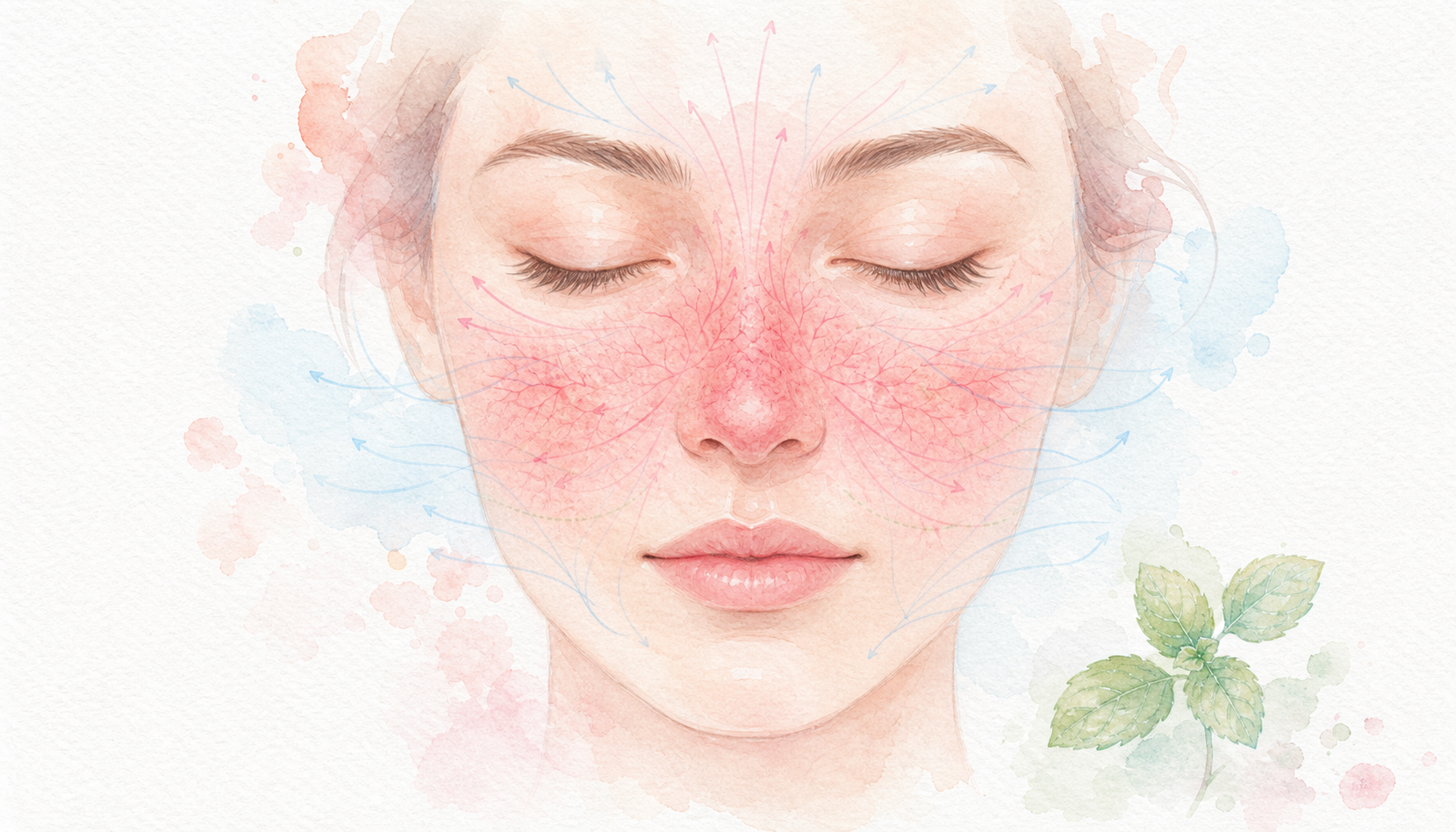
Lasers are only temporary, and the face keeps turning red even after applying ointment.If you are misunderstood as having been drinking and are considering social withdrawal due to the stress of looking in the mirror, please read this page to the end.
Rosacea is not just a surface-level skin issue. It occurs when the body's internal heat regulation system fails, making blood vessels hypersensitive. Baekrokdam treats this 'internal heat' to help your skin find its own balance.
Key disease information at a glance
- Other names
- Rosacea, strawberry nose, facial flushing, acne rosacea
- Hanja
- 酒渣鼻 (Alcohol Ju + Dregs Ja + Nose Bi)
- Classification
- Chronic inflammatory vascular reactive skin disease
- Main symptoms
- Facial flushing, persistent erythema, papules, telangiectasia
- Can be accompanied
- Ocular injection (redness), indigestion, sleep disorders, and depression
- Diagnosis
- Medical history, abdominal palpation, and four-method diagnosis — checking internal heat-toxin status
- Treatment
- Customized herbal medicine (clearing heat, detoxification, and improving Qi and blood circulation)
- Typical treatment period
- Approx. 3–4 months (6 months or more for chronic/imbalanced cases)
- Telemedicine
- Available (available from the first visit)
Frequently heard in the consultation room
Many patients visit with these descriptions
These are common expressions heard in the clinic. If this sounds like you, you might want to suspect rosacea.
Consult via non-face-to-face treatment →What is Rosacea?
Rosacea is a chronic inflammatory skin disease where blood vessels in the center of the face abnormally dilate, causing persistent redness. It is accompanied by pain and heat that are on a different level from simply blushing out of embarrassment.
In Korean medicine, this has beenJusa (Rosacea)called. It means 'as if wine dregs remained on the nose,' and it is defined as a disease caused by waste products and heat in the body gathering in the face, even if it's not necessarily due to alcohol.
Many people mistake it for acne, but rosacea isa vascular issue. Therefore, you must be careful because using the wrong acne medication or squeezing it recklessly can break down the skin barrier and worsen the symptoms.
According to Western medical diagnostic criteria, rosacea is diagnosed when two or more of the following occur: facial flushing, persistent erythema, papules, pustules, or telangiectasia. In severe cases, it can lead to ocular rosacea, where the eyes become bloodshot, or rhinophyma, where the nose becomes bulbous.
The key isvascular reactivity. The essence of treatment is to reduce the sensitivity where your facial blood vessels overreact and turn red even at temperature changes or slight stress that others don't mind.
Attending Medical Staff

Chief DirectorDr. Yeonseung Choe
Many people visit the clinic saying, 'It's so stressful being asked if I've been drinking.' Rosacea isn't simply caused by thin skin. It's a state where internal heat rises and blood vessels fail to function properly. Rather than just treating the surface, I will help your skin soothe itself by correcting internal imbalances through Korean herbal medicine.
- Graduated from Gyeonggi Science High School
- Graduated from Kyung Hee University, Pre-Korean Medicine
- Graduated from Kyung Hee University, College of Korean Medicine
- Current) Chief Director of Baekrokdam Korean Medicine Clinic
- Former) Chief Director of Miall Korean Medicine Clinic, Incheon Songdo Branch
- Former) Director of Miall Korean Medicine Clinic, Gangnam Main Branch
- Former) Chief Director of Dolbom Korean Medicine Clinic, Seocho Main Branch
- [Publications]
- Overcoming Polycystic Ovary Syndrome
- Overcoming Chronic Vaginitis - Symptoms, Causes, and Treatment
- Post-miscarriage Care as Important as Postpartum Care: Post-miscarriage Herbal Medicine A to Z
Rosacea is based on genetic factorsas heat stimulation in daily life accumulates.and occurs
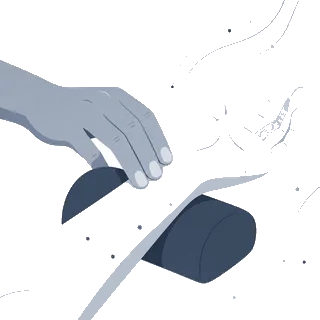
Main causes of rosacea — how they accumulate
- 1 Heat toxins of internal organs (stomach heat, lung heat)
In traditional medicine, heat accumulated in the stomach and lungs is believed to rise to the face. Stimulating dietary habits are the primary cause.
- 2 Autonomic nervous system imbalance and stress
Facial flushing triggered by emotional changes occurs because the autonomic nervous system has lost its ability to regulate blood vessels.
- 3 Inappropriate skin treatment and ointment abuse
Prolonged use of steroid ointments thins the skin and makes blood vessels more visible, worsening rosacea.
- 4 External environmental stimuli
UV rays, rapid temperature changes (saunas, indoor/outdoor in winter), and fine dust continuously irritate sensitive blood vessels.
- 5 Chronic digestive diseases
Rosacea is very frequently accompanied in patients with reflux esophagitis or chronic gastritis.
Rosacea symptoms worsen in stages. It can progress beyond simple redness to skin deformation.
Main symptoms of rosacea — what patients actually experience
Skin surface symptoms
- Persistent facial flushing — the redness does not subside quickly, and the face remains red as if intoxicated
- Telangiectasia — capillaries on the nose or cheeks appear visible like spider webs
- Papules and pustules — they appear like acne, but no sebum is released even when squeezed
- Skin hyperplasia (Rhinophyma) — the skin around the nose becomes bumpy and thick, like an orange peel
Sensations and accompanying symptoms
- Burning heat and stinging sensation
- Bloodshot eyes, dryness, and foreign body sensation (Ocular Rosacea)
- Postprandial flushing and indigestion
- Insomnia caused by facial heat
- Feelings of withdrawal and depression in social relationships
It's not just the surface of the skin that hurtsSystemic discomfortThese come as a set.
Especially if you 'toss and turn because your face gets hotter at night,' it could be a sign of deep internal heat toxicity.
Chronic Rosacea, Baekrokdam's Approach
Summary— It's not just about peeling the skin or suppressing inflammation; we need to change the environment itself where heat rises upward.
Why Baekrokdam focuses on herbal medicine
Rather than just suppressing external symptoms, the goal of herbal medicine is to create a body that recovers on its own without medication.
Rosacea isIt's not a field that can be resolved simply with topical medications.. Ointments that temporarily constrict blood vessels or suppress inflammation cause redness to return quickly once stopped. This is why many people come to us after relying on ointments for 5 or 10 years, only to find their skin barrier has thinned.
Herbal medicine aims to lower abnormal internal heat (熱) and correct the circulation of Qi and blood.If Western medical treatment is "suppressing symptoms," herbal medicine is closer to "creating a bodily state where the skin doesn't need to turn red." This is why herbal medicine is essential for chronic recurrent rosacea.
Why is it not easily detected through tests?
While tests look at numbers and structures, the essence is often a 'body imbalance' that is not easily caught by tests.
It is difficult to find the cause of rosacea through general tests. Blood tests or biopsies often show nothing special other than 'inflammation.' However, what the patient feelsBurning sensation, flushing, indigestionis a clear signal.
This is not a structural problem, butProblems with autonomic nerves and vascular regulation functionsa functional one. That's why situations occur where "tests are normal, but the face is burning." Oriental medical diagnosis is the process of reading this invisible 'flow of heat.'
So how is it treated? — Baekrokdam's approach
We examine the whole body through medical inquiry, pulse diagnosis, and abdominal palpation, and resolve the root cause with herbal medicine.
Hidden behind the visible flushinginternal causeWe allocate a long time for each consultation to find the
- Abdominal palpation and medical inquiry— We meticulously check digestion and bowel patterns to see if heat has accumulated in the stomach or liver. It is very common for heat from the stomach to rise to the face.
- Visual and photographic diagnosis— We judge the depth of the disease by looking at the distribution of erythema, the shape of papules, and the degree of telangiectasia.
- Pulse diagnosis— We determine the direction of the prescription by identifying the stagnation of Qi and blood throughout the body and the degree of heat toxins through the flow of the pulse.
Based on this diagnosisResolving "upper heat and lower cold" (hot upper body and cold lower body)We prescribe customized herbal medicine. The principle is that by lowering heat and clearing the blood, excessive dilation of facial blood vessels naturally subsides.
Pattern identification categories of rosacea observed in clinical practice
Rosacea is largely divided into four types depending on the patient's constitution and cause. Which one applies to you?
Lung and Stomach Heat Accumulation Type (肺胃熱盛)肺胃熱盛
A type characterized by a preference for spicy and stimulating foods, with prominent erythema and papules around the nose and cheeks.
Treatment Principle: Clearing Heat from the Lung and Stomach (淸瀉肺胃)
Intense Heat-Toxin Type (熱毒熾盛)熱毒熾盛
An acute exacerbation type where severe inflammation leads to pustules, burning sensations, and pain.
Treatment Principle: Clearing Heat and Detoxifying (淸熱解毒)
Qi Stagnation and Blood Stasis Type (氣滯血瘀)氣滯血瘀
A chronic type where long-standing symptoms lead to dark red skin, skin thickening, and prominent telangiectasia.
Treatment Principle: Invigorating Blood and Removing Stasis (活血化瘀)
Liver Fire Type (肝火型)肝火型
A type where heat sensations surge rapidly due to stress or anger, with fluctuating symptoms.
Treatment Principle: Soothing the Liver and Relieving Stagnation (疏肝解鬱)
Because these types often appear in combination for each patient,Checking for changes every 2 to 4 weekswe finely adjust the herbal prescription.

Rosacea treatment progress by stage
Below is the general flow of Korean traditional medicine treatment.
- Month 1 — Soothing heat and detoxifying
The most distressingStage of reducing burning and stinging sensationsis.
- Starting to lower the heat concentrated in the upper body through herbal medicine
- Repeated process of facial redness temporarily fluctuating and then calming down
- Experiencing improved sleep quality and reduced facial heat
- Months 2–3 — Reduction of inflammation and vascular stabilization
Visibly apparentPeriod when papules and capillaries improveis.
- Inflammatory reactions such as pustules or papules are noticeably reduced
- Shortened duration of flushing as vascular reactivity to stimuli (temperature, food) decreases
- Skin barrier gradually strengthens, becoming less sensitive to external stimuli
- Months 3–4 — Strengthening the barrier and preventing recurrence
Skin condition maintained even without medicationFinal stage of creating.
- Redness almost disappears and normal skin tone is restored
- Internal organ imbalances (such as stomach heat) are resolved, improving both digestion and complexion
- Develop the ability to self-manage even after treatment ends through lifestyle correction.
Recovery speed for skin diseases may vary depending on individual condition and history of steroid use.
Long-term steroid users: Rebound phenomenon (worsening when stopping) may occur, so it is important to allow for a treatment period of at least 6 months and reduce it gradually.
Consult comfortably about your concerns through a remote consultation.Herbal medicine prescriptions are available nationwide.
Long-term steroid users: Rebound phenomenon (worsening when stopping) may occur, so it is important to allow for a treatment period of at least 6 months and reduce it gradually.
Conditions confused with Rosacea
Rosacea is easily confused with other skin conditions. An accurate differential diagnosis is necessary to avoid suffering from incorrect treatment.
Comedones (sebum plugs) are present and typically occur after puberty. Rosacea is characterized by the absence of comedones and the presence of telangiectasia.
It is characterized by severe itching and yellow scales. While it often occurs alongside rosacea, the main symptoms of rosacea are 'redness' and 'heat' rather than scaling.
A butterfly-shaped rash appears on the cheeks, resembling rosacea, but it is a systemic autoimmune disease with specific findings on blood tests.
It becomes rapidly itchy and red after exposure to specific cosmetics or substances. It heals quickly once the trigger is removed, whereas rosacea persists chronically even without a specific cause.
The face turns red along with systemic sweating due to hormonal changes. Rosacea is characterized by more distinct inflammatory reactions and telangiectasia localized to the face.
Rosacea treatment reviews
Rosacea FAQ
How is rosacea different from acne?
The biggest difference is the presence of 'comedones (sebum plugs).' While acne produces sebum when squeezed, rosacea often presents only as red papules or pustules without sebum. Also, if 'vascular reactivity'—where the face flushes significantly due to temperature or emotional changes—is prominent, there is a high probability it is rosacea.
I've had multiple laser treatments; why does it keep recurring?
Laser treatments work by destroying already dilated blood vessels. However, if the 'internal body heat' and 'autonomic nervous system sensitivity' that cause vessels to dilate remain unchanged, new vessels will soon expand again. You must treat the internal cause, not just the surface, to break the cycle of recurrence.
Can patients with rosacea use cosmetics or sunscreen?
Rosacea-prone skin is extremely sensitive, so it's best to minimize products and use non-irritating ones. Since UV rays are a major factor that worsens rosacea, I highly recommend mild physical sunscreens. However, covering redness too thickly with makeup can interfere with skin respiration and worsen the sensation of heat.
How long should the treatment period be?
Usually, 3 to 4 months is considered the intensive treatment period. It involves reducing heat in the early stage, decreasing inflammation and flushing in the middle stage, and restoring the skin barrier in the final stage. If you have reached the phymatous (rhinophyma) stage where the skin has thickened, long-term management of 6 months or more is required.
I don't drink alcohol at all; why is it called "strawberry nose"?
In Korean medicine, the cause of rosacea is seen as heat accumulated in the stomach and lungs due to spicy, irritating foods or stress, not just alcohol, which then rises to the nose and face. Even if you don't drink, if internal heat toxins manifest on the face, "strawberry nose" symptoms can occur.
Is it possible to get herbal medicine prescriptions through telemedicine?
Yes, it is possible. The key to diagnosing rosacea lies in visual symptoms, the patient's sensation of heat, and digestive status. Through high-resolution photos and detailed medical questionnaires, you can receive customized herbal prescriptions via telemedicine from anywhere in the country.
How do you distinguish between rosacea and seborrheic dermatitis?
Rosacea and seborrheic dermatitis are easily confused because they both cause facial redness. Generally, seborrheic dermatitis is often accompanied by itching and flaking, whereas rosacea is characterized by redness due to dilated blood vessels, primarily around the nose and cheeks. Since it's quite common for both conditions to occur together, a careful examination is necessary.
My face feels very hot and my nose is turning red; is this a symptom of rosacea?
If you experience recurring symptoms of heat rising to the upper body along with a red tip of the nose, you may suspect rhinophyma. Symptoms often worsen when exposed to spicy foods or sudden temperature changes. Since this may be a sign of weakened internal heat regulation rather than just a surface skin issue, a constitutional approach is necessary.
Skin conditions to consider alongside rhinophyma
These are skin and internal conditions that are beneficial to manage alongside rhinophyma.
함께 보면 좋은 문서
다음으로 보면 좋은 자료
현재 보고 있는 문서Rosacea
관련 주제와 진료 정보를 이어서 확인하면 이해가 더 빠릅니다.