Walking Diet Speed: 5.6 km/h Standard and Calorie Burn

Table of Contents
It’s frustrating when the scale doesn’t budge despite walking for an hour every day. In the clinic, I often hear, "Doctor, I really walk every day." The first thing I ask is speed. It’s no exaggeration to say that speed, rather than time, determines the results of a walking diet.
Speed is What Separates a Stroll from Exercise
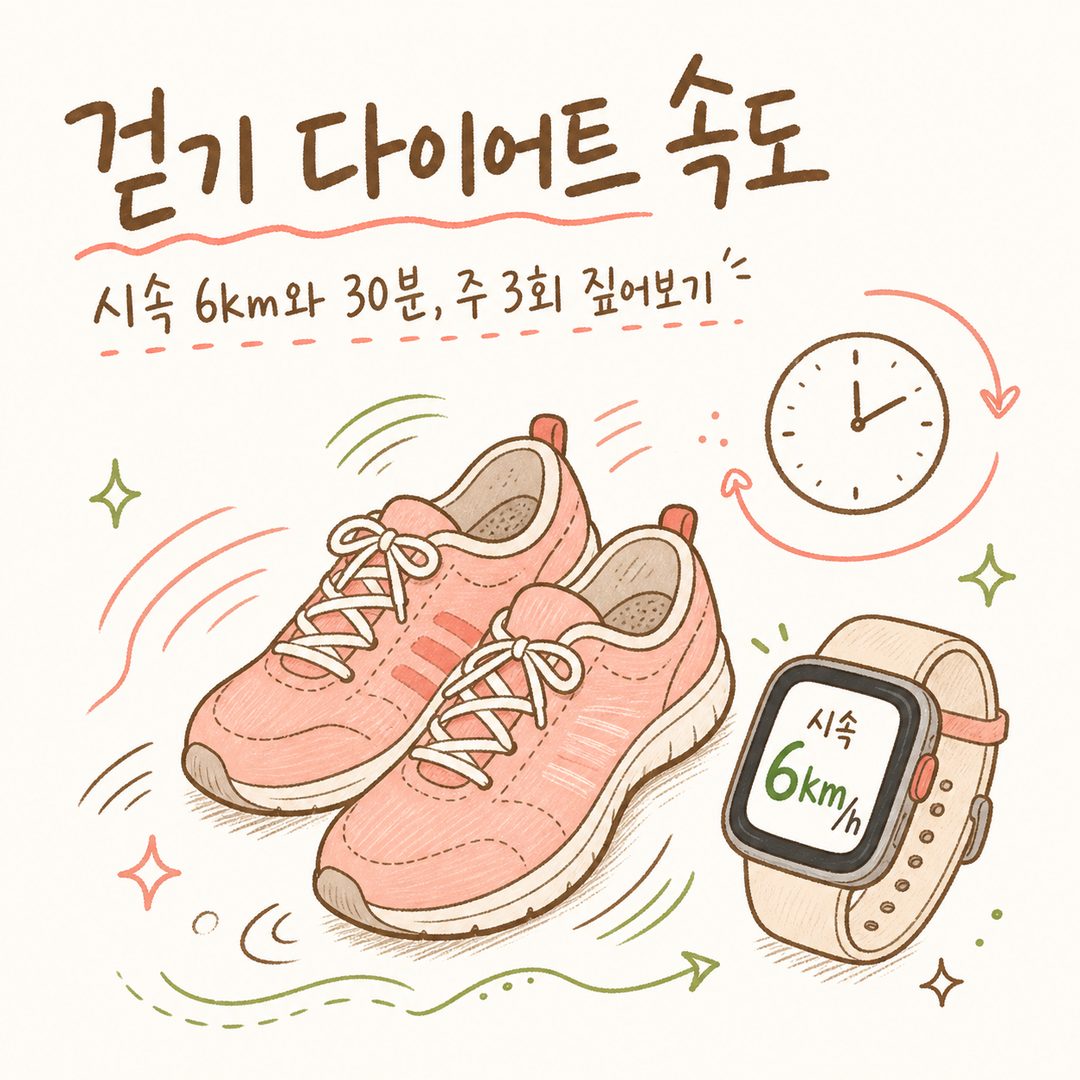
The reason why one person loses weight while another stays the same after the same 30-minute walk is simple. Calorie consumption only increases significantly during brisk walking that leaves you slightly out of breath. Most data suggests a brisk walking standard of around 5.6 km/h, and if you want to increase exercise intensity, a range of 6.4 to 8.0 km/h is recommended.
At this speed, brisk walking is classified as moderate to high-intensity aerobic exercise. Some reports indicate that "walking as fast as possible" is the method that consumes the most energy. This doesn't mean strolling is bad. However, if your goal is clearly weight management, a pace that leaves you slightly breathless is much more efficient than walking slowly for a long time.
A good rule of thumb is "the level where you can talk but not sing." That point where you can have a short conversation with the person next to you, but you lack the breath to hum a melody. That is the closest pace to brisk walking for a diet.
Calorie Burn Determined by Weight and Speed
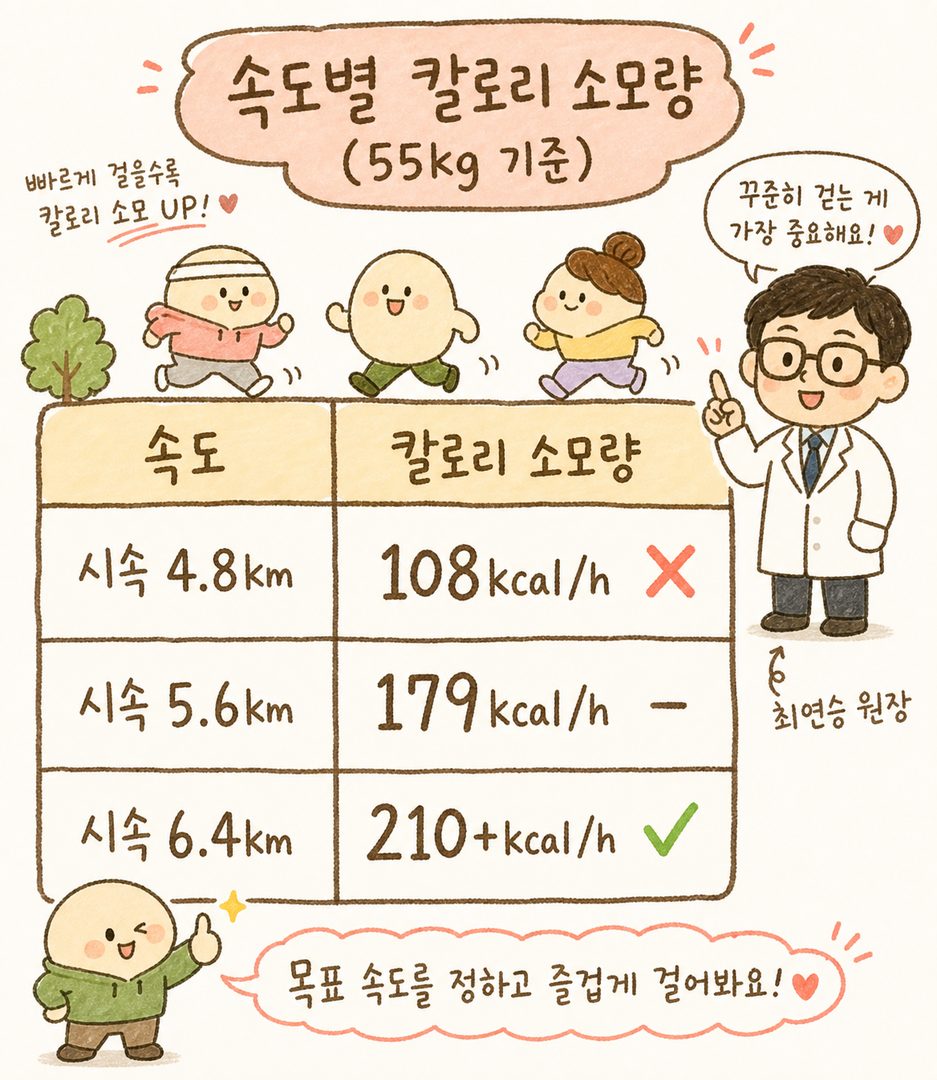
The difference becomes clearer when looking at the numbers. If a person weighing 55kg walks at 4.8 km/h, they burn 108 kcal/hour. The moment they walk at 5.6 km/h, it rises to 179 kcal/hour. By increasing the speed by just 0.8 km/h, you burn nearly 70 kcal more in the same hour. For overall brisk walking, energy consumption of 5.8 to 9.1 kcal/kg per hour has been reported.
If you go even faster, you can consume 400 to 500 kcal per hour. The National Mental Health Center states that walking for 1 hour a day leads to a consumption of 2,100 to 3,000 kcal per week, resulting in a weight loss effect of about 0.45 kg. While 0.45 kg a week may seem small, it becomes a significant number when combined with dietary adjustments.
There is one point I want to emphasize here: walking alone may not lead to a large amount of weight loss. Most people who feel that change is slow despite exercising properly often need to reinforce their diet.
The Scale is the Last to Show Changes
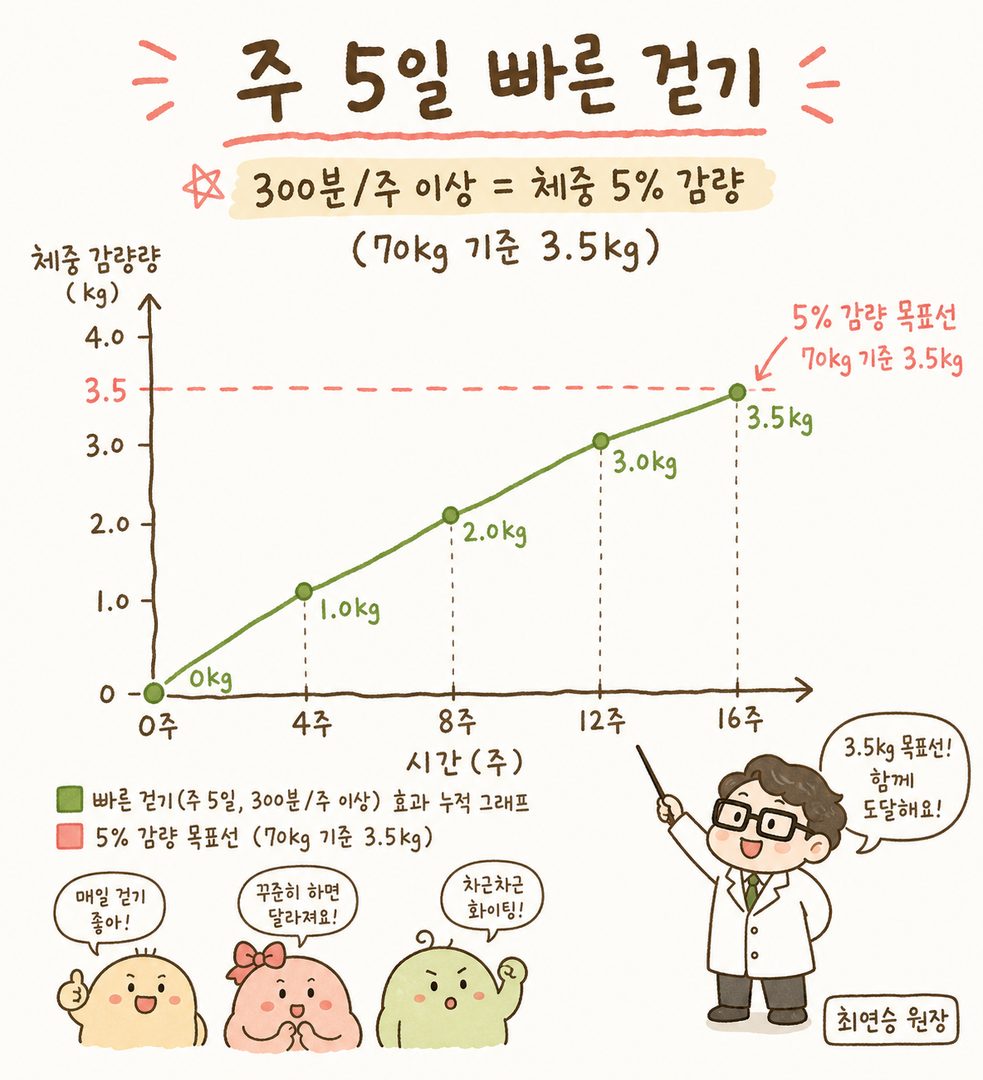
When I see patients in the clinic who have walked consistently for one to three months, the order in which changes appear is almost always the same. Before the weight drops, waist circumference decreases, blood pressure stabilizes, and overall physical condition feels lighter. This is because visceral fat and cardiovascular health respond first.
Noticeable changes usually require at least 1 month, and more definitive changes require 3 months or more of consistency. If you start without knowing this timeframe, it's easy to get disappointed by the numbers on the scale after just two weeks and quit. That’s why I advise patients, "Try measuring your waist with a tape measure instead of using the scale." The tape measure provides answers much faster.
The Role of Walking in a Korean Medicine Diet
In Korean medicine, when approaching a diet, we first examine Qi and blood circulation and constitution. Even if two people walk at the same fast pace, one might lose bloating as they sweat, while the other might experience knee pain first. The results of the same exercise vary depending on the constitution.
Brisk walking is particularly effective for those with severe water retention or frequent lower body edema. The muscle pumping action moves the stagnant fluids. Conversely, for those with significantly low energy (Qi), overexerting themselves for an hour at 6 km/h from the start can actually slow down recovery. For these individuals, it is safer to walk for short, frequent periods and gradually increase exercise intensity while supplementing energy with herbal medicine.
More than half of the people who come to the clinic because their walking diet isn't working find that the issue isn't the exercise, but rather appetite control and metabolism recovery. Therefore, in the clinic, we don't just look at exercise alone; we examine eating habits, constitution, and even sleep.
Speed Guide to Apply Starting Today
If you are just starting out, you can set your goals like this:
Beginners: Time is more important than speed. Get used to walking for more than 30 minutes without strain before increasing the speed.
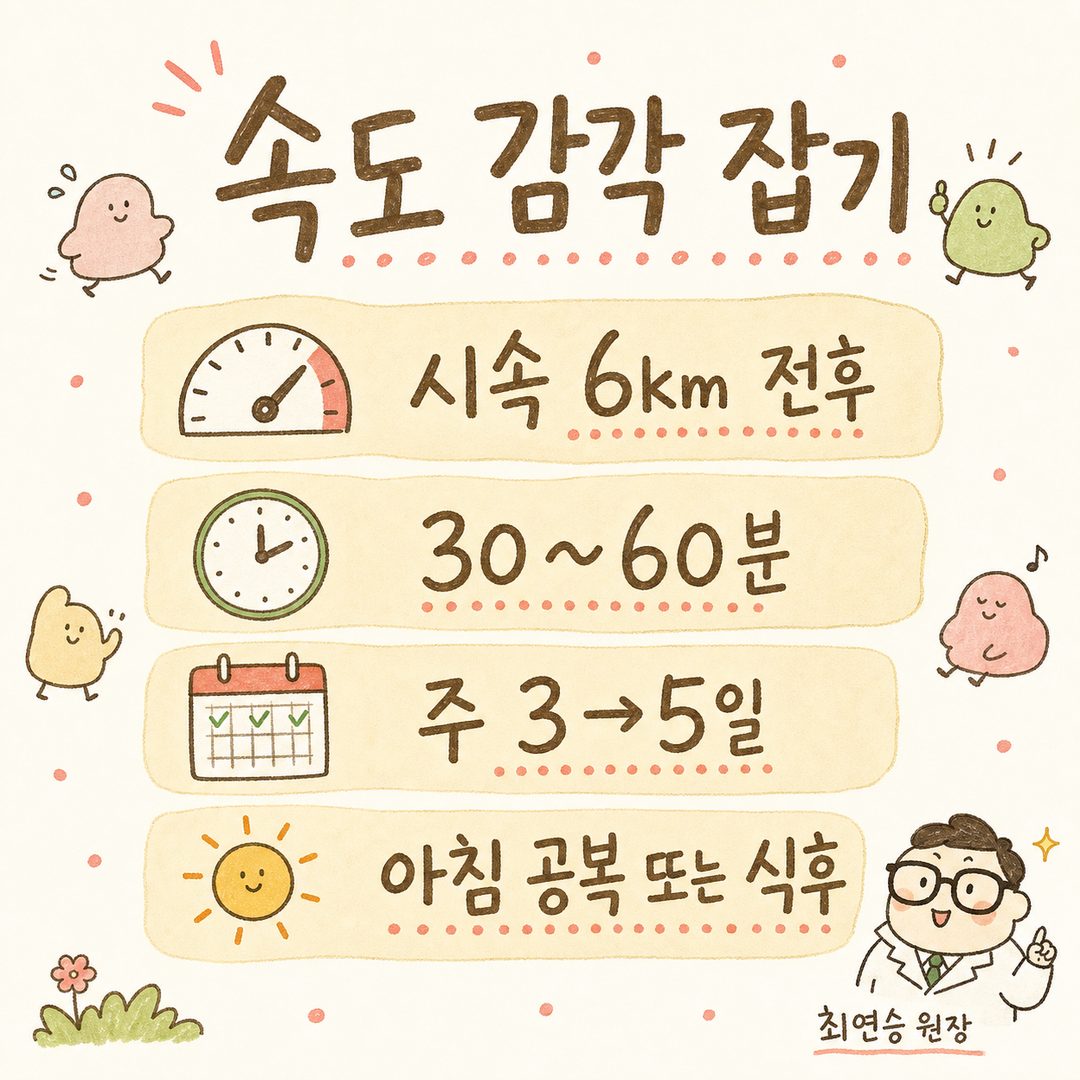
For General Weight Management: At 5–6 km/h for at least 30 minutes. A pace where you can talk but not sing.
For Greater Weight Loss: Maintain 6 km/h or more for about 1 hour if possible.
If Tracking Steps: Aim for 8,000 steps or more per day, or 300 minutes or more of moderate-intensity physical activity per week.
Posture is just as important as speed. Don't just move your feet quickly; swing your arms vigorously and combine it with lower body strength training for better results. If a daily schedule is too burdensome, it's fine to aim for at least every other day.
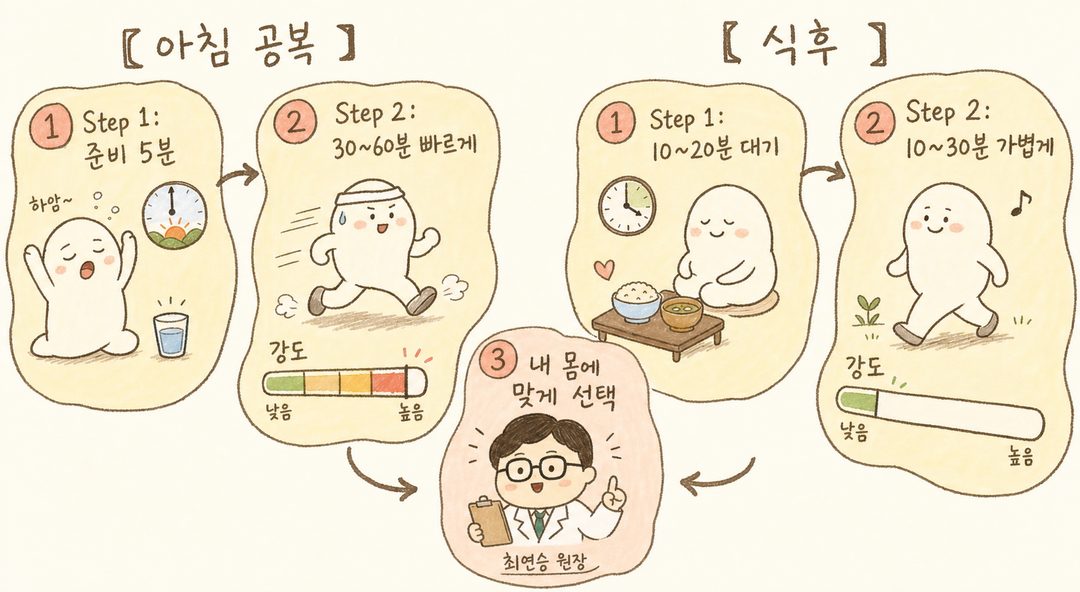
Also, pay attention to the timing. Walking for 10 minutes after a meal is beneficial for blood sugar control, and if losing weight is the priority, walking for 30 minutes to an hour on an empty stomach in the morning is known to be more appropriate. You can also mix the two.
Please don't get frustrated too early if the numbers on the scale don't move. If you walk briskly for just one month, you will feel your condition improve. However, if your exercise efficiency is low due to uncontrollable appetite, edema, or chronic fatigue, it is a good choice to get a check-up at Baekrokdam Clinic and consider Baekrok Gambi-jung, a prescription tailored to your constitution and lifestyle. When exercise and Korean medicine prescriptions go together, the effects of walking return as tangible results much faster.