Dieting and Ramyun-ttang: Calories, Sodium, and Tips

Table of Contents
Have you ever suddenly craved Ramyun-ttang while dieting? In the clinic, I often hear the question, "Is Ramyun-ttang okay?" Because of its crunchy texture and small portion size, it feels manageable, but when you look at the actual numbers, they are heavy enough to make you feel dizzy.
Why Ramyun-ttang is Burdensome for Weight Management
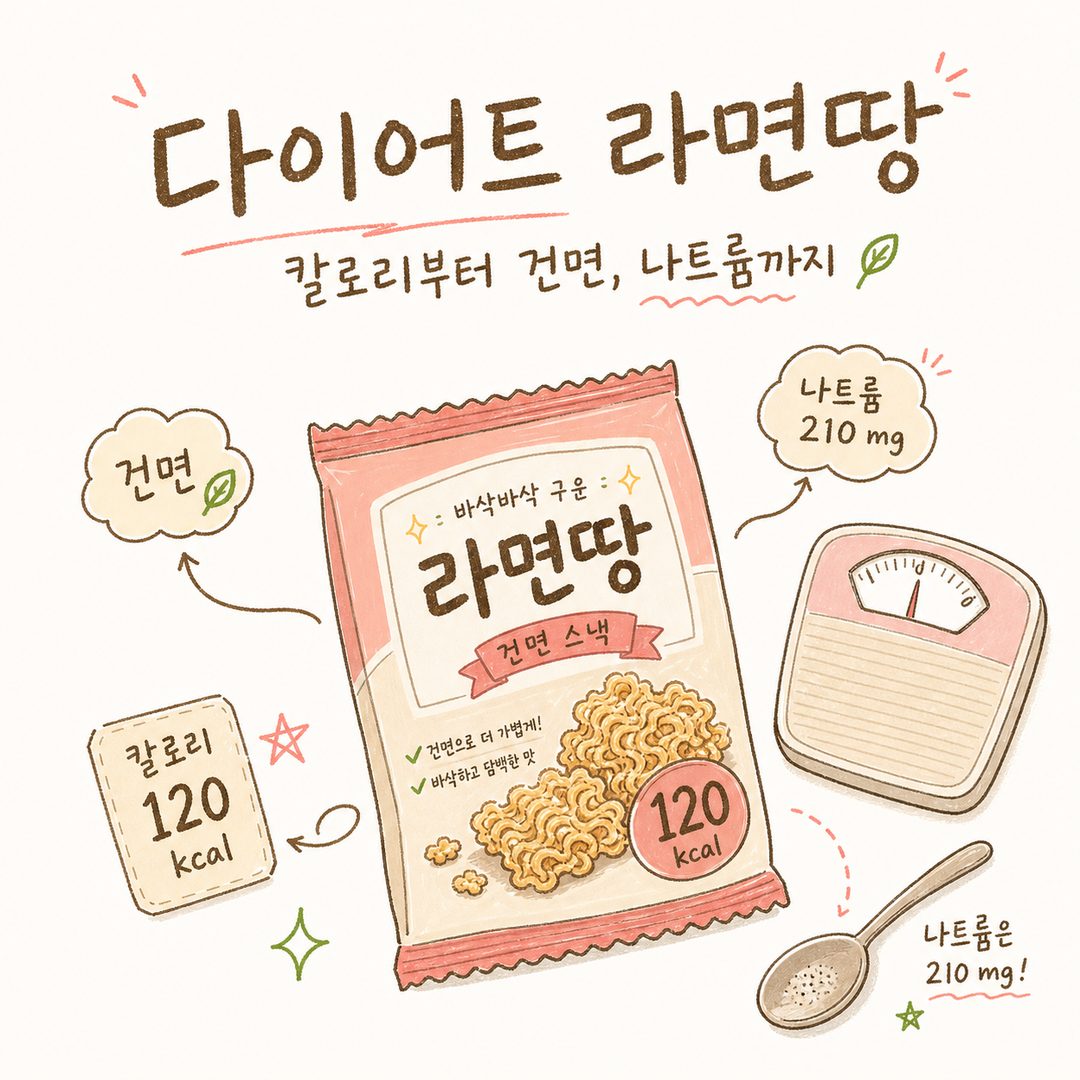
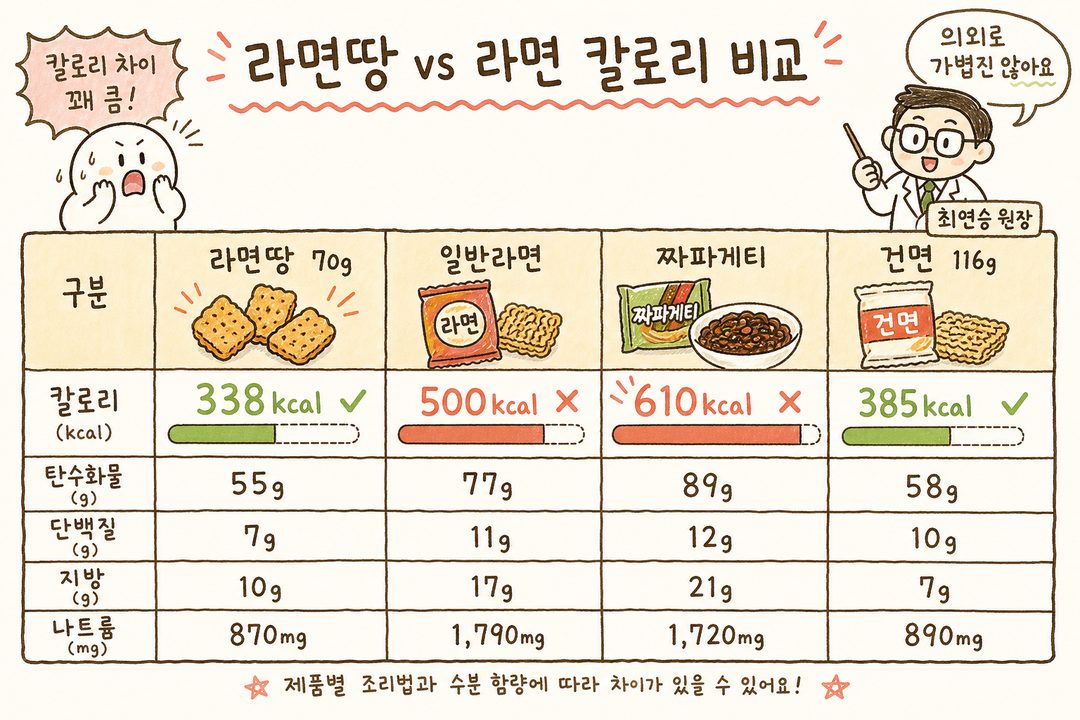
It is easy to see Ramyun-ttang as just a "snack made of crushed noodles," but the story changes when you look at the nutritional facts. According to nutritional data, a 70g serving of Ramyun-ttang made with non-fried noodles contains 338 kcal, 55g of carbohydrates, 7g of protein, and 10g of fat. It is a typical refined carbohydrate snack—heavy on carbs and low in protein.
If made with regular deep-fried noodles, the burden increases further. Some data shows that a single bag of regular ramen is about 500 kcal, and Jjapaghetti can go up to 610 kcal. If you follow common recipes that add 2 tablespoons of mayonnaise and 1 tablespoon of sugar, it becomes a high-calorie snack rather than something suitable for a diet.
Changes Caused by Frequent Ramyun-ttang Consumption
In the clinic, many patients say, "I ate less rice and just had Ramyun-ttang instead." However, after observing them for a week or two, their weight often stays the same or even increases. The reason is simple.
Many ramen products contain over 50% of the daily recommended sodium intake in one bag, while lacking fiber, vitamins, and minerals. Even when eaten as Ramyun-ttang, this nutritional profile remains the same. Consequently, edema (swelling) does not subside easily, and because the lack of protein and fiber leads to short-lived satiety, it easily leads to binge eating during the next meal.
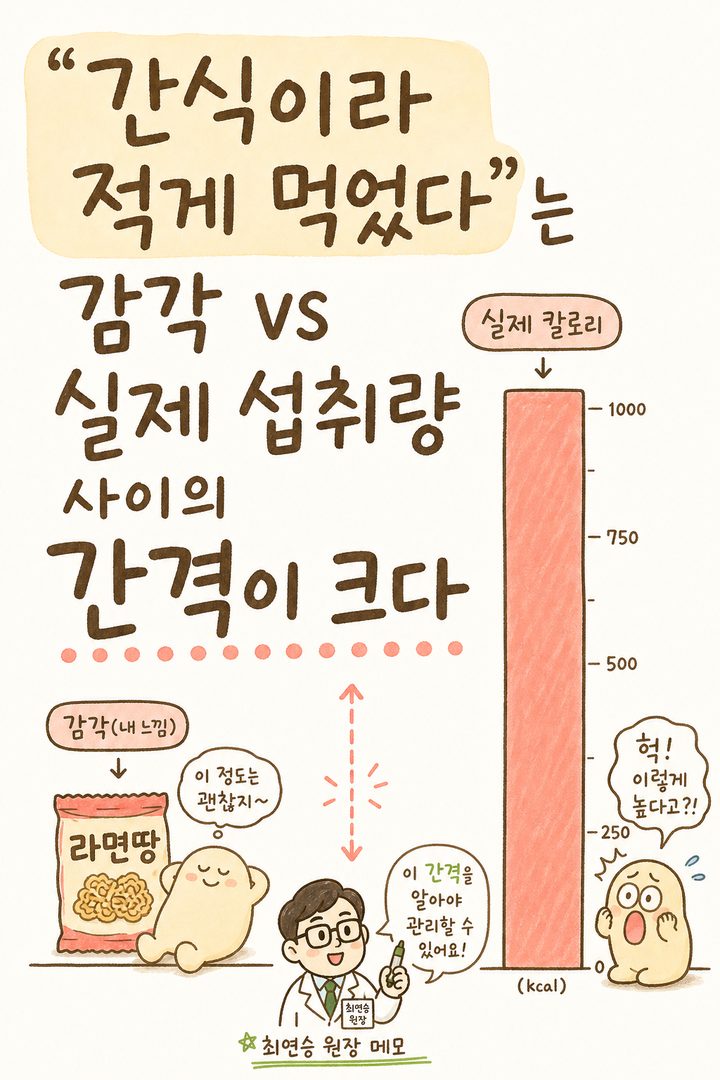
An appropriate calorie count for a single meal is usually around 500–650 kcal. If you add mayonnaise and sugar to a bag of Ramyun-ttang, it can easily exceed this range. There is a significant gap between the feeling of "eating a small snack" and the actual amount consumed.
Baekrokdam Clinic’s Perspective on Ramyun-ttang Habits
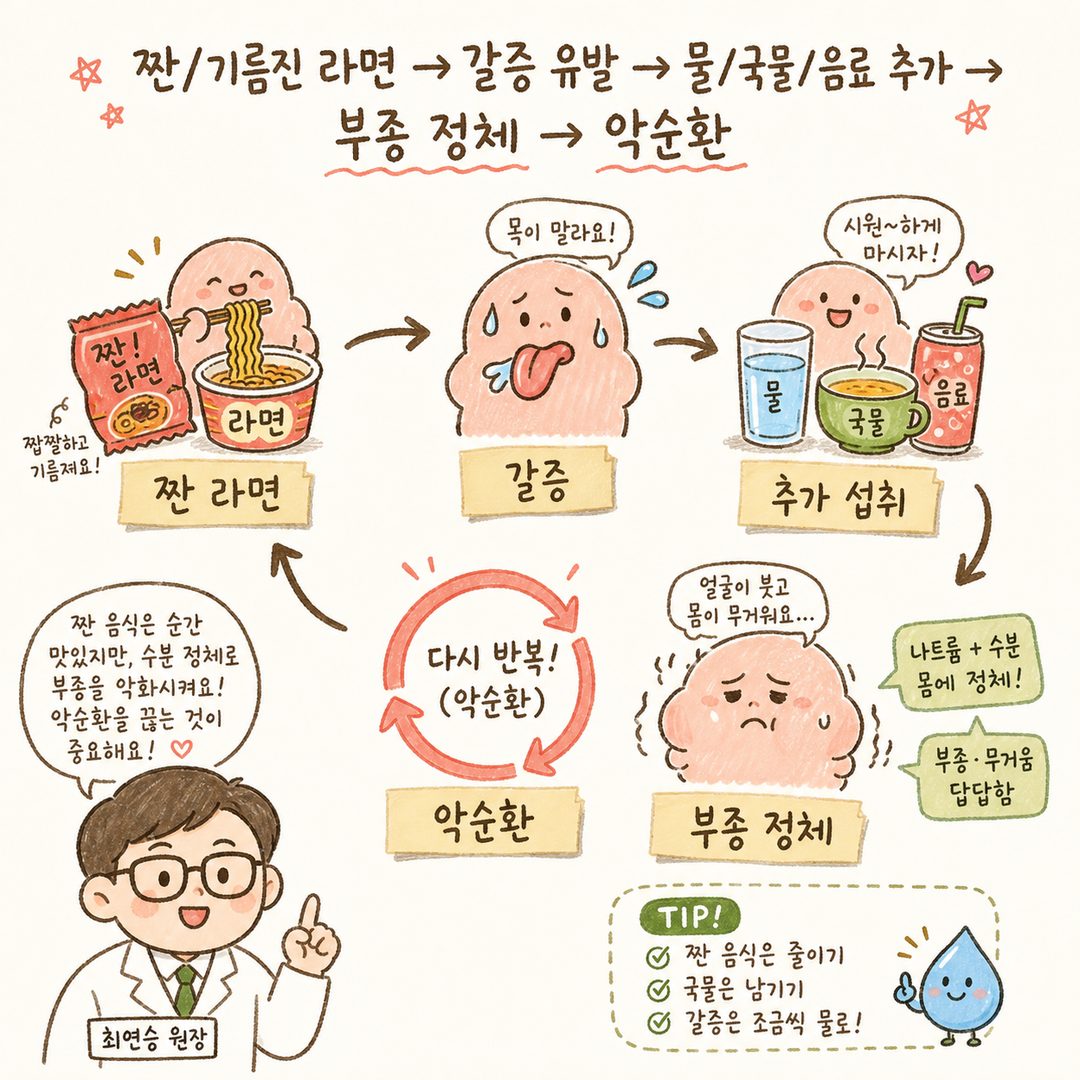
In Korean medicine, we do not just look at calorie counts. Foods that are salty, greasy, and high in refined carbohydrates increase the burden on the Spleen and Stomach (digestive system) and easily create waste accumulation called Dameum (痰飮). Crunchy and salty snacks like Ramyun-ttang cause thirst, which often leads to a vicious cycle of seeking more water, soup, or sugary drinks.
For those whose hands and feet swell easily, whose faces look puffy in the morning, or who frequently feel bloated after meals, simply reducing snacks like Ramyun-ttang can make their physical condition feel much lighter. We often hear feedback like, "The number on the scale is the same, but my clothes feel more comfortable," as edema is cleared even before significant fat loss occurs.
If You Must Eat Ramyun-ttang During a Diet
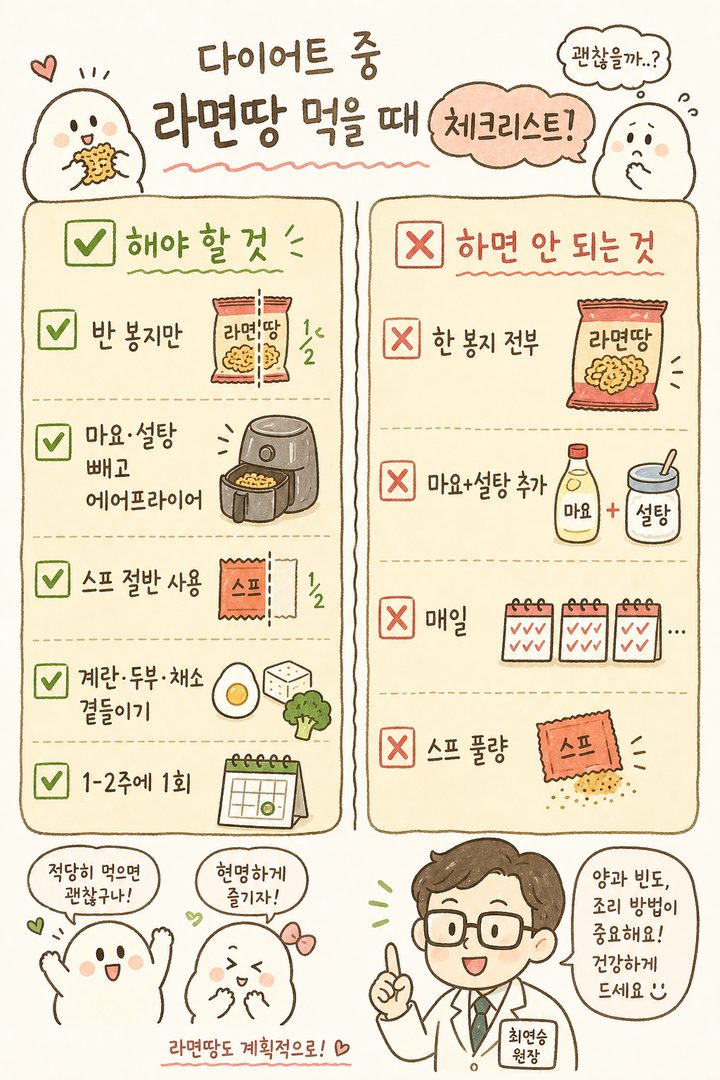
I won't tell you to quit entirely, as very few people can actually do that. Instead, if you follow a few principles, you can significantly reduce the impact of one bag.
Eat only half — Reduce the amount consumed at once by splitting one bag into two servings.
Skip the mayo and sugar — Bake it in an air fryer or oven instead.
Use only half the soup base — Lower the sodium burden.
Add protein and fiber — Pair it with boiled eggs, tofu, chicken breast, or vegetables like cucumber and carrots.
Limit frequency to once every 1–2 weeks — Set a specific day to eat it in advance.
The last principle is particularly important. The pattern of "suppressing the urge until you explode and binge" is the most dangerous. If you decide in advance, "I will have half a bag this Saturday," it becomes much easier to postpone the impulse during the week until Saturday.
If you must choose a type of ramen, non-fried noodles are generally less burdensome than deep-fried ones. One non-fried noodle product (116g) contains about 385 kcal and 1,430mg of sodium, which is relatively light within the ramen category. However, please remember that it is a "less burdensome option," not a "diet food."

Meal Rhythm is More Important Than One Snack
What is more important than whether you eat a bag of Ramyun-ttang is your daily meal rhythm. If you skip breakfast, binge at lunch, and finish the day with a snack like Ramyun-ttang, you won't lose weight even if you cut out the snack. Conversely, those who maintain a steady rhythm of three protein-centered meals can continue their progress without much disruption even if they occasionally enjoy Ramyun-ttang.
The issue with Ramyun-ttang is not "will this one bag ruin my diet?" but rather "what place does it hold in my weekly diet?" The key is to enjoy it occasionally without guilt while keeping your regular meals solid.
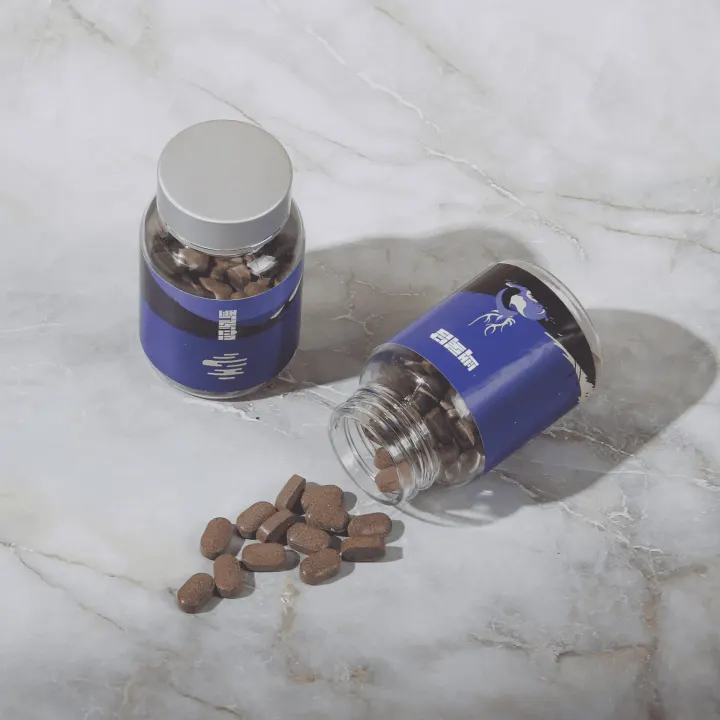
If you find yourself constantly craving Ramyun-ttang and struggling to quit salty snacks, it may not be a simple matter of willpower; your Spleen and Stomach function or an edema-prone Dameum constitution may be influencing you. At Baekrokdam Clinic, we examine your constitution, eating habits, and edema patterns together, using Baekrok Gambi-jung to help regulate appetite rhythms and clear waste accumulation. If you have felt frustrated by repeatedly giving in to a bag of Ramyun-ttang, starting with a consultation to check your body's signals is a great first step.