Diet Meal Plan Guide: Carbs, Protein & Fiber

Table of Contents
The most common concern I hear is, "Doctor, I don't even know where to start with what to eat." As someone who's been there, I understand completely. Your daily routine might include kimchi stew for lunch with colleagues, tteokbokki or ramen during late nights, and bread or desserts as weekend rewards. Simply telling someone with these habits to "just eat less" is irresponsible, as it often leads to binge eating later. Today, I'll break down a daily meal plan focusing on four key elements: carbohydrates, protein, fiber, and sauces. These recommendations follow general guidelines, but please consult a specialist if you have any medical conditions.

Starting with the Foundation: Choosing the Right Carbohydrates
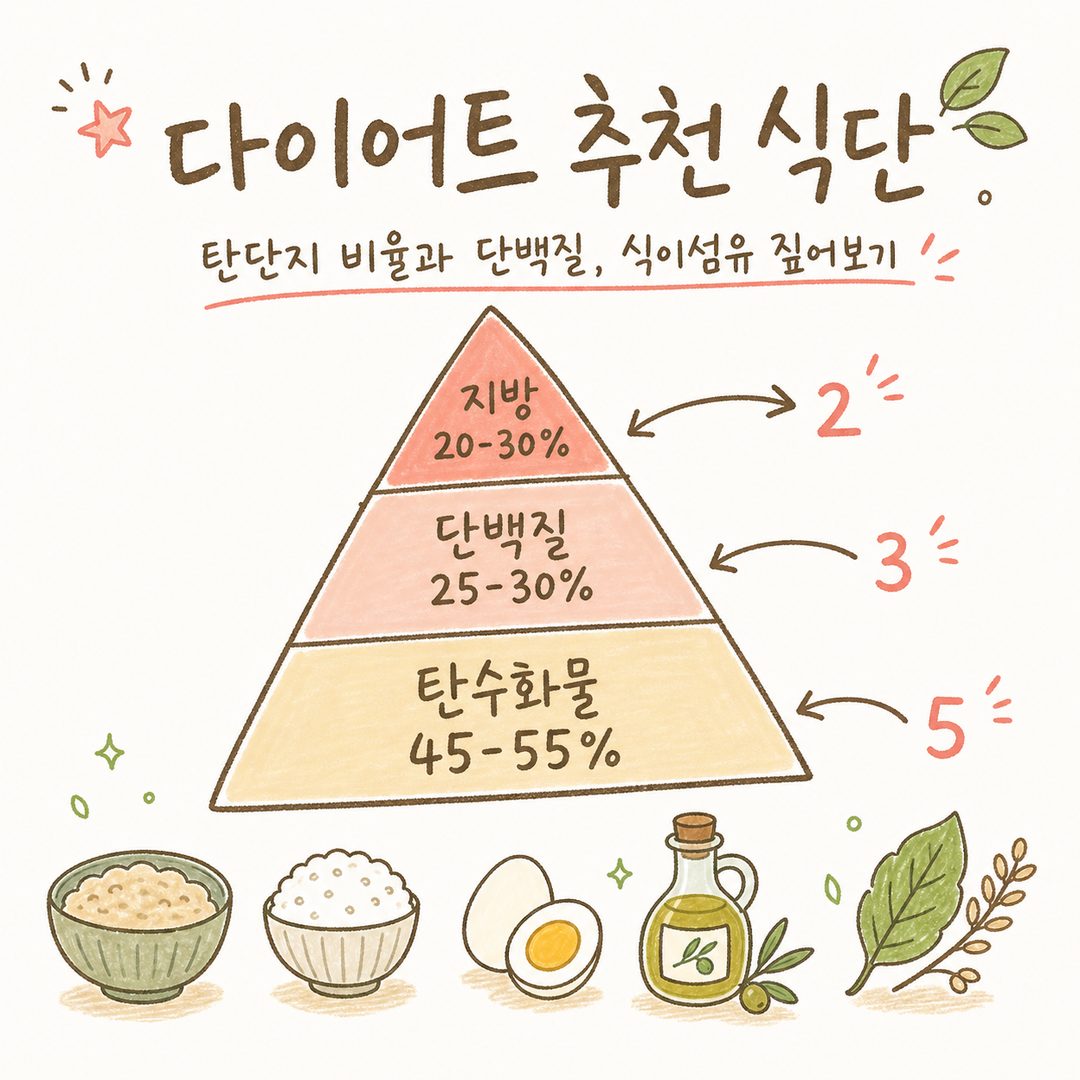
When creating a new meal plan, the first thing to address is the quantity and quality of carbohydrates. For weight management diets, the commonly recommended daily caloric intake is around 1,200-1,500kcal. A macronutrient ratio of 5:3:2 (45-55% carbs, 25-30% protein, 20-30% fat) is generally sustainable.
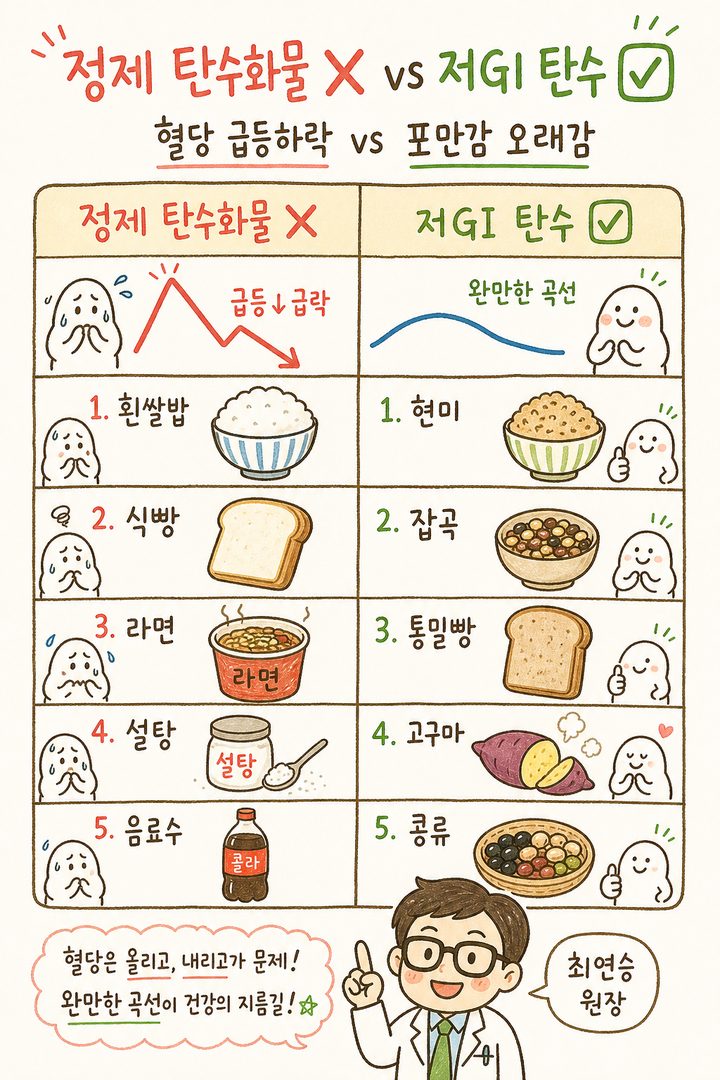
The real issue isn't just the amount but "what kind of carbs." Refined carbohydrates like white rice, bread, ramen, snacks, sugar, and sweetened drinks cause rapid blood sugar spikes and crashes, leaving you hungry again quickly. Switching to low-GI options like brown rice, mixed grains, whole wheat bread, sweet potatoes, and legumes provides longer-lasting satiety. For those considering a low-carb approach, aiming for 50-100g net carbs per day can be effective. Some cases have shown that maintaining under 100g net carbs for 5-6 days a week can help change body composition, with reports of approximately 1kg weight loss per week. However, I must mention that the more restrictive the approach, the harder it is to maintain.
Including Protein in Every Meal
When starting a diet, people often focus only on "eating less," but the real key is evenly distributing protein throughout the day. If you lose muscle along with fat, your basal metabolic rate decreases, making weight regain more likely. It's safer to increase protein rather than starve yourself.
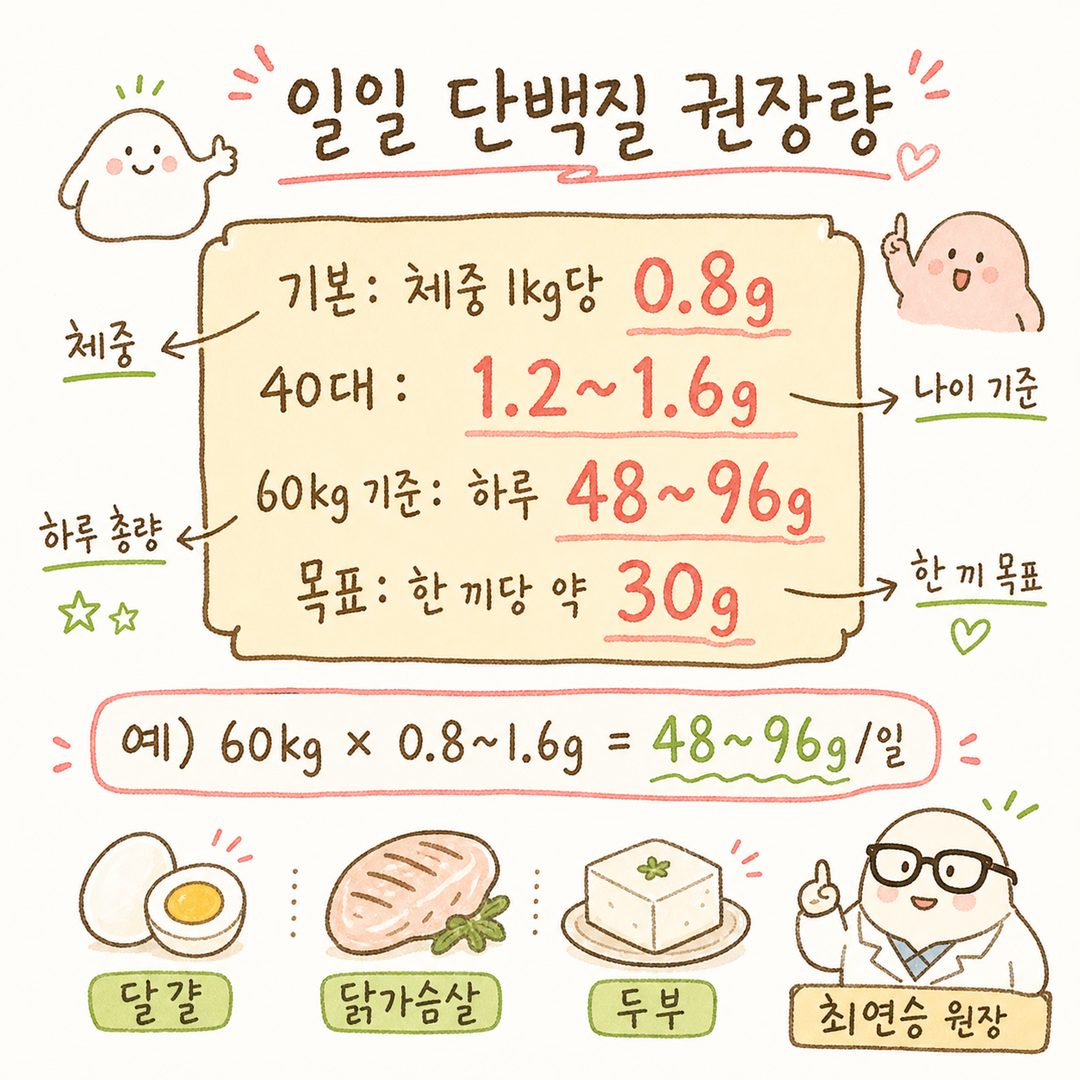
The general adult protein guideline is at least 0.8g per kg of body weight (at least 48g for 60kg). However, after age 40, muscle loss accelerates, so the recommended amount increases. Studies on 40s nutrition recommend 1.2-1.6g per kg of body weight daily, or 72-96g for a 60kg person. Rather than consuming it all at once, distributing protein evenly across breakfast, lunch, and dinner improves absorption and helps maintain satiety. Aim for about 30g of protein per meal.
For those who find breakfast challenging, here's a simple combination: 40g oatmeal with 100g unsweetened Greek yogurt provides both carbs and protein in about 200-300kcal. This takes only 5 minutes to prepare.
The Answer Lies in Fiber and Vegetables
The most important consideration for side dishes is fiber. Getting over 20g of fiber daily from vegetables, whole grains, beans, and fruits extends satiety and helps prevent constipation. Studies on 40s nutrition recommend over 10g of fiber per meal, which also helps moderate blood sugar spikes.
In practice, think "increase vegetables as you decrease rice." A bowl of salad, two types of blanched vegetables, and fermented vegetables like kimchi and radish kimchi. The more variety, the more satisfying the meal. Legumes are excellent as they provide both protein and fiber. Half a block of tofu, a handful of black beans, or lentils mixed into multigrain rice - these small changes accumulate over months.
Reconsidering Sauces and Seasonings - The Hidden 80% of Calories
When people say they're not losing weight despite following a good diet, the culprit is usually sauces and seasonings. Caesar dressing generously poured over salad, sweet and savory teriyaki sauce with chicken breast, or seasoned ribs at company dinners - often the seasonings are more caloric than the main ingredients.
I often recommend this principle to patients: reduce simple sugars and flour-based seasonings (sugar, corn syrup, commercial sauces, flour paste) and simplify to soy sauce, vinegar, olive oil, lemon juice, and herbs. It's also good to consciously avoid late-night regulars like tteokbokki, ramen, jjajangmyeon, sweet breads, and juices. A healthy weight loss rate typically requires a 300-500kcal daily deficit from your maintenance calories, and a significant portion of this deficit can be lost through sauces. The same chicken breast salad can vary greatly in calories based on just one tablespoon of dressing.
❌ vs ✅ — Same Menu, Different Results
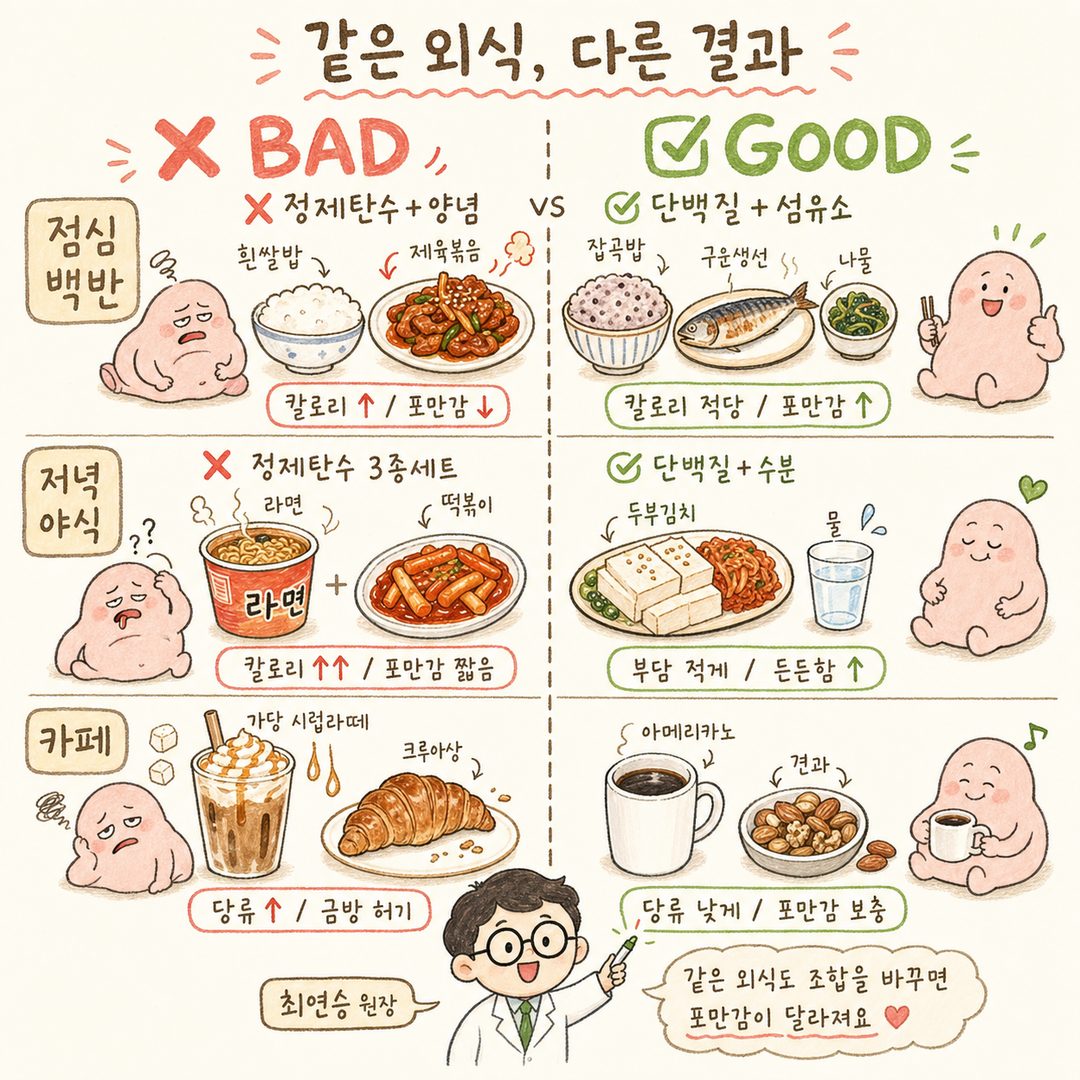
Let's compare some common dining situations to show how to choose without derailing your diet:
Lunch set ❌ One bowl white rice + pork stir-fry (sweet & salty sauce) + soda → Refined carbs and sauce calories combine, making you sleepy and hungry in the afternoon.
Lunch set ✅ Half bowl multigrain rice + grilled/boiled meat + 2-3 vegetable side dishes + seaweed soup → Same price but fills you with protein and fiber.
Late-night snack ❌ Ramen + kimbap + tteokbokki → The trifecta of refined carbs brings swelling the next day.
Late-night snack ✅ One plate tofu kimchi + cucumber/cherry tomatoes → Provides protein and hydration for lighter next-day condition.
Cafe ❌ Sweetened syrup latte + croissant → Falls into the bread/juice category.
Cafe ✅ Americano or unsweetened milk latte + handful of nuts → Briefly satisfies hunger with protein and healthy fats.
The key isn't "cutting out" but "swapping." As small substitutions accumulate, you'll rely less on willpower.
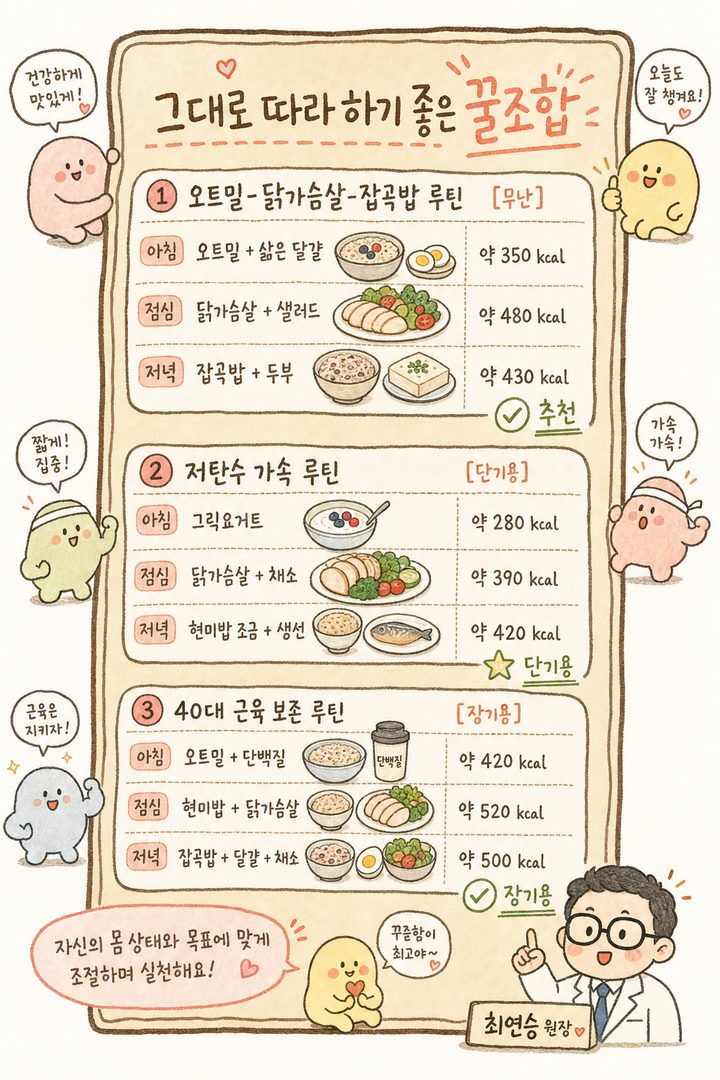

3 Easy-to-Follow Combination Plans
Here are three daily meal combinations I often recommend to patients, each around 1,300-1,400kcal.
- Oatmeal-Chicken Breast-Multigrain Rice Routine
Breakfast: 40g oatmeal + 100g Greek yogurt + handful of blueberries
Lunch: Half bowl multigrain rice + 100g chicken breast + two vegetable side dishes + seaweed soup
Dinner: Half block tofu + generous vegetable salad (olive oil & lemon juice)
This balanced combination provides protein and fiber at every meal.
- Low-Carb Accelerated Routine (Short-term)
Breakfast: 2 boiled eggs + half avocado + cherry tomatoes
Lunch: Grilled salmon + spinach side dish + braised tofu
Dinner: Grilled beef tenderloin + steamed cabbage + kimchi
Keeping net carbs at 50-100g can bring quick short-term weight changes. However, long-term maintenance is difficult, and you should return to a regular diet if headaches or fatigue occur.
- 40s Muscle Preservation Routine
Breakfast: 1 slice whole wheat bread + scrambled eggs + glass of milk
Lunch: Half bowl brown rice + grilled fish + bean sprout soup + one vegetable side dish
Dinner: Half block tofu + 80g chicken breast + plate of vegetables
This combination provides about 30g protein per meal, meeting the 1.2-1.6g per kg body weight guideline.
Choose among these three based on your lifestyle and allow about a week for adjustment.
Even with good dietary principles, some find appetite control too difficult or don't lose weight despite eating sufficiently. In such cases, it's necessary to examine your constitution and hormonal balance. Baekrok Gambi-jung is a Korean medicine prescription that helps design diet and lifestyle adjustments at this point. Don't struggle alone for too long - consider visiting our clinic for a consultation.