Women's Body Fat Percentage — From Calculation to Normal Ranges and Amenorrhea

Table of Contents
When I talk with patients in the clinic, so many of them get fixated on the number on the scale. They'll say, "Doctor, my weight is normal, so why is my belly sticking out?" or "I've lost weight, but my body shape hasn't changed." At times like these, I always tell them: what matters isn't the weight itself, but body fat percentage — which shows how much fat is actually in your body.

Definition of Body Fat Percentage and Calculation Formula
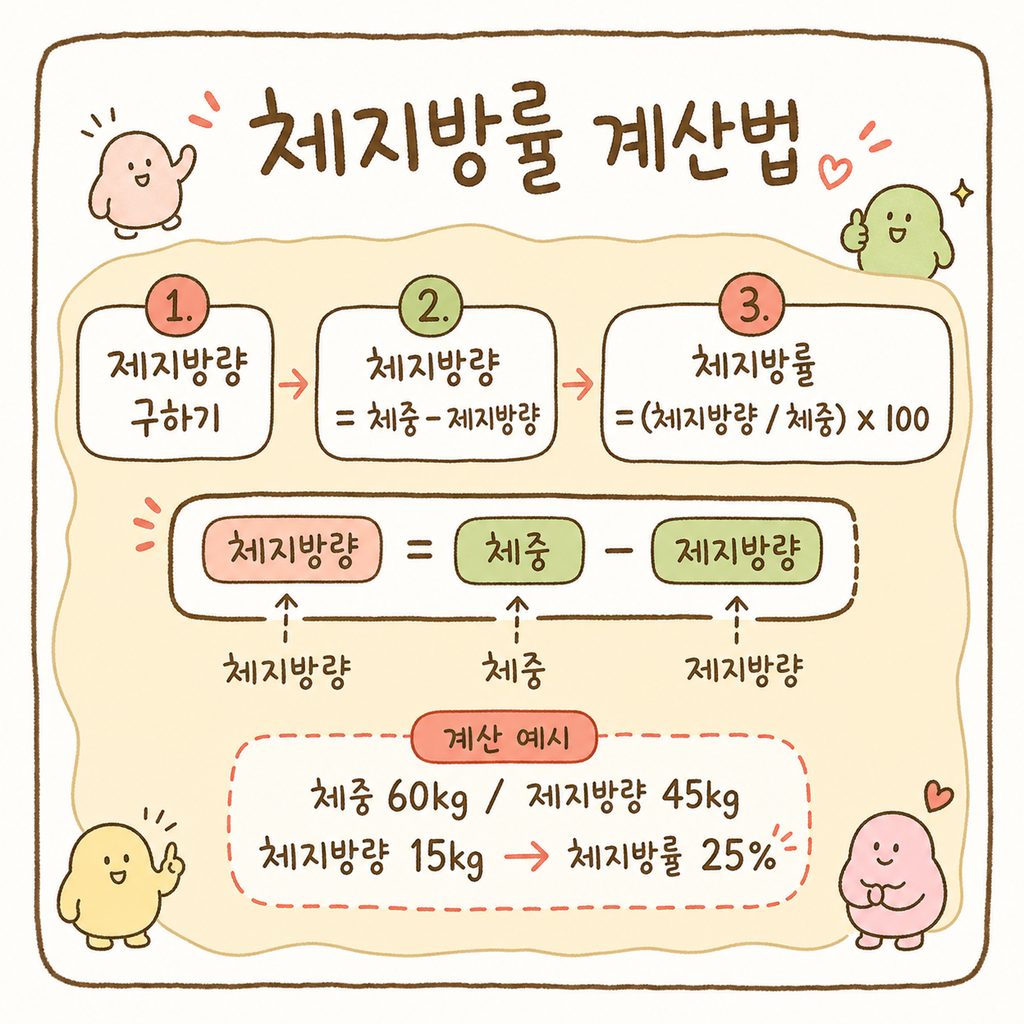
Body fat percentage refers to the proportion of fat in your total body weight. Think of it as an indicator that reveals your body's internal composition, which you simply can't see from weight alone. To calculate it accurately, you first need to find your fat-free mass. Fat-free mass is everything in your body except fat — the combined weight of your bones, muscles, and organs.
Here's how you calculate it:
Women's Fat-Free Mass Formula: (1.07 × body weight kg) − (128 × (body weight kg² ÷ height cm²))
Fat Mass Formula: Body weight − Fat-free mass
Body Fat Percentage Formula: (Fat mass ÷ Body weight) × 100
Once you complete these steps, you'll have an actual number representing your body's fat ratio.
Calculation Example with Real Numbers
Formulas can be dizzying, so let me walk you through a real example. Let's assume a woman who is 165 cm tall and weighs 55 kg.
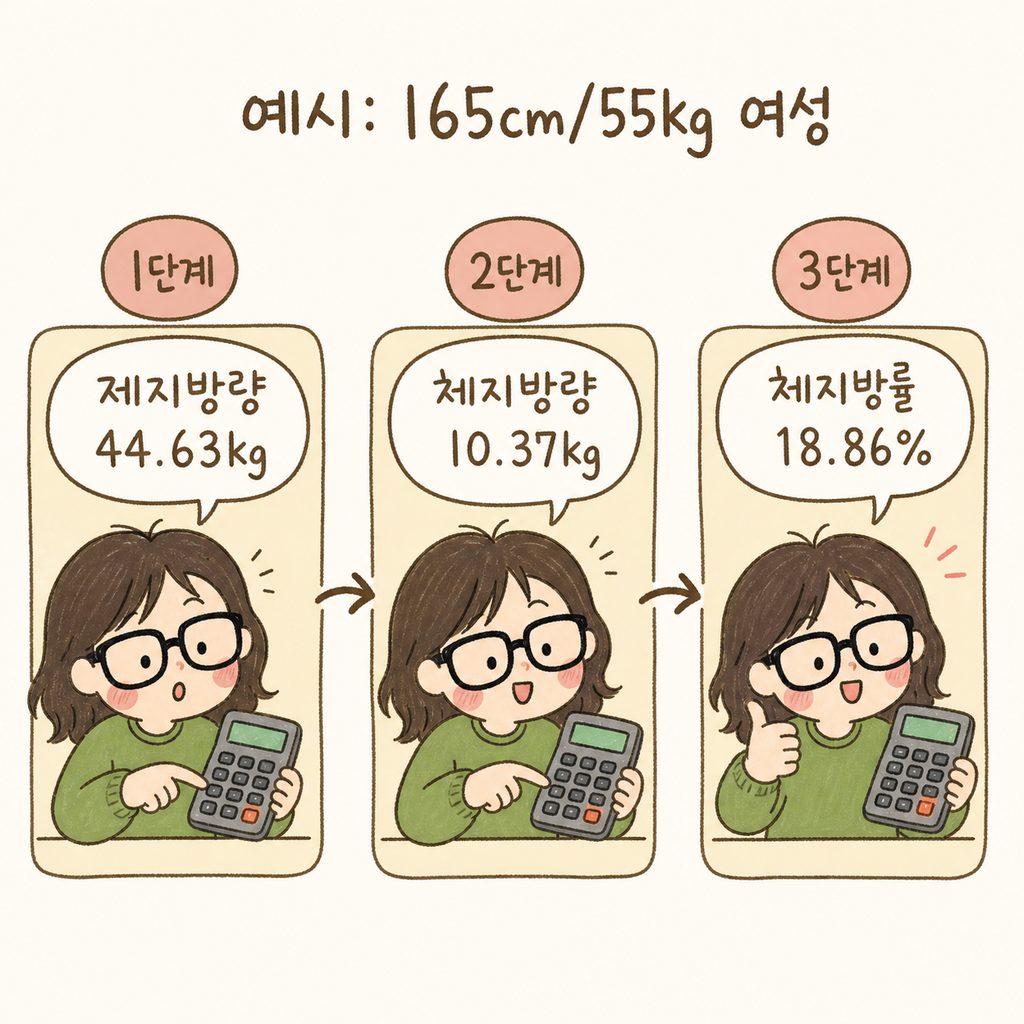
First, let's find the fat-free mass. Calculating (1.07 × 55) − (128 × (55² ÷ 165²)) gives us a fat-free mass of 44.63 kg. Subtract this from the total body weight of 55 kg, and we get a fat mass of 10.37 kg.
Finally, dividing this fat mass by body weight and multiplying by 100 gives us a body fat percentage of 18.86%. Seeing it as actual numbers reveals objectively whether you're simply thin or whether you have a good balance of muscle and fat.
Interpreting Results and Normal Range Warnings
Now that you have your number, it's time to interpret it. Many people assume that lower body fat is always better, but the truth is that women actually need a certain amount of body fat.
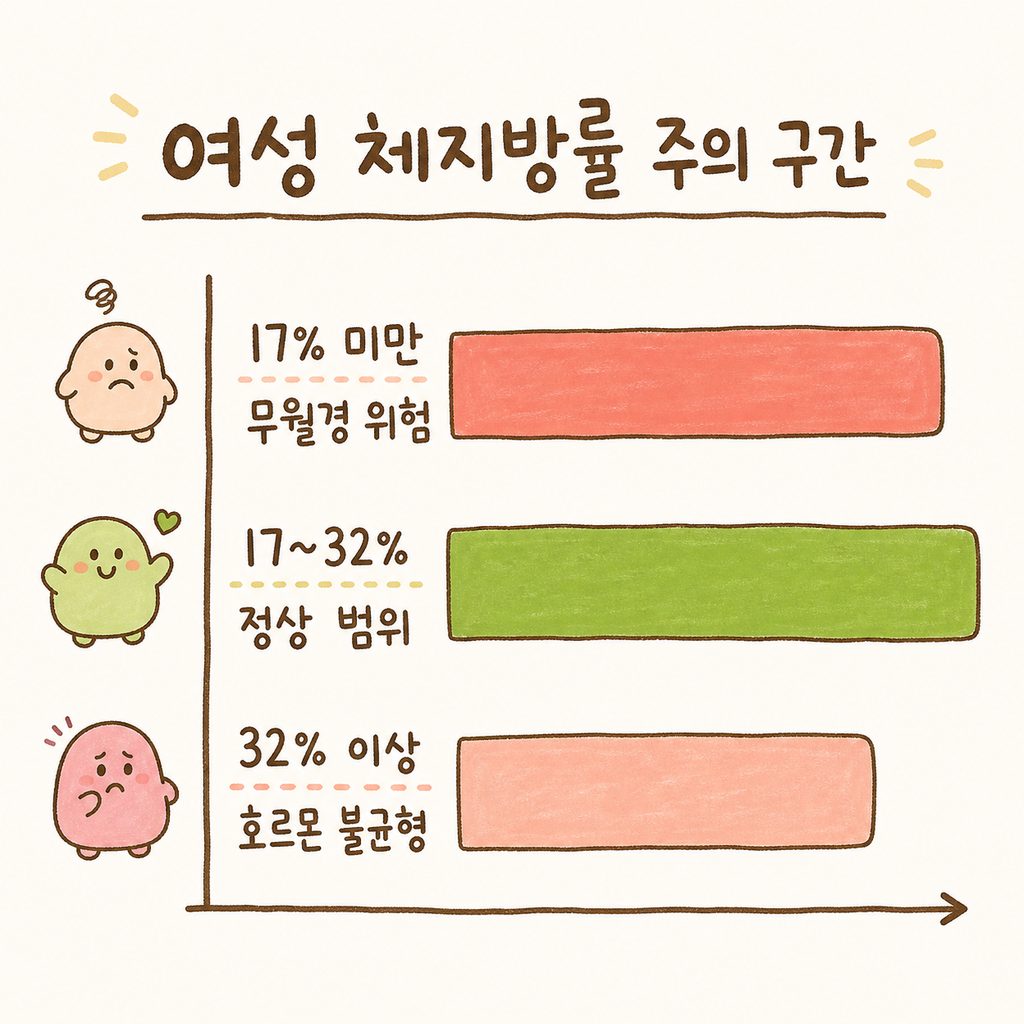
Experts emphasize that for women to maintain normal menstruation, body fat percentage should never drop below 17%. When body fat becomes too low, hormonal balance collapses, significantly increasing the risk of amenorrhea. In fact, this risk increases when someone rapidly loses 15 kg or more in a short period.
On the other hand, having a body fat percentage above 32% is also problematic. At this level, hormonal balance is disrupted and menstruation often becomes irregular. The key to women's health is maintaining an appropriate range — neither too low nor too high.
Limitations of the Calculation Formula
The formula I mentioned earlier has the advantage of being a convenient estimate, but it also has clear limitations. Since it only uses height and weight, it can't account for individual differences in muscle distribution, bone density, or hydration levels.
People who exercise professionally and have very high muscle mass may find that their calculated body fat percentage actually comes out higher. So instead of fixating on this single number, it's more accurate to complement it with precise measurements like InBody (BIA) or DEXA scans. In statistics, much research has worked to reduce errors by setting a 95% confidence interval[1]. We, too, need an approach that considers multiple indicators rather than relying on a single number.
Complementary Indicators to Consider
An excellent indicator to examine alongside body fat percentage is the Fat-Free Mass Index (FFMI). This quantifies fat-free mass while accounting for height, and the normal FFMI for Korean adult women is known to be approximately 14.9 to 16.1 kg/m².
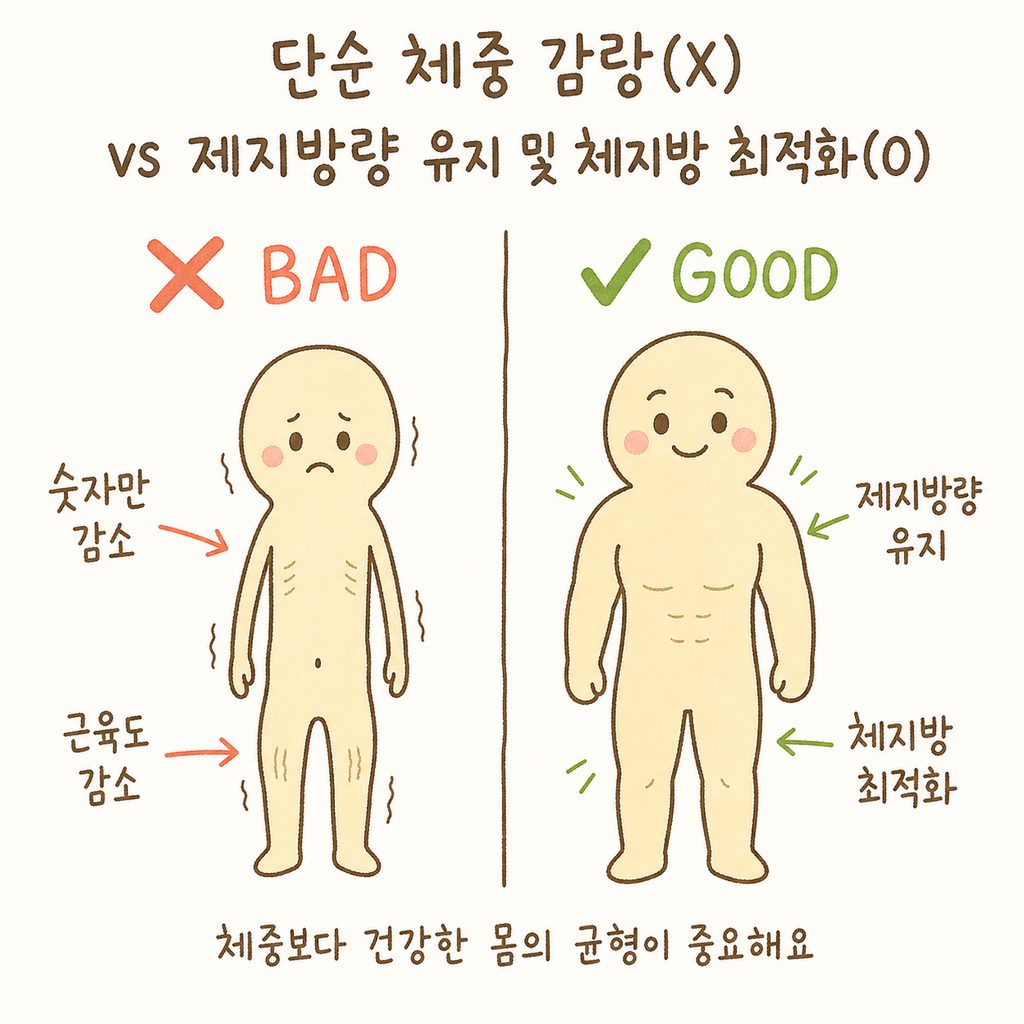

When you focus only on shedding fat, you'll inevitably lose fat-free mass — meaning muscle. Even though your weight decreases, your basal metabolism drops, turning you into someone who gains weight easily just from eating a little. My recommendation is to structure your diet and exercise so that while lowering body fat percentage, you also maintain an appropriate FFMI.
In Korean medicine, this isn't viewed as a simple numerical problem but is understood through the lens of the circulation and balance of gi (energy) and blood. If body fat is concentrated in specific areas, it could be a signal that metabolism in those areas has become stagnant.
Numbers are just one hint about our body's condition — they're not the answer sheet. The most important thing is to listen to the signals your body sends and manage your weight in a healthy way. If you ever feel excessively fatigued or experience symptoms like menstrual irregularity while managing your diet and exercise alone, please don't hesitate to seek professional help.
With the Baekrokdam program, you can expect better results through metabolism regulation tailored to your body constitution. Instead of aggressive weight loss, I encourage you to start making healthy changes that care for your body.
References
[1] The association between sleep duration and general and abdominal obesity in Koreans: data from the Korean National Health and Nutrition Examination Survey, 2001 and 2005. (Obesity (Silver Spring, Md.), 2009) — https://pubmed.ncbi.nlm.nih.gov/19180067/
Additional Resources