Worried about your menstrual cycle? Should you diet during menstruation?

Concerned about your menstrual cycle? Should you diet during your period?
Many women experience their diet plans being disrupted by body changes that occur at specific times of the month. "'No matter what I do during this time, I feel like I gain weight during my period, and my appetite is uncontrollable,' patients tell me, and their voices are always deeply etched in my clinical notes. Many people wonder whether they should continue their menstrual diet, take a break, or give up entirely. The important thing is to understand your body during this period not as an 'enemy,' but as a 'partner,' and to read your body's environment.
Body Changes During Your Period: Why Do They Make Dieting Difficult?
| “Dr., starting a week before my period, my face swells up like a waterlogged sponge in the mornings. My weight also suddenly increases by 2kg, and I especially crave salty or sweet foods like crazy. Doesn't this mean I should just give up on dieting?” |
The symptoms many patients experience before their period, especially Hyun-a (pseudonym) in her late 30s, are a very common story encountered in the clinic. These changes primarily stem from the complex interplay of female hormones, estrogen and progesterone. During the luteal phase before menstruation, as progesterone levels rise, our bodies have a strong tendency to accumulate water. Just like a dam's water level rising, the extracellular fluid in the body increases, leading to edema, and temporary weight gain of 1 to 3kg. This weight gain is mostly due to water retention, not fat. Hormonal changes can also slow down bowel movements, causing constipation, and affect brain serotonin levels, triggering intense cravings for chocolate or salty foods. In traditional Korean medicine, premenstrual edema and appetite changes are often viewed as a tendency toward 'dam-eum (phlegm-fluid)'. Dam-eum is an abnormal metabolic byproduct of fluid retained in the body, accompanied by morning puffiness, lethargy, and indigestion, becoming an obstacle to weight management during menstruation. This is not simply weight gain but can be interpreted as a temporary imbalance in the body's 'Gi-Hyeol-Jin-Aek (Qi, Blood, and Body Fluids)'.
How Should We Interpret Our Body's Signals?
| Jisoo (pseudonym), a professional in her late 20s, experienced extreme stress every month due to severe appetite surges and edema before her period. Believing she couldn't give up dieting during her period, she tried rigorously adhering to her diet, which ironically led to a vicious cycle of even greater appetite rebound and binge eating. Suffering from extreme guilt even when her weight increased by just 1kg, Jisoo eventually sought counseling, wanting to give up on dieting. During this time, her body's signal was 'rest,' but Jisoo interpreted it as 'weakness'. The corrective point was to help her understand her body's natural rhythm and guide her to take time for relaxation. We explained that elevated levels of the stress hormone cortisol can affect body fat accumulation, emphasizing that rest is also a crucial menstrual diet strategy. |
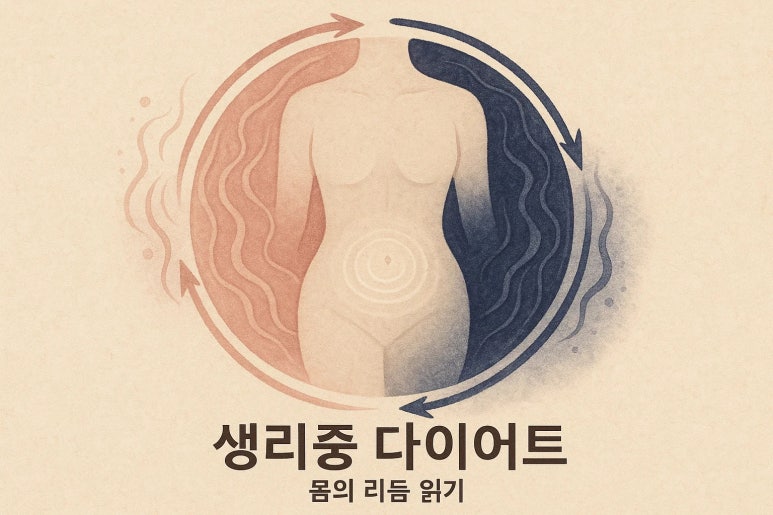
| Our bodies can be largely divided into two phases based on the menstrual cycle. The first is the 'follicular phase,' from after menstruation until ovulation, a time when estrogen is active, leading to good condition and relatively easier appetite control. During this phase, you can leverage your vitality to increase exercise intensity or manage your diet more rigorously. The second is the 'luteal phase,' from after ovulation until before menstruation. As mentioned earlier, due to the influence of progesterone, symptoms such as edema, increased appetite, and fatigue may appear. During this phase, it's more important to listen to your body's signals than to impose unconditional restrictions. Just as you might rest when the altitude increases during mountain climbing, you should reduce your exercise intensity by about 20-30% compared to usual and respond flexibly. In traditional Korean medicine, the follicular phase is a time when Gi and Hyeol (Qi and Blood) become abundant, increasing physical vitality and making it favorable for dieting during your period. Conversely, the luteal phase is a time when Gi and Hyeol circulation tends to stagnate or the functions of the Liver and Spleen are likely to decline. During this time, management that aids digestion and resolves dam-eum (phlegm-fluid) is necessary. Adjusting your menstrual diet plan according to your body's rhythm in this way is wise. |
| Warm ginger tea or cinnamon tea, foods rich in B vitamins (brown rice, legumes), and magnesium-rich nuts can be helpful for menstrual pain relief and luteal phase appetite control. These help warm the body, improve blood circulation, and contribute to nerve stabilization. Specifically, nerve stabilization also positively influences the alleviation of the HPA axis response to stress. |
Healthy Weight Management During Your Period: Here's How to Practice It
| During your period, weight management should focus on 'maintenance' and 'regulation' rather than unconditional 'weight loss'. The key is 'flexibility tailored to your body's rhythm'. In your diet, it's important to continue healthy eating focused on vegetables and protein instead of salty, sweet, or stimulating foods. For carbohydrates, it's best to consume primarily whole grains to reduce blood sugar spikes and maintain satiety for longer. For exercise, we recommend replacing intense cardio or strength training with activities that don't burden the body, such as yoga, stretching, or light walking. Ensure 7-8 hours of adequate sleep to support hormonal balance, and trying meditation or a warm bath for stress management is also a good method. Responding sensitively to your body's signals and taking care of yourself in this way is, in the long term, the most effective weight management strategy during your period. |
| It is absolutely forbidden to hastily try diuretics, extreme fasting, or excessive exercise just because you've gained weight during your period and want quick results. These can place a great burden on your body, further disrupt hormonal balance, and lead to irregular periods, worsening condition, or severe yo-yo effects. In particular, be careful as the misuse or abuse of certain medications or dietary supplements during your period can lead to severe side effects. Respecting your body's natural cycle and managing it in a way that doesn't harm your body's environment is paramount. |
| Juyeon (pseudonym), in her early 40s, used to dread even stepping on the scale before her period. However, she started charting her menstrual cycle, and during the luteal phase, she took a more relaxed approach to her diet while increasing her intake of protein and vegetables. She switched her exercise to light walks and relaxed with a warm foot bath before bed. As a result, she reported a significant reduction in the sudden weight fluctuations and binge eating impulses she experienced before her period, and menstrual diet management became much more comfortable. This is a great example of finding balance between body and mind and freeing oneself from the pressure of weight gain during menstruation. |
Dieting during your period is not just about losing weight; it's a process of deeply communicating with and understanding your body. Rather than being swayed by the numbers on the scale, it's important to listen to the subtle signals your body sends and find the pace and methods that are right for you. If your current approach isn't effective or you're looking for a better way, I recommend tracking your sleep patterns, appetite signals, and waist circumference changes for about two weeks to observe your body's responses. These records will be important clues for your next steps. I hope the story I've shared today provides a small comfort and wise guidance on your weight management journey during your period. Your body always sends you honest messages. Learning how to read those messages is the true beginning of genuine health management.