
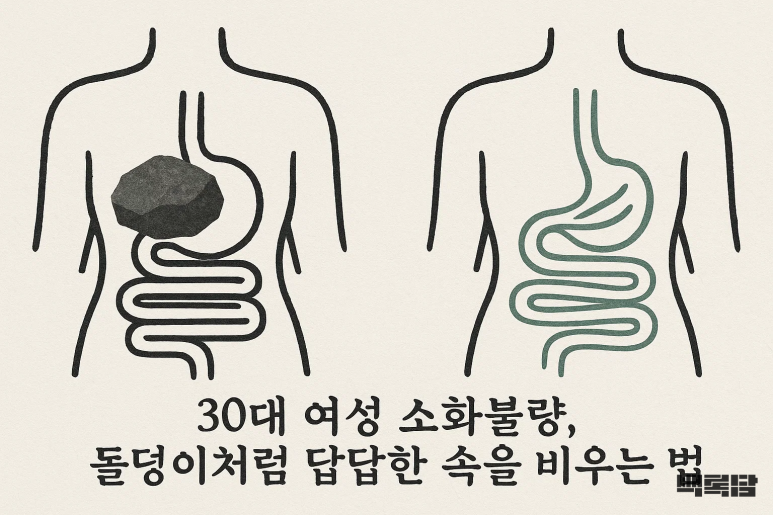
Feeling Bloated and Uncomfortable from Indigestion | A 30-Something Woman's Indigestion Workouts

Table of Contents
- Indigestion: More Than Just a Simple Discomfort
- The Core of Digestive Health: 'Body Circulation' and 'Activating Bowel Movements'
- Daily Exercises for Indigestion Relief
- 1. Awaken the Power of Deep Digestion with Diaphragmatic Breathing
- 2. Abdominal Massage with Warm Hands: The Secret to Activating Bowel MovementsAbdominal massage is a very effective method to directly stimulate bowel movements, improve indigestion, and relieve abdominal discomfort. Gentle massage with warm hands can relax intestinal muscle tension and promote the secretion of digestive fluids. How exactly should you perform abdominal massage? With warm palms, gently massage around your navel in a clockwise circular motion. Gradually widen the circles to massage the entire abdomen with sweeping motions. Especially if you have constipation, gently pressing the Tianchu (CV 6) acupressure points, located about 3 cm to the left and right of the navel, is also a good method. It's even better to perform this motion for about 5 to 10 minutes a day, especially after drinking a glass of warm water. Tip for enhancing the effects of abdominal massage: When performing abdominal massage, it's important to be gentle and consistent rather than pressing too hard. Drinking warm water before and after massage also helps promote bowel movements and waste elimination. Using essential oils can add a calming effect for the mind and body, creating a synergistic effect on digestive health.
- 3. Awaken Body Circulation with Light Aerobic ExerciseLight aerobic exercise is more beneficial for digestive health than strenuous exercise. Activities like walking, jogging, stretching, and yoga promote body circulation and relieve stress, thereby improving overall digestive function. What are some light aerobic exercises you can easily incorporate into your daily routine? I recommend getting into the habit of taking a light walk for 20-30 minutes after meals. Taking the stairs instead of the elevator, or taking a short walk during your lunch break can also be good daily exercises. While aiming for more than 30 minutes of aerobic exercise consistently every day, it's most important to do it regularly, even if for shorter periods.
- Caution: Exercise for Indigestion, When Should You Consult a Professional?If indigestion, abdominal pain, or heartburn symptoms persist or worsen even after exercise, or if they are accompanied by serious symptoms such as weight loss, bloody stools, or vomiting, you must consult a medical professional. Especially if you have heart disease or other underlying medical conditions, please consult your doctor before starting any exercise. Premature self-diagnosis or treatment can, in fact, harm your health. Indigestion and abdominal discomfort are more than just annoyances; they are important signals our body sends us. I believe it's important not to ignore these signals, but to listen to your body's voice and become an active participant in your recovery. The exercises for indigestion introduced today are not grand and difficult methods, but small habits that can be consistently practiced in daily life. I am confident that these small changes will improve body circulation, activate bowel movements, and ultimately be a valuable start to regaining your digestive health and the vitality you may have lost. To be honest, digestive problems often don't resolve perfectly with just one or two efforts. Consistency and patience are required, but through this process, you will communicate more deeply with your own body. I sincerely hope that all of you can overcome discomfort and enjoy a healthy and vibrant daily life.
Indigestion: More Than Just a Simple Discomfort
In our busy daily lives, while indigestion and abdominal discomfort have become common, they are by no means signals to be taken lightly.
This isn't just a stomach issue; it could be a warning of poor overall circulation and weakened bowel function.
So, how can we overcome this discomfort, restore digestive health, and regain vitality in our daily lives?
I believe one of the key solutions lies in 'daily exercise that gets your body moving.'
Jiyoung (pseudonym), a professional in her 30s, also came to me seeking relief from chronic indigestion.
Jiyoung was constantly plagued by late nights at work, and after work, she was too exhausted to even think about exercise, instead just wanting to lie down.
She gradually felt increasingly bloated and a sensation as if something was pressing on her epigastrium, often leading to restless nights.
Various medications offered only temporary relief, and eventually, she said she dreaded meals without digestive aids.
Jiyoung was a typical case where indigestion led to stagnant circulation and slowed bowel movements, resulting in an overall decline in vitality.
The Core of Digestive Health: 'Body Circulation' and 'Activating Bowel Movements'
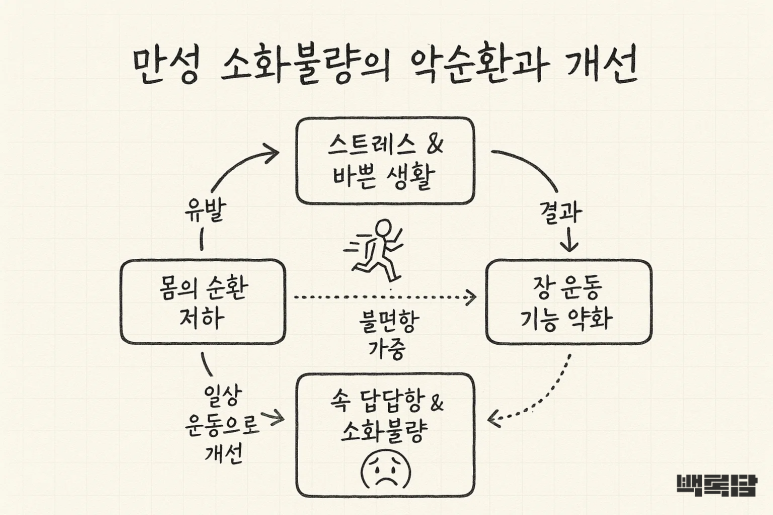
For many people experiencing indigestion and abdominal discomfort like Jiyoung, what I emphasize is 'body circulation' and 'activating bowel movements.'
Our body's digestive process goes beyond merely breaking down food in the stomach; systemic blood circulation and autonomic nervous system function are essential.
Stress can increase stomach acid secretion and slow down digestion, affecting the gut-brain axis and exacerbating digestive issues.
Considering these complex factors, exercise for indigestion can be seen not just as strengthening the stomach, but as a process of restoring overall body balance.
Key Pathways for Digestive Improvement: Body Circulation & Activating Bowel Movements
Indigestion often occurs when blood circulation is poor or intestinal peristalsis weakens. Regular physical activity, especially exercises that stimulate the abdomen and move the whole body, promotes blood and lymph flow, increasing oxygen and nutrient supply to digestive organs. Additionally, gently moving the muscles around the intestines activates intestinal peristalsis and aids in waste elimination. This process ultimately helps digestive enzyme secretion and increases food digestion and absorption rates, relieving abdominal discomfort and improving overall digestive function.
Daily Exercises for Indigestion Relief
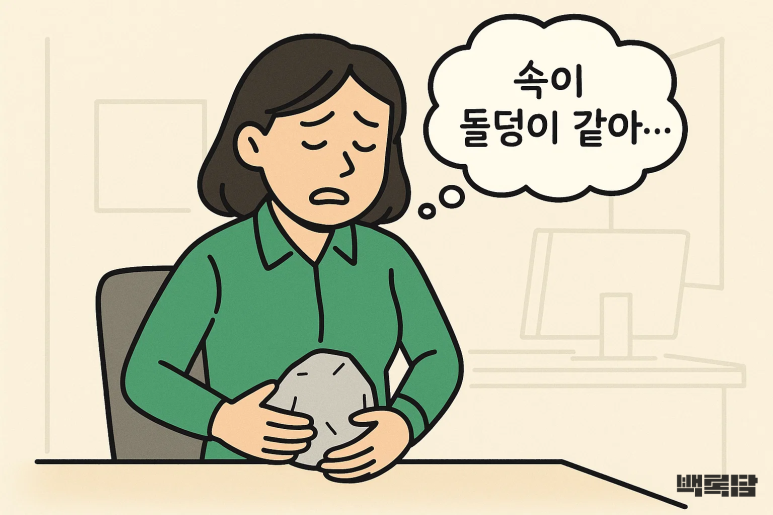
Here are some daily exercises for indigestion relief that I recommend to my patients in clinical practice.
These exercises can be easily tried anytime, without special equipment or space.
1. Awaken the Power of Deep Digestion with Diaphragmatic Breathing
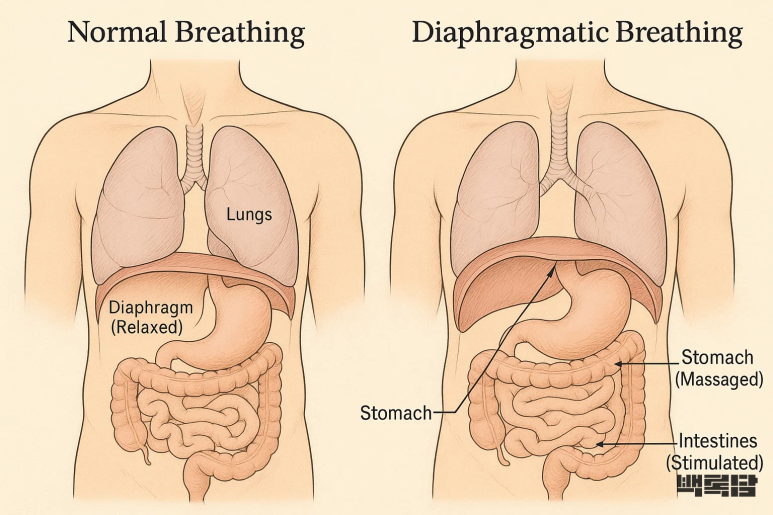
Deep breathing has a remarkable impact on digestive function.
Diaphragmatic breathing involves moving the abdomen significantly to gently massage digestive organs, and it plays a crucial role in aiding digestion by activating the parasympathetic nervous system.
So, how should you start diaphragmatic breathing? In a comfortable sitting or lying position, place one hand on your chest and the other on your abdomen. Slowly inhale through your nose, feeling your belly inflate like a balloon, while trying to keep your chest as still as possible. Exhale slowly through your mouth, feeling your belly contract towards your spine, completely emptying all air. Repeat this process for about 5 to 10 minutes, and I recommend practicing it consistently before or after meals, or whenever you feel abdominal discomfort.