
I feel bloated no matter what I eat | Long COVID: Indigestion in a woman in her 30s

Table of Contents
How Does COVID-19 Disrupt Gastrointestinal Function?
| “Ever since I got COVID, nothing I eat seems to digest, and I always feel bloated. I thought it was gastritis and took medication, but it only helped for a short while, and I can't sleep well at night. It feels like my body is completely broken.” |
Chronic Indigestion: More Than Just a Gastrointestinal Problem
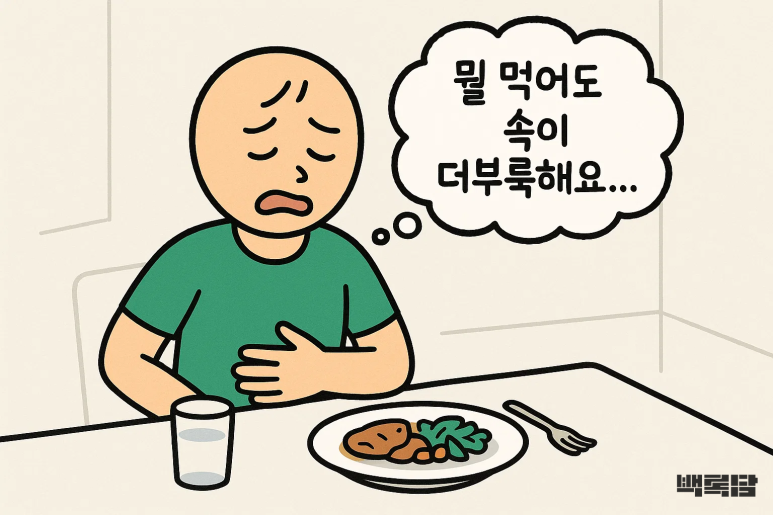
| Ms. Ji-hye (a pseudonym) usually maintained healthy lifestyle habits. However, after being infected with COVID-19 last year, she began to suffer from ‘bloating’ and indigestion regardless of what she ate. At first, she thought it was just mild gastritis, but over time, her symptoms worsened. In particular, a cup of coffee in the morning often triggered heartburn. An upper endoscopy revealed no specific abnormalities, and the doctor diagnosed it as psychosomatic. I meticulously examined not only Ms. Ji-hye's gastrointestinal function but also her overall nervous system fatigue and gut health. |
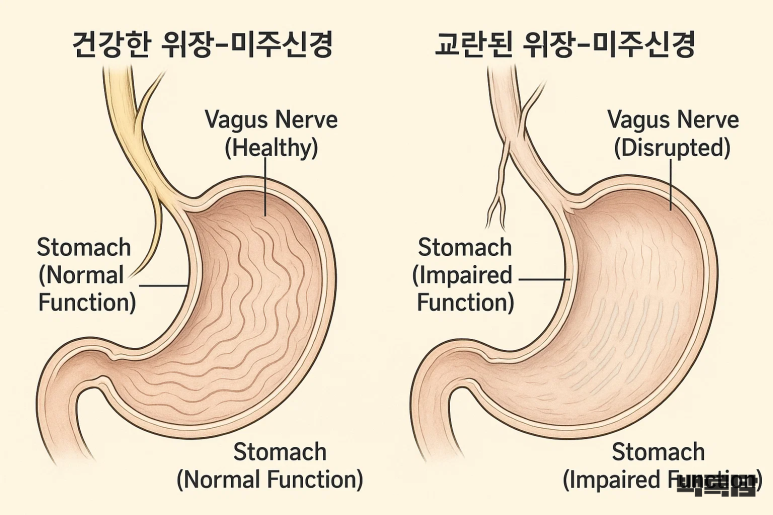
As in Ms. Ji-hye's (a pseudonym) case, indigestion stems from complex causes. To be frank, I, too, initially focused solely on issues with the stomach itself. However, after seeing many patients and examining them closely, I realized that the connection between the nervous system and gut health is, surprisingly, a more crucial factor. Caffeine intake also affects the digestive system. Studies show that caffeine can stimulate stomach acid secretion and relax the lower esophageal sphincter, causing acid reflux symptoms. If your stomach is sensitive, coffee on an empty stomach is likely to cause heartburn, nausea, and bloating. However, not all coffees are the same. Cold brew or dark roast coffee is known to be less acidic than regular coffee, making it gentler on the stomach. The important thing is how our body reacts to these external factors.
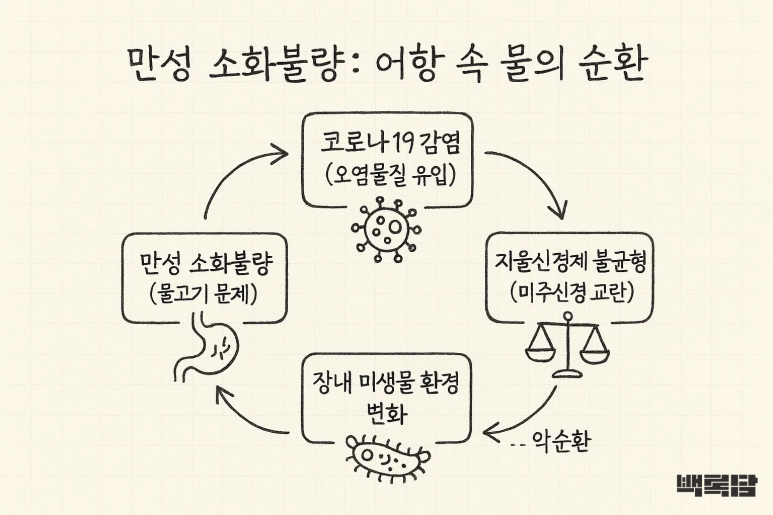
| The core principle for understanding chronic indigestion can be compared to the 'water circulation in a fish tank.' Just as fish suffer when the water in the tank becomes murky, if our body's internal environment—that is, the balance of gut health and the autonomic nervous system—is disrupted, gastrointestinal function also malfunctions. COVID-19 infection is like pollutants entering a fish tank and disrupting water circulation. The delicate connection between the nervous system and gastrointestinal function weakens, which in turn leads to changes in the intestinal microbial environment, chronicizing indigestion symptoms. Instead of simply skimming off the murky water (symptom suppression), we must re-establish the filtration system (the body's recovery power) so that the water can circulate cleanly on its own. |
Listening to Your Body's Signals
| If you experience indigestion when consuming coffee, you can try a few things. Drinking it after a meal rather than on an empty stomach, and adding milk or cream to reduce stomach lining irritation, can be helpful. Choosing cold brew or dark roast, which are less acidic than regular coffee, is another option. Also, remember that caffeine sensitivity can vary depending on various factors, including genetic predisposition, as well as age, medications, and stress. |
The Journey Towards Recovery: Shall We Walk It Together?
| If indigestion symptoms persist for a long time or are accompanied by other serious symptoms such as weight loss, bloody stools, or dysphagia, consultation with a medical professional is absolutely necessary. Rather than relying solely on self-diagnosis or home remedies, it is important to meet with a healthcare provider who can thoroughly examine your entire body to establish an accurate diagnosis and a customized treatment plan. |
The journey to recovery can sometimes feel long and tedious. However, I want to tell you that you are not alone on this journey. If you listen to the signals your body sends and take care of yourself patiently and consistently, I believe you can certainly regain a healthy balance. Trust in your body's own healing power and I encourage you to calmly take the next steps.