
Familiar pain is reproduced at the trigger point
When pressing a small nodule or a tight band in the muscle, the same pain you usually feel may appear at that spot or in a slightly distant area.
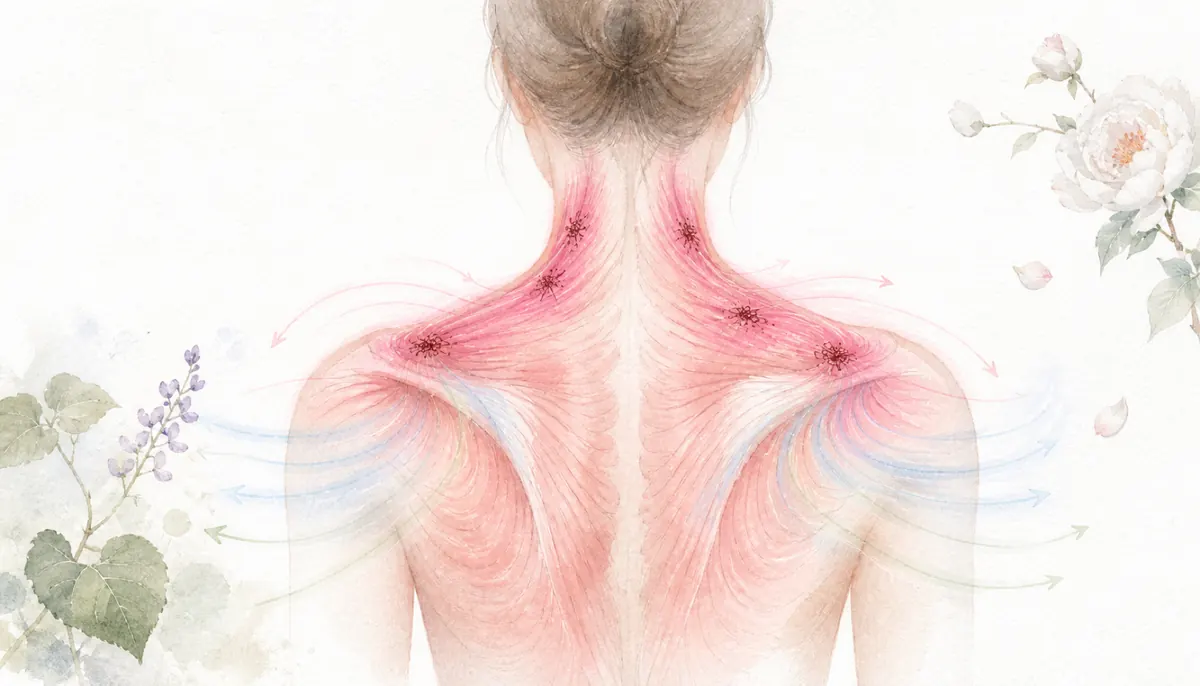
Myofascial Pain Syndrome is characterized by the presence of tight bands or nodules in specific areas of the muscles and surrounding fascia; pressing these trigger points reproduces the usual pain at the site or in a distant area. The pain may be felt as aching, throbbing, tightness, or stiffness, and may be accompanied by tenderness, decreased muscle strength, and a reduced range of motion. However, chest pressure, shortness of breath, cold sweats, or sudden one-sided weakness, sensory loss, or slurred speech should not be viewed as referred muscle pain and require immediate emergency evaluation.
Myofascial Pain Syndrome Symptoms
Symptom and Care Differentiation
| Current Presentation | Possible Meaning | Priority Action |
|---|---|---|
| Same pain reproduced when pressing a tight muscle band | Possible myofascial trigger point | Confirm pain location and radiation path during examination |
| Aching, tightness, stiffness, and limited movement | Possible decline in local muscle or fascia function | Record movements that worsen symptoms and impact on daily life |
| Numbness, electric-like pain, or progressive muscle weakness | Possible other causes such as nerve compression | Prompt neurological and musculoskeletal evaluation |
| Chest pressure, shortness of breath, cold sweats, or jaw/arm pain | Possible cardiac emergency | Immediately call 119 or go to the emergency room |
| Sudden one-sided weakness, speech impairment, or vision changes | Possible stroke | Immediately call 119 or go to the emergency room |
What the clinic checks first
Myofascial Pain Syndrome is diagnosed through an examination that identifies tight bands within the muscle, trigger points, and local or referred pain that is reproduced when pressed. Since there is no single test that confirms the condition based on pain alone, joint, nerve, and systemic causes are ruled out. Sudden signs of cardiac issues or stroke require emergency response over the identification of trigger points.
When pressing a small nodule or a tight band in the muscle, the same pain you usually feel may appear at that spot or in a slightly distant area.
Descriptions vary from a persistent dull ache to tightness that worsens with movement, and muscle tenderness may occur simultaneously.
You may feel weakness due to avoiding the use of painful muscles, or movement in joints such as the neck, shoulders, or lower back may be limited.
Distinct numbness, electric-like pain, changes in reflexes, or progressive muscle weakness are evaluated for neurological causes other than simple myofascial pain.
If joint swelling, heat, widespread bilateral pain, and severe fatigue are central, other causes such as joint diseases or fibromyalgia are distinguished.
Chest pressure, difficulty breathing, cold sweats, or sudden one-sided weakness and speech impairment are not regarded as muscle pain or referred pain.
Muscles in painful areas such as the neck, shoulders, back, or waist may feel like tense bands, and specific points may show particular tenderness.
Pressing a trigger point can reproduce referred pain not only at the site of pressure but also in a distant area along a certain path.
Pain can manifest as aching, throbbing, a tight squeezing sensation, or a lingering dull ache, and may vary depending on activity and posture.
The range of motion for actions involving the affected muscle, such as turning the neck or raising the arm, may decrease, leading to the avoidance of such movements.
Muscle use may decrease due to pain, which can feel like a loss of strength; however, actual progressive muscle weakness requires a separate evaluation for neurological causes.
Pain can disrupt sleep, and resulting fatigue and tension can further increase muscle discomfort; therefore, sleep and daily functioning are also recorded.
Seek immediate emergency help for pressure or tightness in the center or left side of the chest, shortness of breath, cold sweats, feeling of fainting, or pain in the jaw or arms.
Contact 119 immediately for weakness or sensory loss on one side of the face, arm, or leg, abnormalities in speech, vision, or walking, or severe headache without a known cause.
Cardiac or cerebrovascular emergencies and progressive neurological damage must be ruled out first. Consultations regarding the supportive role of herbal medicine are only for chronic pain remaining after standard medical care.
Myofascial Pain Syndrome Consultation at Baekrokdam
If you experience chest pain, shortness of breath, cold sweats, or sudden unilateral neurological symptoms, go to the emergency room immediately.
Through examination and documentation, we determine where the familiar pain is reproduced upon pressure and which movements exacerbate the symptoms.
Without replacing neurological/joint evaluations or necessary rehabilitation, we monitor changes in pain, range of motion, and sleep quality.
Please prepare information regarding where the pain started and how it spreads, reactions to trigger point pressure, postures or movements that worsen the pain, any numbness or changes in muscle strength, and any chest, respiratory, speech, or vision symptoms.
Representative symptoms include localized or referred pain that is reproduced when pressing on tight bands of muscle and trigger points, as well as tenderness, stiffness, and reduced range of motion.
It means that pain may be felt in an area distant from the trigger point being pressed. However, you should not self-diagnose chest pain or neurological symptoms as referred pain.
While they may be felt mildly, distinct numbness, electric-shock-like pain, or progressive muscle weakness require a prompt medical evaluation for other causes, such as nerve compression.
Cardiac or neurological emergencies and joint or nerve diseases must be differentiated first. Herbal medicine does not replace these evaluations and standard medical care.
Content reviewed:
This information supports, but does not replace, diagnosis or treatment by a qualified healthcare professional.