Private Insurance for Obesity Drugs: Wegovy & Saxenda

Table of Contents
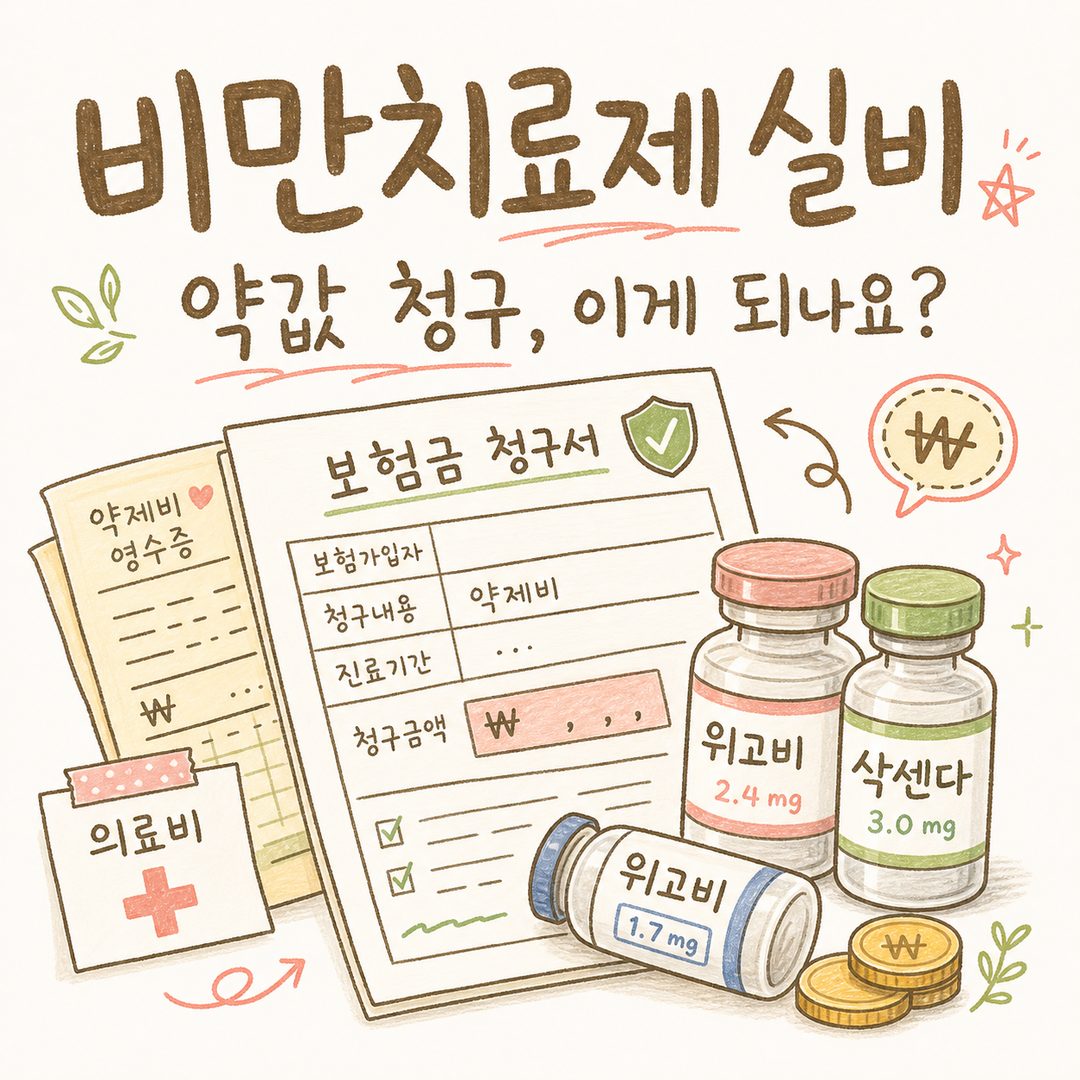
Many patients ask, "Doctor, I can claim Wegovy on my private insurance, right?" as soon as they sit down. Recently, a patient brought a receipt and sighed, saying, "The insurance company denied it, and I have no idea why." I would have felt just as dizzy in their shoes. Today, I’ll clear up the misunderstandings surrounding obesity treatments and private health insurance.
Why isn't simple obesity covered by private insurance?
The first thing to point out is the private insurance policy itself. In domestic private health insurance, obesity treatment is, in principle, listed as an exclusion. This applies across all generations of private insurance, from the 1st to the 4th. Even if you have a newly signed policy, the situation does not change.
According to guidance from financial authorities and the insurance industry, even for patients with severe obesity with a BMI of 30kg/㎡ or higher, medications and injections prescribed for the "purpose of treating obesity" are blocked from private insurance payouts. In other words, insurance does not kick in for the sole reason of wanting to lose weight. This is the same for GLP-1 class obesity treatments like Wegovy, Saxenda, and Mounjaro. If the purpose is weight management, they are mostly prescribed as non-reimbursable, and the out-of-pocket cost becomes entirely the patient's responsibility.
Prescription cases where exceptions are granted
Does this mean private insurance claims are completely blocked? Not necessarily. If a drug is prescribed for the purpose of treating a disease and National Health Insurance reimbursement is applied, a path opens up to receive a portion of the out-of-pocket costs back from private insurance.
Typical comorbidities and codes are classified as follows:
Diabetes E11
Hyperglycemia R73
Hypertension I10
Dyslipidemia, cardiovascular disease, etc.
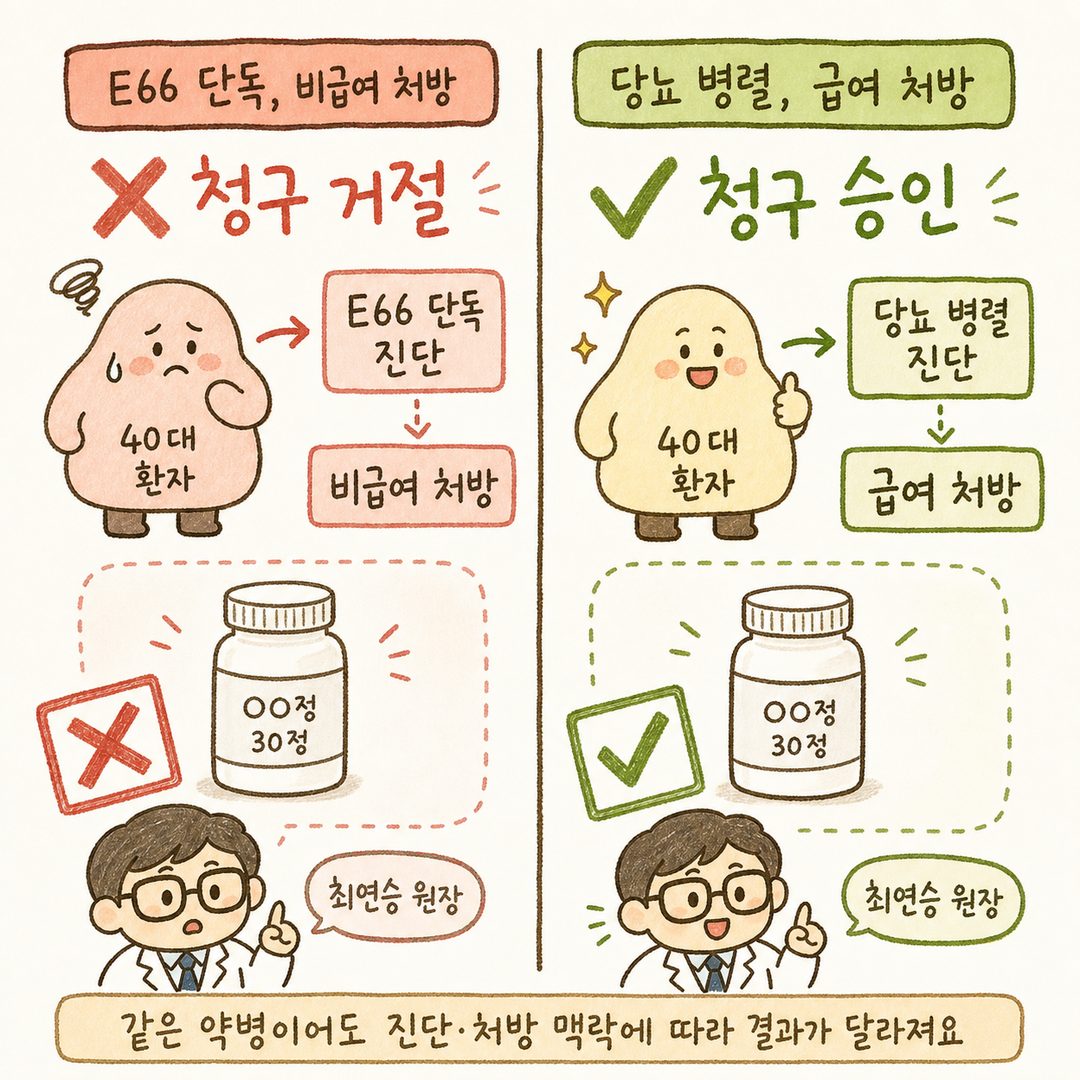
If someone with these conditions is prescribed a GLP-1 agent for the purpose of "blood sugar control" or "reduction of cardiovascular risk," the out-of-pocket portion of the reimbursable amount on the receipt may be eligible for a claim. Conversely, if the diagnosis is only simple obesity E66 and it is a non-reimbursable prescription, the insurance company will deny payment even if the same medication was received. They don't just look at the drug name; they look at these three things: diagnosis name, purpose of prescription, and reimbursement status.
Real-life cases from the clinic
Let me briefly tell you about a patient in their late 40s. They had been using Wegovy as a non-reimbursable treatment for about 6 weeks and were flustered because the insurance company blocked the entire claim. Looking at the prescription, the diagnosis was E66 alone. It was also clearly stamped as "Purpose of weight loss, non-reimbursable." From the patient's perspective, they consider it a medical expense since a doctor provided the medicine, but the reality is that it's difficult to pass because it is an exclusion under the policy terms.
Another person was diagnosed with diabetes, and the medical staff set blood sugar control as the primary goal, issuing a reimbursable prescription. In this case, a portion of the out-of-pocket cost was returned by private insurance. Even for a drug with the same ingredients, the result varies completely depending on the context of the prescription. Therefore, before receiving medication, I recommend asking your doctor once more, "Is this reimbursable or non-reimbursable, and what diagnosis code is being used?"
Perspective from Baekrokdam Clinic
What we often tell our patients is not to get too consumed by whether private insurance is possible. Whether insurance covers it or not, weight has a strong tendency to return. The moment you stop the medication, appetite signals return to their original state, and a yo-yo effect inevitably follows.
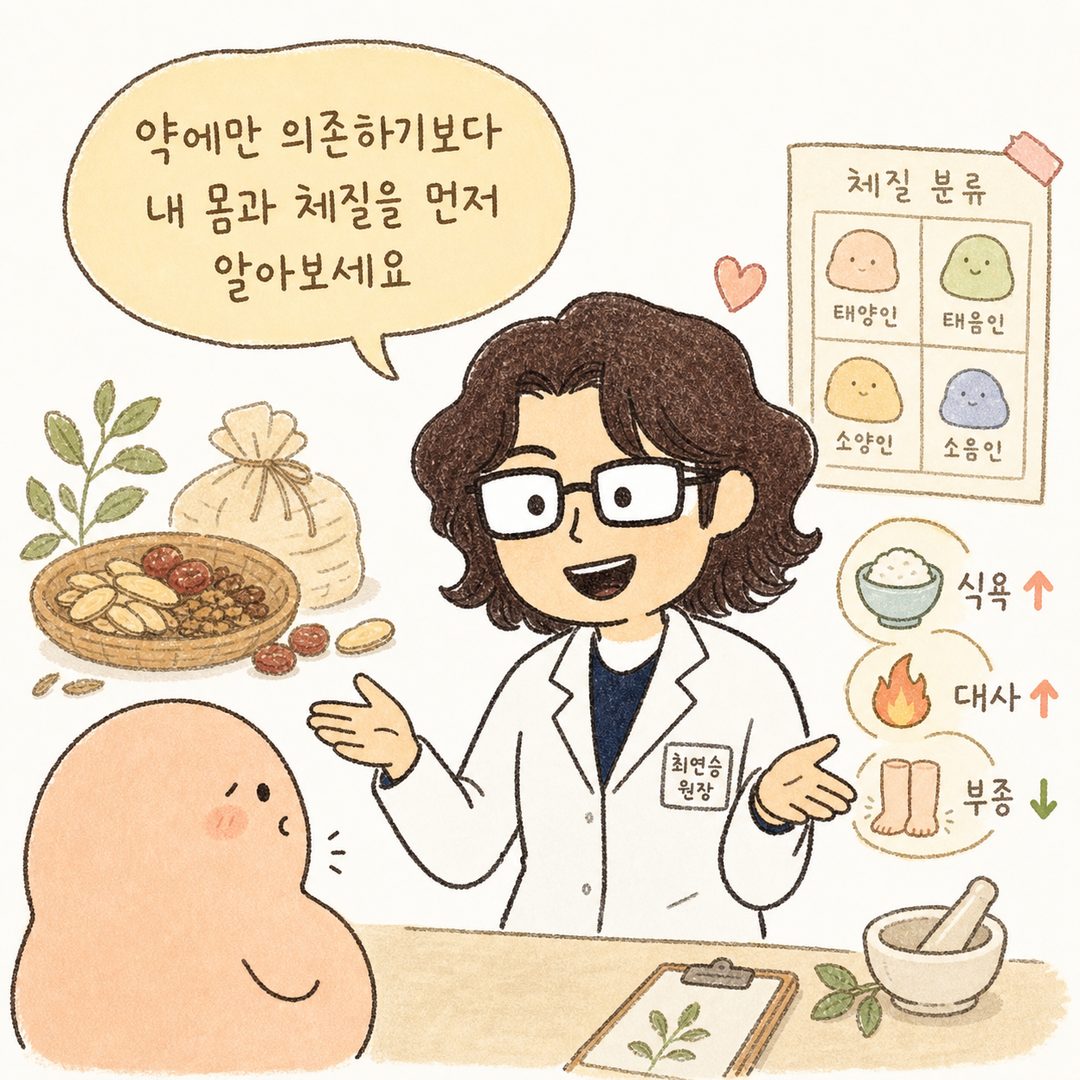
In Korean medicine, obesity is not seen simply as "excess calories." The weight loss approach differs depending on whether the constitution easily accumulates phlegm-fluid (痰飮), whether metabolism is sluggish due to Qi deficiency (氣虛), or whether the stomach cannot rest due to food stagnation (食積). Even at the same weight, some people primarily have edema while others have abdominal fat, so the prescriptions differ. Rather than relying solely on the appetite-suppressing effects of drugs, it is better to consider a direction that helps the body regulate appetite and metabolism on its own.
Action points to check right now
Here are the items to check before going to the hospital or immediately after receiving medication:
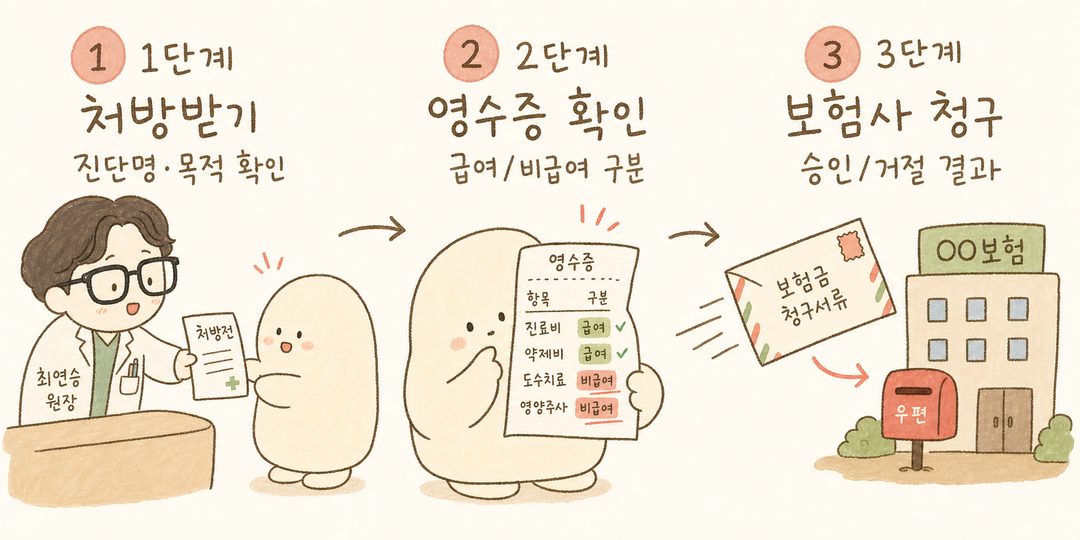
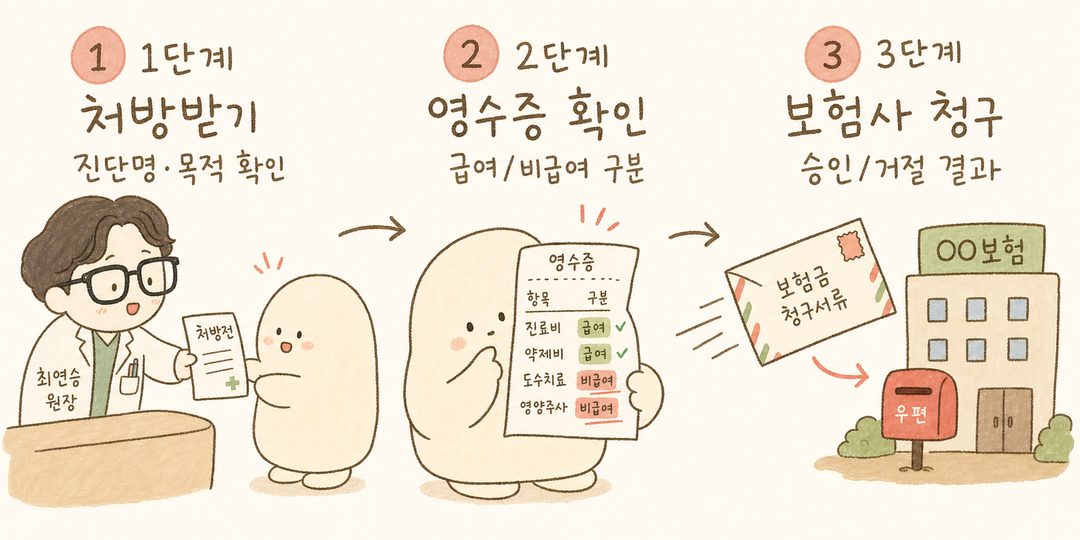
Check the diagnosis name (disease code) on the prescription and receipt. If it is E66 alone, a private insurance claim will be difficult.
Distinguish whether the drug cost is reimbursable or non-reimbursable on the receipt. If it is only in the non-reimbursable column, it is almost certainly an exclusion.
If you have comorbidities (diabetes, hypertension, dyslipidemia), tell your doctor in advance during the consultation. The purpose of the prescription itself may change.
Read the insurance exclusion clauses yourself before claiming. The obesity item is listed separately in all generations from the 1st to the 4th.
Do not make unreasonable claims with only receipts for non-reimbursable drug costs. A history of rejection can affect your next renewal or screening.
Just by taking care of these five things, the frustration of "Why isn't it working?" will be significantly reduced.
The issue of private insurance for obesity drugs is decided by the context of the prescription, not the type of drug. Rather than entrusting everything to a single pill, I hope you find a way to lose weight without strain by understanding your body's condition and constitution. Baekrokdam Clinic's Baekrok Gambi-jung is a Korean herbal medicine prescription that looks at appetite, metabolism, and edema based on a constitutional approach, assisting the diet/weight management journey for those who find it difficult to rely solely on drugs. When your heart wavers over insurance eligibility, please knock on our clinic door. We will help you sort it out together.