Body Fat Percentage Calculation: BMI to Obesity Standards

Table of Contents
Many patients ask, 'I've lost weight, but why do I look the same in the mirror?' As I explain in my clinic, there's a more honest indicator than the scale: body fat percentage. Even at 60kg, different fat ratios significantly affect body shape and health. Many wonder how to measure it at home without specialized equipment. Today, I'll explain practical calculation methods and their limitations, just as I do in my clinic.
Definition and Basic Formula
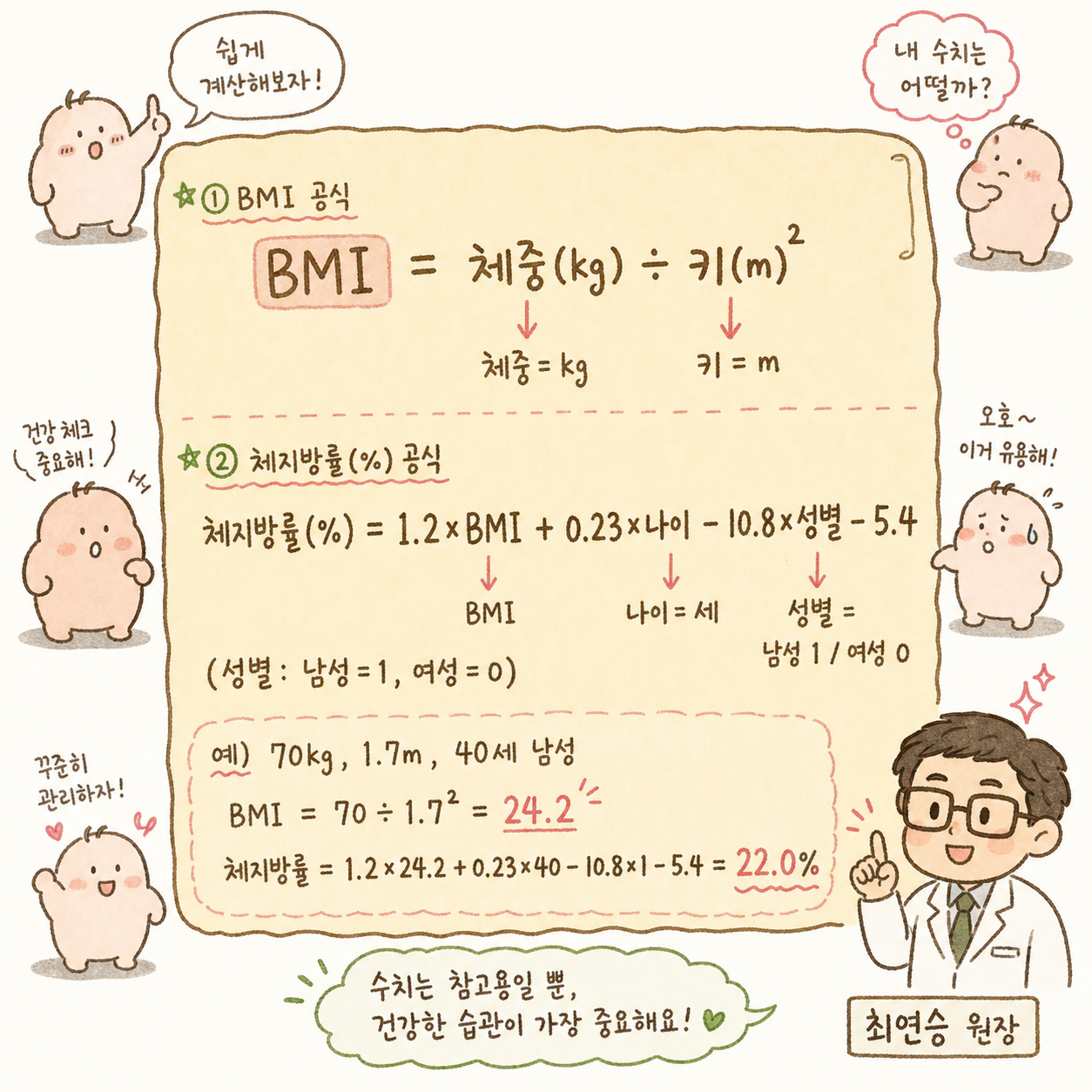
Body fat percentage is exactly what it sounds like: the proportion of body weight that is fat, expressed as a percentage. The basic formula is:
- Body Fat (%) = Body Fat Mass (kg) ÷ Body Weight (kg) × 100
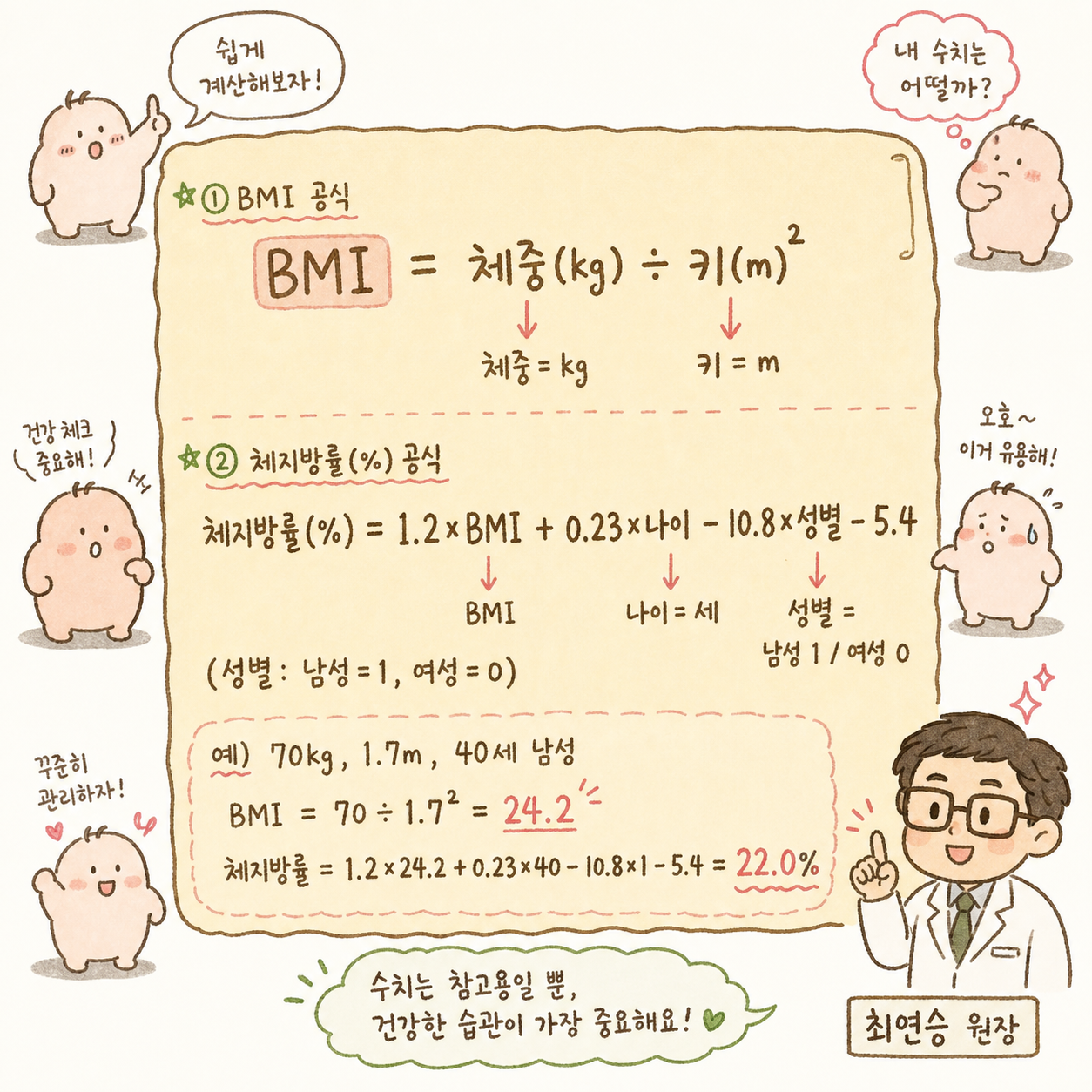
The challenge is accurately measuring body fat mass at home. Most people use BMI-based estimation formulas or BIA (Bioelectrical Impedance Analysis) tests at health centers or gyms. BMI itself is simple to calculate:
- BMI = Weight (kg) ÷ Height (m)²
A common estimation formula is: 1.2 × BMI + 0.23 × Age − 10.8 × Gender − 5.4, where male=1, female=0. While it looks complex, it's easily calculated with a phone calculator.
Practical Calculation Example
Let's work through some examples.
If you know your body fat mass: For a 60kg person with 12kg body fat, the calculation is 12 ÷ 60 × 100 = 20%. Your lean mass (muscle, bone, water) is simply weight minus fat mass.
Using the BMI-based formula for a 40-year-old male with BMI 25:
1.2 × 25 + 0.23 × 40 − 10.8 × 1 − 5.4
= 30 + 9.2 − 10.8 − 5.4
= 23.0%
For a woman with the same metrics, the gender factor becomes 0, resulting in a higher percentage. This reflects women's naturally higher essential fat requirements.
Remember, this is an estimation. Use it as a tracking tool rather than an absolute measure.
Interpreting Your Results
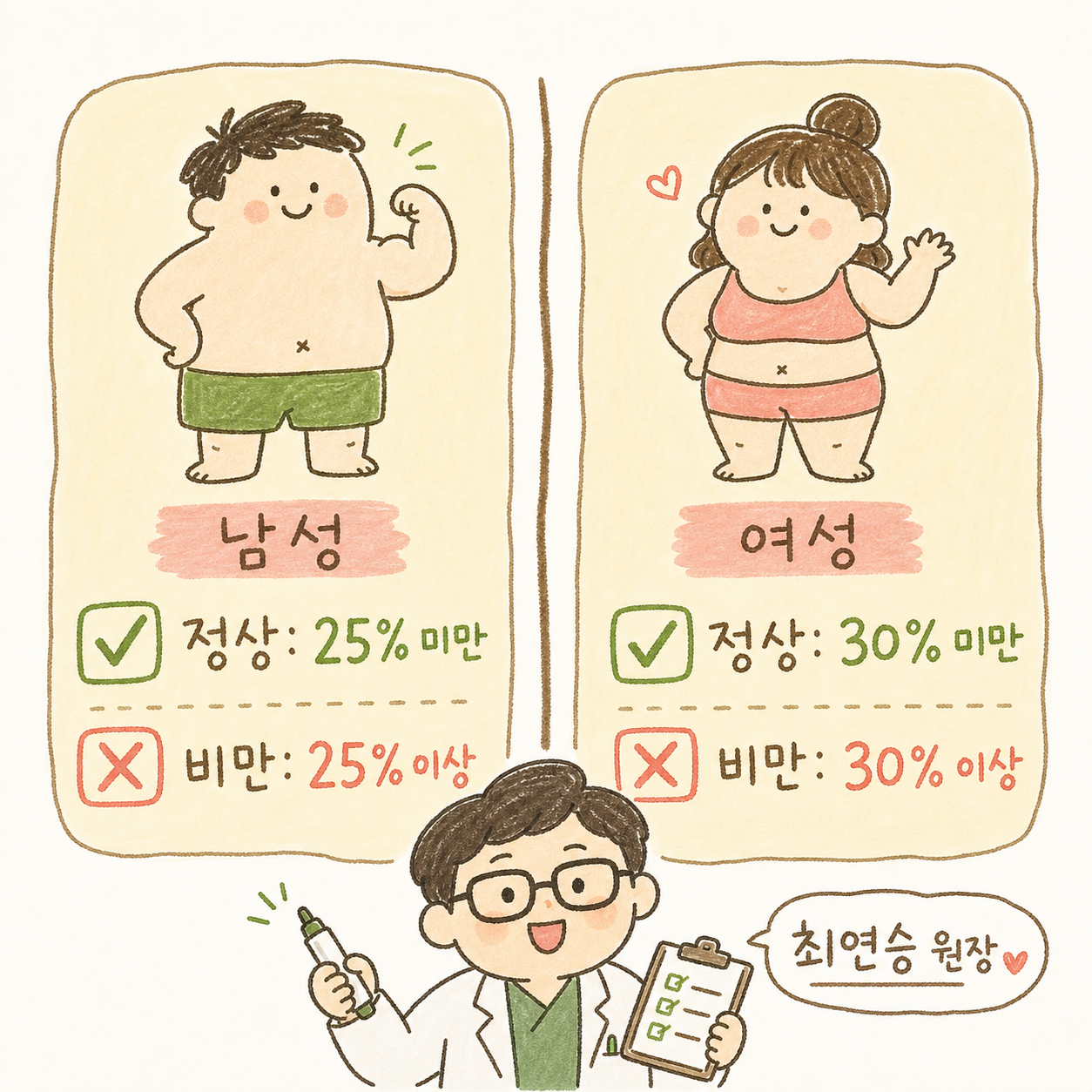
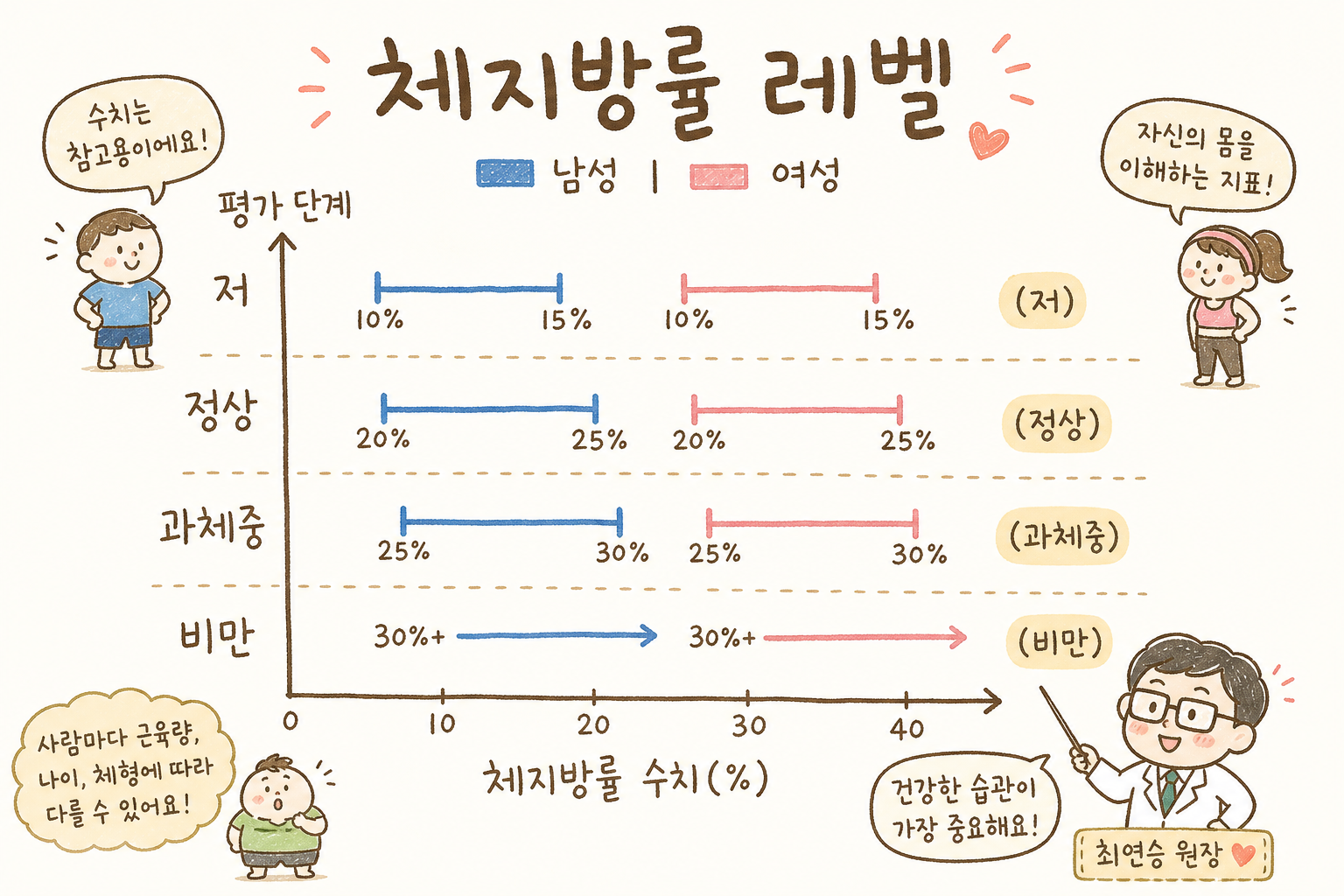
Korean public health standards define obesity as:
Men: ≥25% body fat
Women: ≥30% body fat
Our example (40-year-old male, BMI 25, estimated 23.0% body fat) falls just below the obesity threshold. This shows how BMI and body fat percentage can tell different stories.
BMI categories for Korean adults:
Underweight: <18.5
Normal: 18.5-22.9
Overweight: 23-24.9
Obese: ≥25
Combining both metrics gives a clearer health picture.
When Formulas Don't Apply
Estimation formulas have limitations, especially for:
Muscular individuals: Athletes may have high BMI but low body fat
Elderly with sarcopenic obesity: Normal BMI but high fat percentage
Extreme heights: BMI calculations become less accurate
Consider these formulas as initial screening tools. For precise measurements, visit a healthcare facility for BIA testing. Consistent use of the same machine provides the most reliable tracking.

Complementary Metrics
Body fat percentage is just one piece of the puzzle. Consider these additional indicators:
Waist circumference: ≥90cm (men) or ≥85cm (women) indicates abdominal obesity
Lean body mass: Tracks muscle preservation during weight management
Body measurements: Simple tape measurements can provide additional insights
BIA testing: Offers detailed body composition analysis
In Korean medicine, we consider how your body stores fat based on your constitution and metabolic patterns. The numbers are just the beginning.
Try calculating your body fat percentage using these methods. If you need personalized guidance, visit our clinic. At Baekrokdam Korean Medicine Clinic, we'll help you develop a customized weight management strategy, potentially including Baekrok Gambi-jung to support your journey. Let's work together to understand and improve your body composition.